By Barbara LaMonica, Assistant Archivist
I remember when I was a child my mother would sit me down and insist I write thank you notes for all the holiday gifts I received from my aunts and uncles. Her reasoning was that by taking the time to write a personalized handwritten note on special stationery was a sign of respect and gratefulness. I wonder what my mother would think of today’s instantaneous emails or texts? Well she would be happy to know that letter writing is beginning to make a comeback. And it is not only older people. Millennials are the largest group to buy notecards, and Pen Pal Clubs are springing up everywhere. The LA Pen Pal club meets once a month to create their own stationery and sit down together to write letters.
What exactly is the growing appeal of sending and/or receiving a letter rather than an email? One reason is that a letter is unique and tangible. To receive a letter makes the recipient feel important knowing that the sender took the time to write, choose stationery, purchase postage and mail. And the recipient is happy to receive a letter that is not a bill! Reading a letter is easier than scrolling down on a screen. Furthermore, people tend to hold onto letters for a longer period of time rather than an email which is often quickly deleted. More importantly writing, whether letters, notes, or diaries, tends to slow things down in our age of instantaneous digital communication fostering shorter and shorter attention spans.
Additionally, recent research seems to verify that the physical act of handwriting has several benefits over keyboard tapping. The most important advantages are improved memory, spelling, and cognition. A 2014 study published in Psychological Science “The Pen is Mightier than the Keyboard” by P.A. Mueller and D.M. Oppenheimer compared college students who took notes on laptops vs those who used longhand. The results clearly showed that the students who had written had better retention and test scores. “The present research suggests that even when laptops are used solely to take notes, they may still be impairing learning because their use results in shallow processing.”
Most importantly what is the significance of letter and journal writing for historians and archivists? In the past people wrote a great deal of letters and kept diaries. It was an integral part of life and social relations. An etiquette book from the 1890s devotes several chapters on the proper way to write letters for all occasions. “Write letters to relatives and friends very often…the longer you make them the better. The absent husband should write a letter at least once a week. Some husbands make it a rule to write a brief letter home at the close of a day.” (Hills Manual of Social and Business Forms by Thos. H. Hill, Hill Standard Book Company Chicago, 1891.pg. 105).
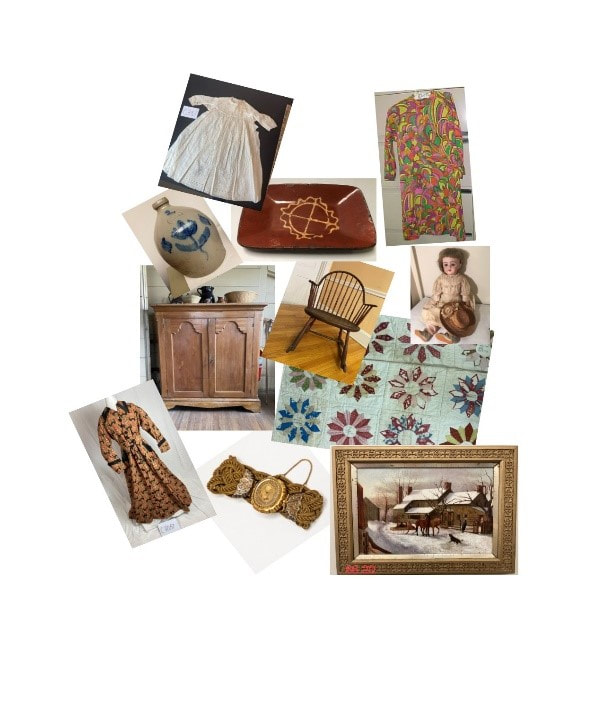
Personal correspondences often survive for decades as keepsakes for succeeding generations. Will a substantial number of emails and texts from our age survive? How will future historians view us when most of our correspondence is digital and temporary in nature? And unlike official documents, personal writings are heartfelt expressions giving historians a perspective on the everyday life and social conventions of an era. The special collections in the Huntington Historical Society Archives contains the letters and diaries of several Huntington residents including past doctors, lawyers, homemakers and soldiers from various conflicts.
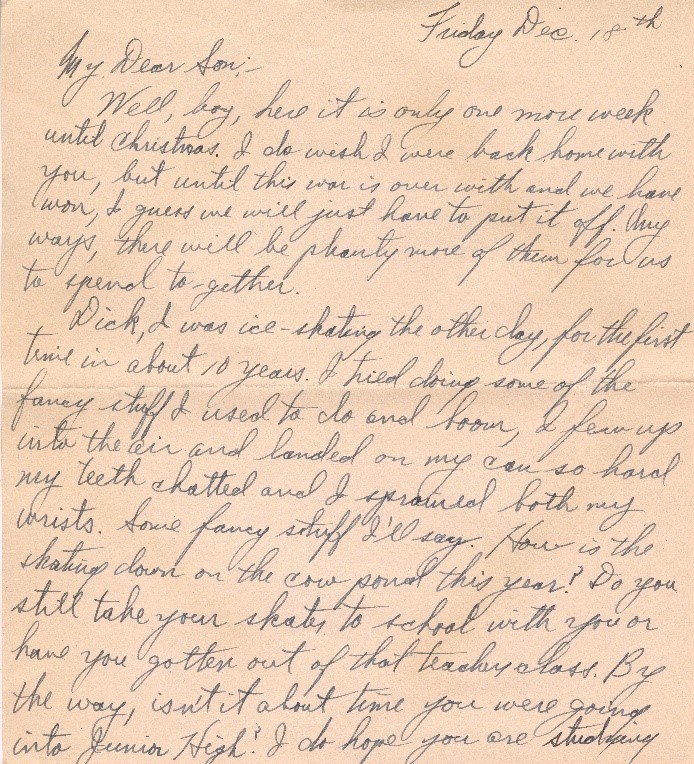
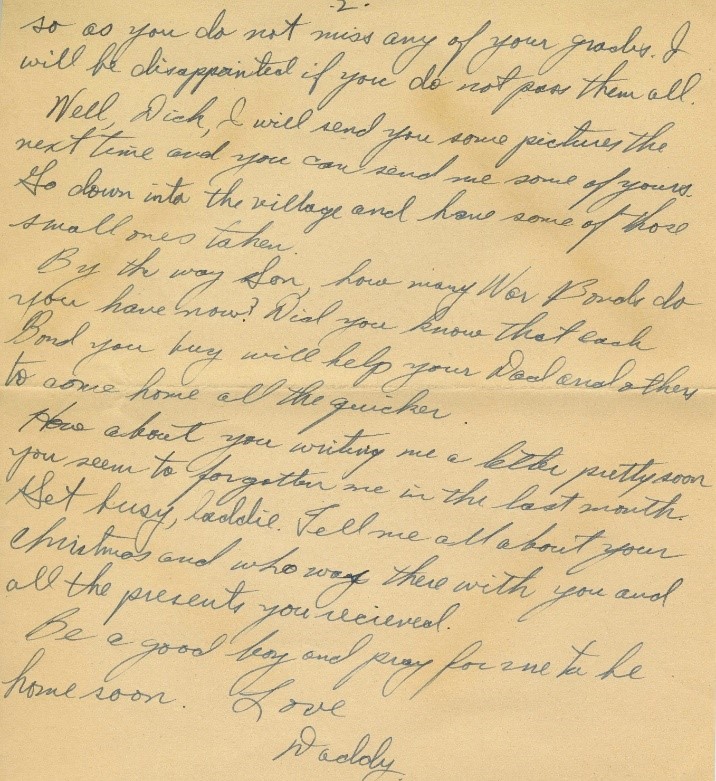
Below is a letter that is part of a WWII collection written by a soldier, Chester R. Koons, to his son Richard. Unfortunately, the father was killed in 1944. The son kept the letters all his life.
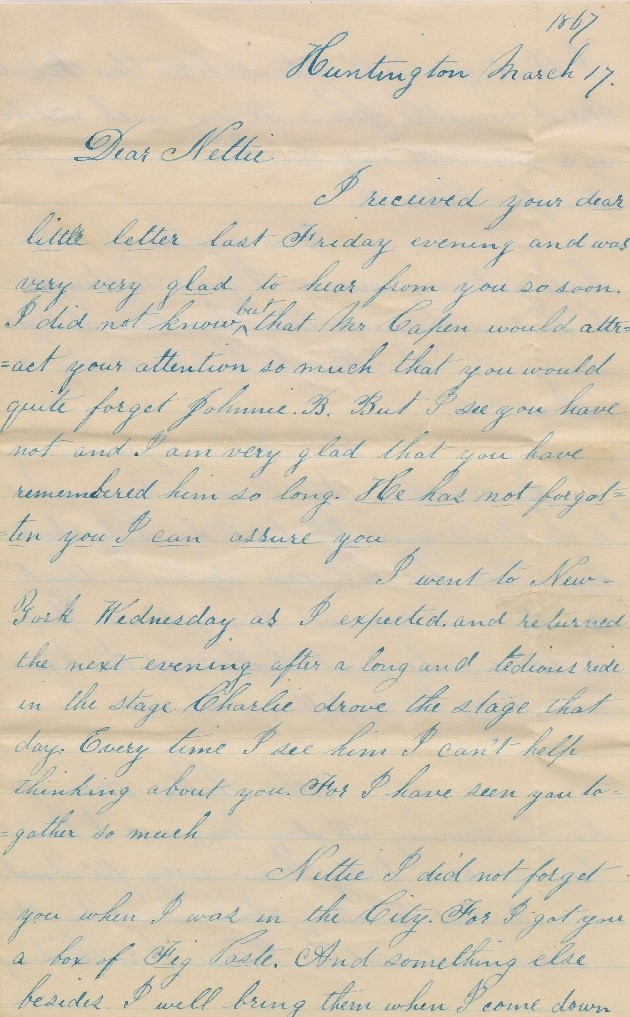
Below is an excerpt from a letter dated March 17th 1867 from John B. Scudder to Nettie White.