By Barbara LaMonica
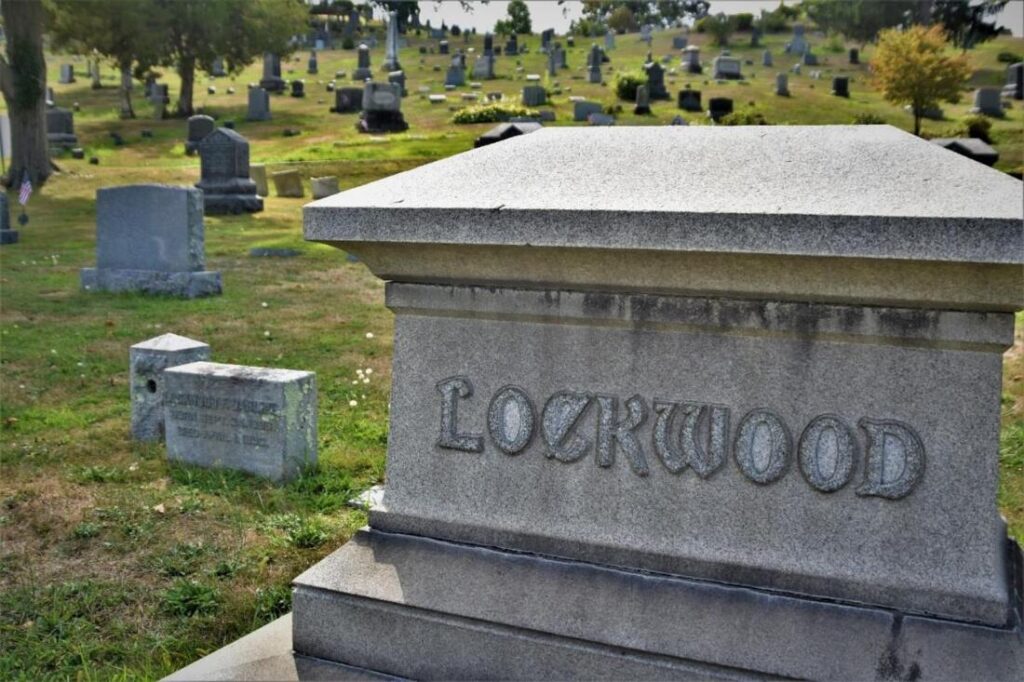
John Freeborn Lockwood was born in Newark in 1815, the son of David Lockwood who was a soldier in the War of 1812. John Lockwood came to Huntington as a young man, and later worked as a clerk for a mercantile house in New York City.
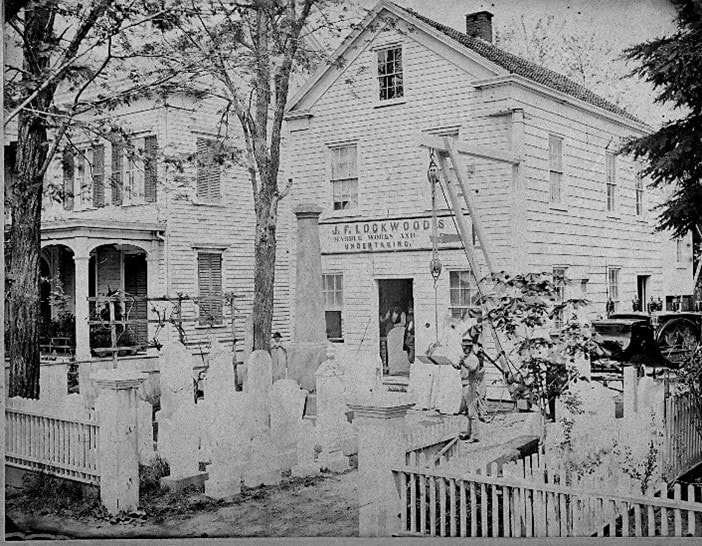
John Freeborn Lockwood was born in Newark in 1815, the son of David Lockwood who was a soldier in the War of 1812. John Lockwood came to Huntington as a young man, and later worked as a clerk for a mercantile house in New York City. In 1837, he returned to Huntington and established a marble working yard on Main Street, eventually adding undertaking to complement the tombstone carving. Before retiring in 1879, he admitted his sons to the business, and John F. Lockwood & Sons became the largest marble cutting and undertaking business on Long Island. When he died in 1898, the sons took charge of the business under the name H & C Lockwood. In 1900, Henry Lockwood bought out his brother Charles and took in his son Everett.
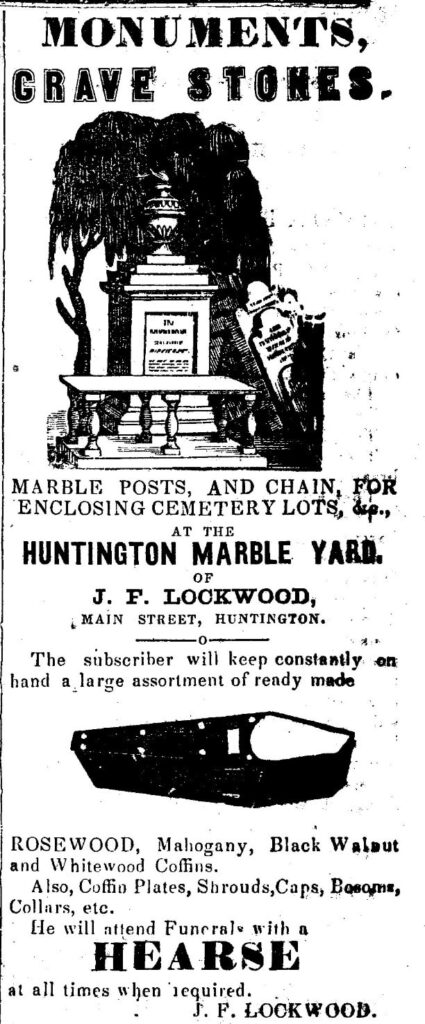
The Huntington Historical Society Archives holds the accounting records of the Lockwood Family Marble Works from 1837-1875. Lockwood was a precise record keeper and his entries provided detailed information on funerary practices. He often included sketches of designs he created for tombstones as well as exact measurements and costs, including who paid the bill. He listed all the products he provided; caskets, funeral clothes for the deceased, transportation to and from railroad stations as well as hearse and horse rentals. He also carved stone benches and marble posts to section off larger family plots. The account records and gravestone writing are often a treasure trove for family research. They can give information on exact dates, other family members, status in the community and even, in some cases, the circumstances of death.