SAMMIS, JR., SILAS (1731-1803). Associator. A prominent Huntington landowner, farmer, and revolutionary signatory, Silas Sammis was born in Huntington, New York Colony, on September 13, 1731, to Silas Sammis Sr. (1700-1779), a farmer, and Ruth Alexander Bryan (or, in some records, Ruth Platt Bryan (1703-1780)).
Silas’s paternal grandfather was also named Silas Sammis (Silas Richard Corey, 1676-1723) and his grandmother was Mary (or Martha) Cornish Corey. Silas’s great-grandfather, John Richard Sammis (1643-1694), was one of the early settlers in Huntington, and he was married to Abigail Salmon Corey. Birth and parentage information have been collected from cemetery records, August 2022 Daughters of the American Revolution genealogy research, an application for Membership in the Connecticut Society of the National Society of Sons of the American Revolution by Donald Stuart Sammis Jr. on September 18, 1951, Geneanet Community Trees Index, and Ancestry.com family tree information. Silas’s siblings were Jesse, Deborah, Phebe, Alexander, Ruth, and Mary. Years of Silas’s siblings’ births often differ slightly with each source referenced, but Silas Jr. was the eldest child.
On September 28, 1753, Silas was married to Ruth Scudder Rogers by Reverend Ebenezer Prime (see) in the First Church of Huntington. Ruth was born on June 15, 1736, in Huntington, the daughter of Hezekiah Rogers and Ruth Scudder. The Scudder family first emigrated from Kent, England, to the Massachusetts Bay Colony in the early 1600s.
Per “Long Island Surnames,” the database archives of Long Island Genealogy, as well as Geneanet Community Trees Index, Ancestry.com family tree information, and cemetery records, Silas and Ruth had several children: Phillip (1757-1823), Sarah (1759-1795), David Silas (1761-1820), Ruth (1763-1790), Content (1763-1832), Stephen (1765-1804), and Silas (1770-1824.) As is the case with Silas’s siblings, sources don’t always list the same children and same years of their births.
As detailed on Donald Stuart Sammis Jr.’s 1951 Sons of the American Revolution application, as well as in The Calendar of Historical Manuscripts Relating to the War of the Revolution, in the Office of the Secretary of State, Albany N.Y., Vol. I (1868), on May 8, 1775, Silas was one of 403 signers of Huntington’s Articles of Association – nearly all were citizens of the Town of Huntington – pledging allegiance to the Continental Congress. His father also was a signer. However, per the “Sammis Family History” genealogical online site brookenelson.com (2020), when Huntington was occupied by the British army after its triumph at the Battle of Long Island on August 27, 1776, Silas signed the Oath of Loyalty to the British Crown, as did almost all heads of household in Huntington, to avoid having their property confiscated by the occupiers. His name is listed on the “First List of Persons who Took the Oath of Loyalty,” in 1778, as reproduced in Charles R. Street’s compilation, Huntington Town Records, including Babylon, Long Island, New York 1776-1873, Volume III (1889.)
Although two of Silas’s sons, David Silas and Phillip, fought in the Battle of Long Island as privates in the First Regiment of Minutemen of the Suffolk County militia, as noted in Frederic Gregory Mather’s The Refugees of 1776 from Long Island to Connecticut (1913), Silas was forced by British occupation authorities, as a member of the Huntington Militia company of Captain Cornelius Conklin (or Conkling), starting on May 18, 1778, to build a fort at Lloyd’s Neck to protect loyalists and British troops; this information is also noted in Huntington Town Records 1776-1873, Volume III. The Huntington Town Records also note a May 12, 1777 appendix entry where Silas was certified to have been “twelve Days Rideing (sic) Wood & Provisions” for the Loyalist General Oliver De Lancey’s 2nd Battalion and was paid £7. 4s. On February 26, 1780, Silas was paid £1 for providing D. Lawler, the quartermaster of the 17th Dragoons, a British cavalry regiment, with 252 pounds of hay for the use of the regiment’s detachment that was escorting provision wagons to Lloyd’s Neck. Other appendix entries record that, in December 1778, Silas provided 400 feet of boards and carted a load of boards to Jericho; in October 1782, fresh hay was taken by Colonel Thompson; in July 1782, two horses were taken for nine days by Major Upham of Thompson’s Dragoons (King’s American Dragoons), a Loyalist cavalry unit then stationed in Huntington; and a saddle was taken by the same Major Upham who promised to return it, but never did.
Silas certainly did engage in activity supporting the British, as noted in the August 2022 Daughters of the American Revolution genealogy research. As written in the “Sammis Family History” online site, it was only by “threats and fines were the British able to muster this militia to perform any local duties” since the residents of Huntington favored independence to continued British rule. Silas was never paid for his stolen property or the compulsory labor he was forced to provide the British army.
For example, on December 28, 1777, Silas submitted a claim of $150.10 for reimbursement for forced service to King George, and imprisonment and false arrest, as well as sheep, hogs, timber, carting services, “for working upon forts,” and for money and goods stolen from him, as derived from Huntington Town Records and reported by Jeffrey I. Richman in Huntington Historical Society’s online article, “Huntington During the Revolutionary War” (2026) and the “Sammis Family History” online site. Once the war ended, a Board of Commissioners was established to ensure compliance with the Treaty of Paris to pay such claims, but the board disbanded without authorizing any payments.
From the American Gazette, May 23, 1782, as reproduced in Henry Onderdonk Jr.’s Revolutionary Incidents of Suffolk and Kings Counties; with an Account of the Battle of Long Island, and the British Prisons and Prison-Ships at New-York (1849), Silas was one of the workers listed to apply to receive payment for delivering hay and straw to Lloyd’s Neck for the use of British troops, dated March 27, 1782. Shortly before the British army left Long Island, Silas was jailed (“put in provost”) but later acquitted for robbery (and, thus, escaping a fine and being lashed on the back 1,000 times with nine knotted cords, known as a cat o’ nine tails), on September 2, 1783, as specified in Huntington Town Records (November 1783.) It was also recorded, on November 5, 1782, that Silas worked for 15 days as a carpenter, using two of his wagons. It appears that his son Philip did similar carpentry work over four days. They both worked on the infamous Fort Golgotha, built on the site of Huntington’s Old Burying Ground, where Silas’s parents were already interred – his father in 1779 and his mother in 1780 – and near the Presbyterian Church where Silas was married, destroyed by the British who used its timber in the fort’s construction.
Although the above-cited records don’t specify if the above incidents involved Silas Jr., or to his father, also named Silas Sammis, the elder Silas would have been in his late 70s during the war years, dying in 1779, and, understandably, too old for most of the specified work.
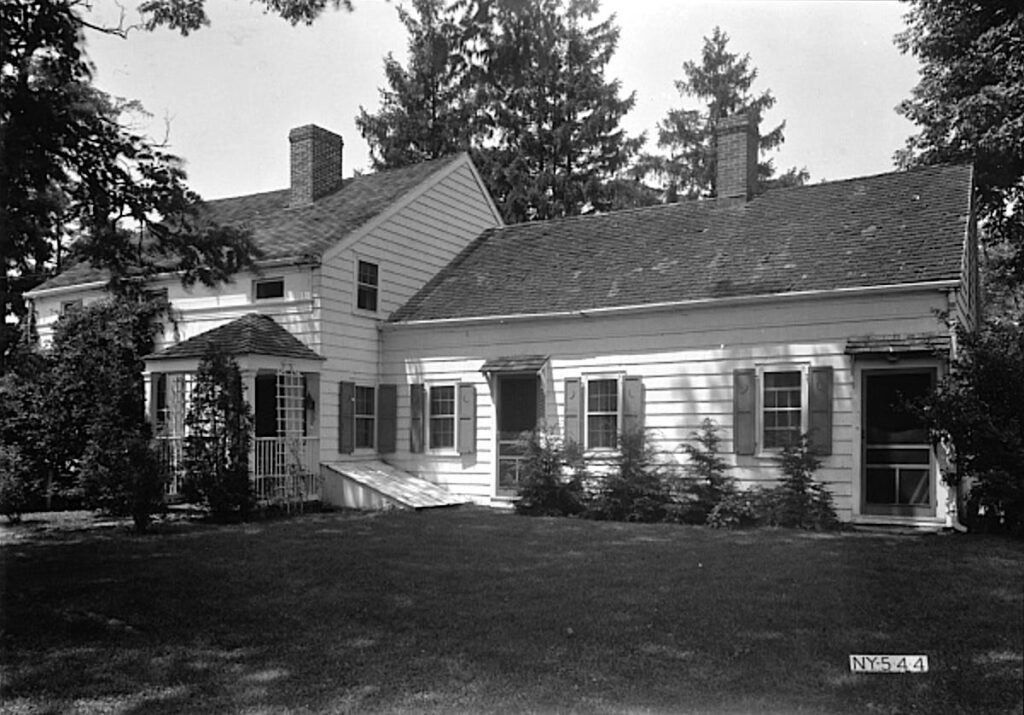
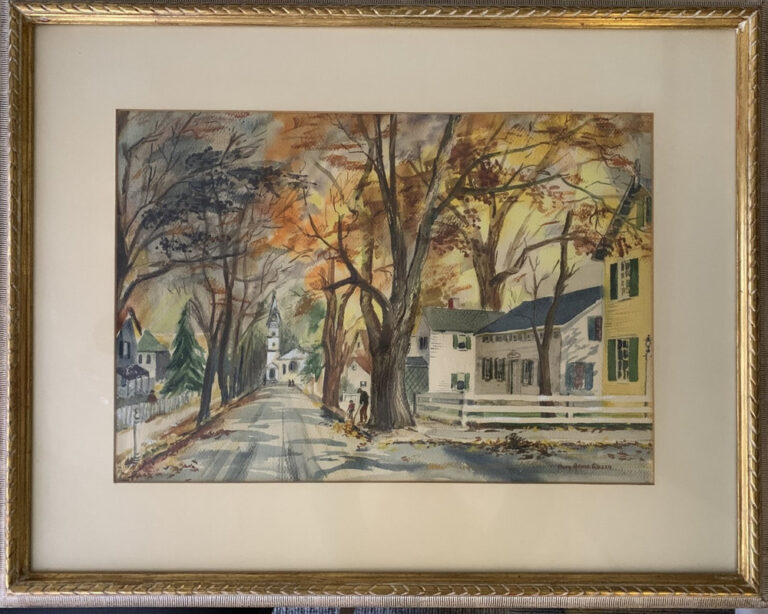
Huntington Town Records show, under a registry tracking property and woodland belonging to the local inhabitants serving in Captain Cornelius Conkling’s militia, surveyed on July 11, 1780, that Silas, who had inherited his father’s farm, owned 40 acres (20—2.) At the close of the Revolutionary War, in 1782, Silas’s property was assessed at £100. His home, known as the Silas Sammis House, it was built about 1730 and is still standing. On April 18, 1791, town records show that the Presbyterian congregation in Huntington proposed to rent the parsonage lot adjoining Silas’s homestead for pasturage.
After the Revolutionary War, as documented in Huntington Town Records 1776-1873, Volume III, Silas was appointed to many positions in the town administration, such as collector, overseer for the poor, and constable. He was repeatedly selected as town trustee through the 1780s, for one-year terms in 1784, 1785, 1789, and 1790, as reported in a presentation on Huntington’s Legal History by town clerk Andrew Raia and town attorney Deborah Misir in 2023. At a May 2, 1780 town meeting, he was elected an Overseer of the Poor. This position was responsible for the care and maintenance of indigent residents in Huntington and records show that Silas continued in this capacity in 1784, and 1797-1799. And in December 1781, he was listed as a member of the town’s protective “Thursday Night Guard.” At an August 22, 1785 town meeting, Silas was among a group of four men chosen to “settle the line” between Huntington and Oyster Bay.
The 1790 United States federal census records Silas living in Huntington, with six other household members, among them two free white males 16 and over; two free white males under 16; and two free white females. By the time the 1800 federal census was recorded, Silas, still residing in Huntington, was living only with his wife. An assessment of Real and Personal Estate Tax in New York, 1799-1804, shows that Silas owned a house and land valued at $1,000. His personal estate was $76.00 and the amount of tax was $1.07.
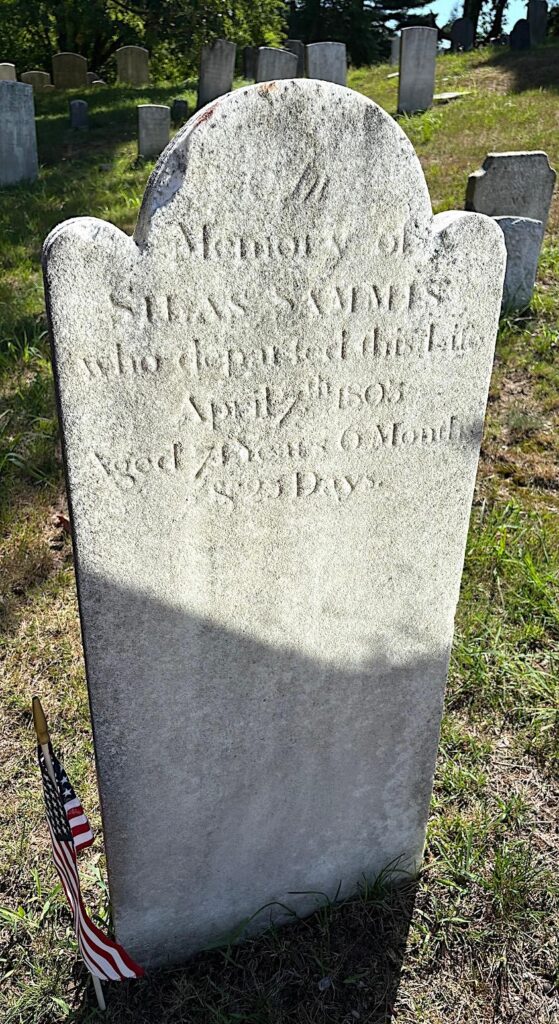
Ruth Sammis, Silas’s wife, died in Huntington on April 8, 1788. According to his headstone and genealogical records, Silas passed away in Huntington on April 7, 1803. Both are interred in Huntington’s Old Burying Ground, along with their parents, Silas’s grandfather, and many of their siblings and children.