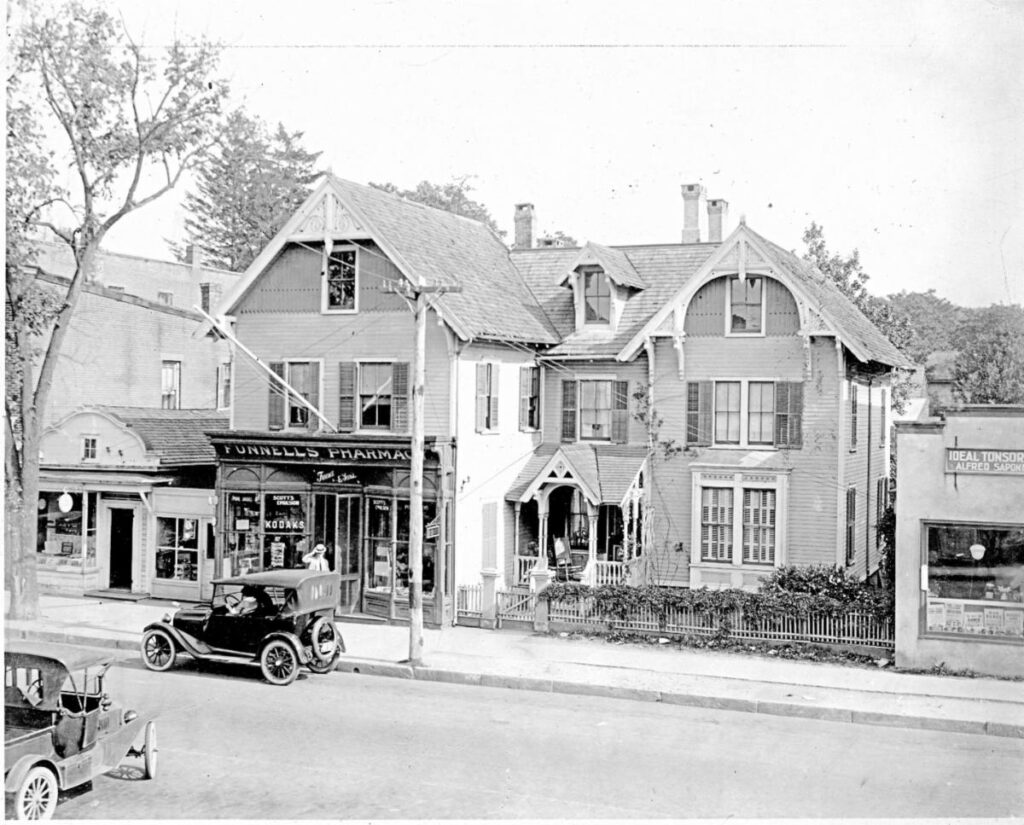
January 12th is Pharmacists Recognition Day and January 19th is the anniversary of the passage of the 18th Amendment to the Constitution in 1919, or Prohibition. The relation between the two is quite interesting.
Contrary to common belief, the 18th Amendment to the Constitution did not prohibit the consumption of alcohol. If you owned a generous liquor cabinet in your home, you were permitted to drink at home or at a friend’s house. Besides storing liquor at home, you could transport it from an old residence to a new residence. The bill only made it illegal to manufacture, import, and distribute alcohol, and there were exemptions for religious, industrial, and medicinal purposes (as doctors had often prescribed alcohol as a tonic for a variety of complaints from anxiety to influenza).
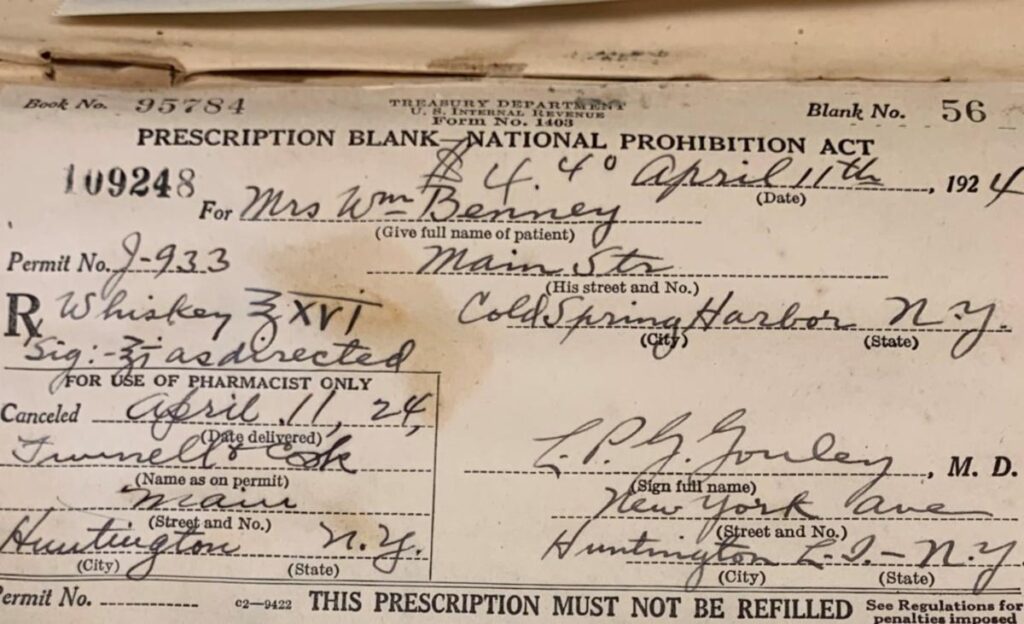
Since alcohol was permitted for “medicinal” purposes, doctors could proscribe and pharmacists could fill prescriptions for alcohol or tonics with alcohol content. During the prohibition period, (the law went into effect in 1920 and was repealed in 1933) the number of registered pharmacists nearly tripled in New York state as this became a popular way to obtain liquor. With a physician’s prescription, patients could legally buy a pint of hard liquor every ten days. Prohibition provided a booming business for pharmacies. For example, Walgreens grew from approximately 20 outlets in 1919 to over 500 by 1929.
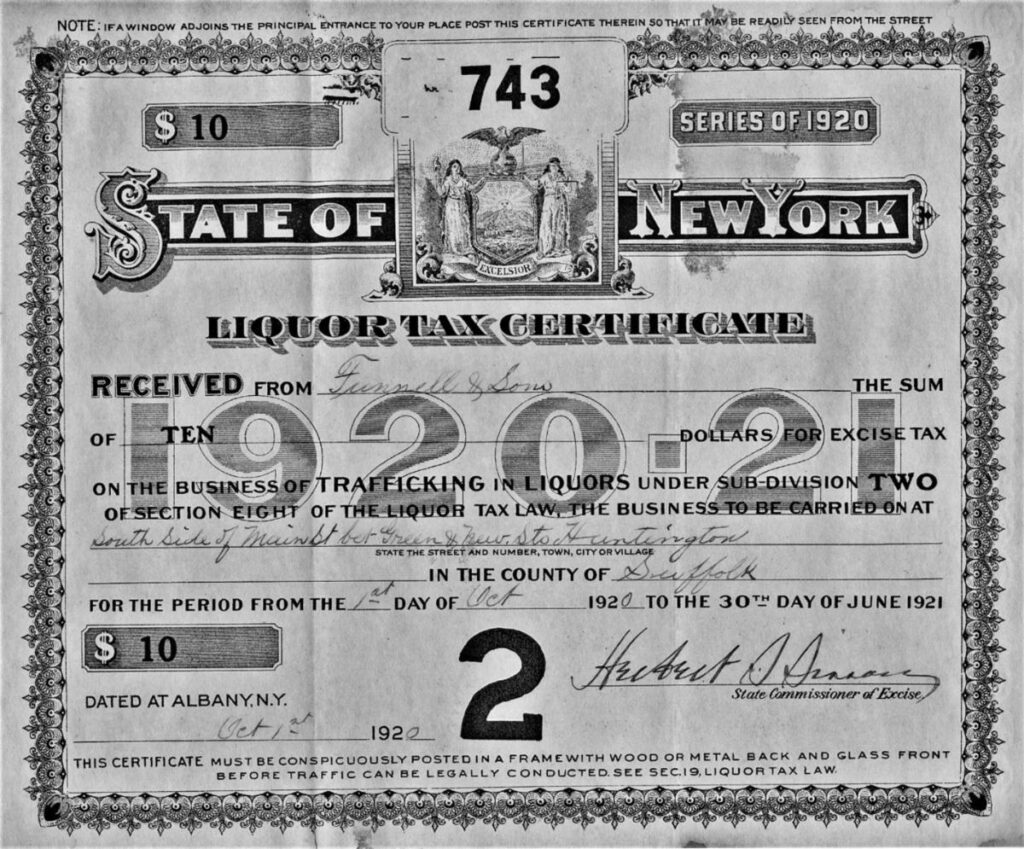
Below are some illustrations of Liquor Tax Certificate, and prescriptions from Funnell’s Drug Store, the first pharmacy in Huntington, founded in 1853. Funnell’s was on the south side of Main Street between New and Green Streets.