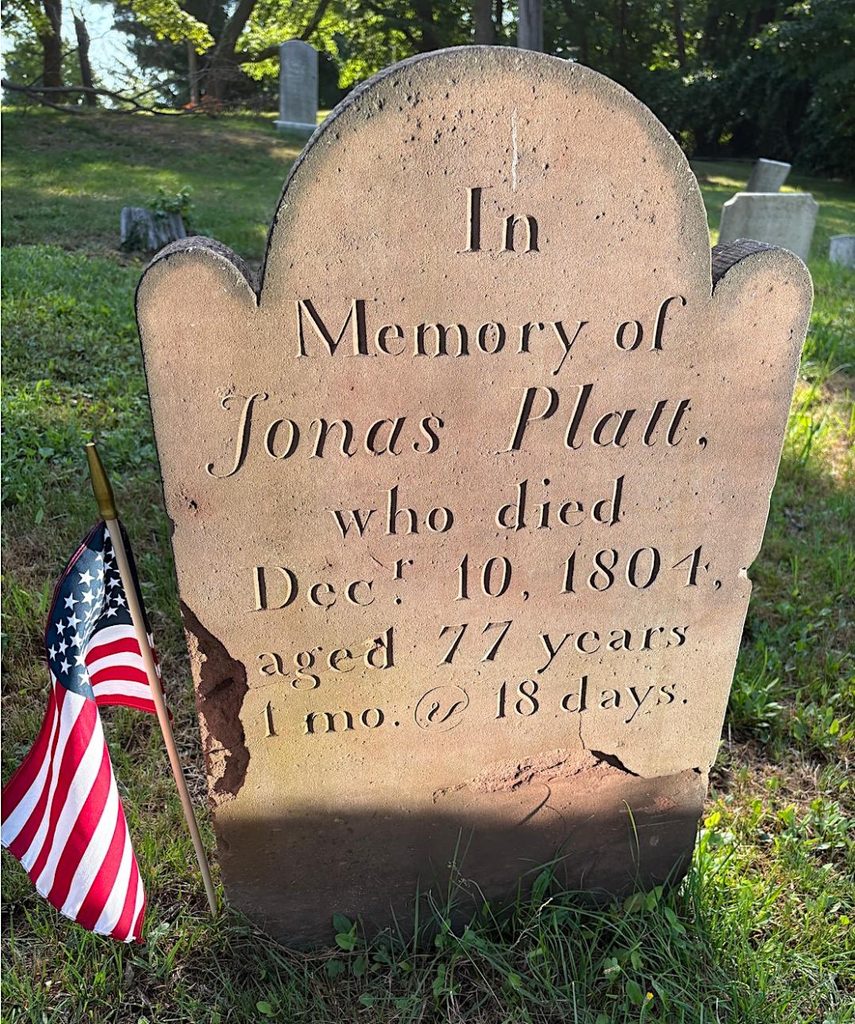
PLATT, JONAS (1727-1804). Signatory of Huntington’s 1775 Articles of Association. As per the Long Island Genealogy Data Base, Jonas was born on October 22, 1727 in Huntington, Suffolk County, Long Island, New York. His parents were Amos Platt (1704-1771) and Zerviah Whitman (1705-1744). Interestingly, Connecticut Town Birth Records, pre-1870, lists the birth of a Jonas Platt on October 9, 1727 to Obediah and Mary in Fairfield, Connecticut. However, on The Empire State Society of the Sons of the American Revolution Supplemental Application, Jonas’s descendant, Reginald Rogers, confirms that Jonas was born in Huntington, Long Island, but records his birth as October 13, 1727.
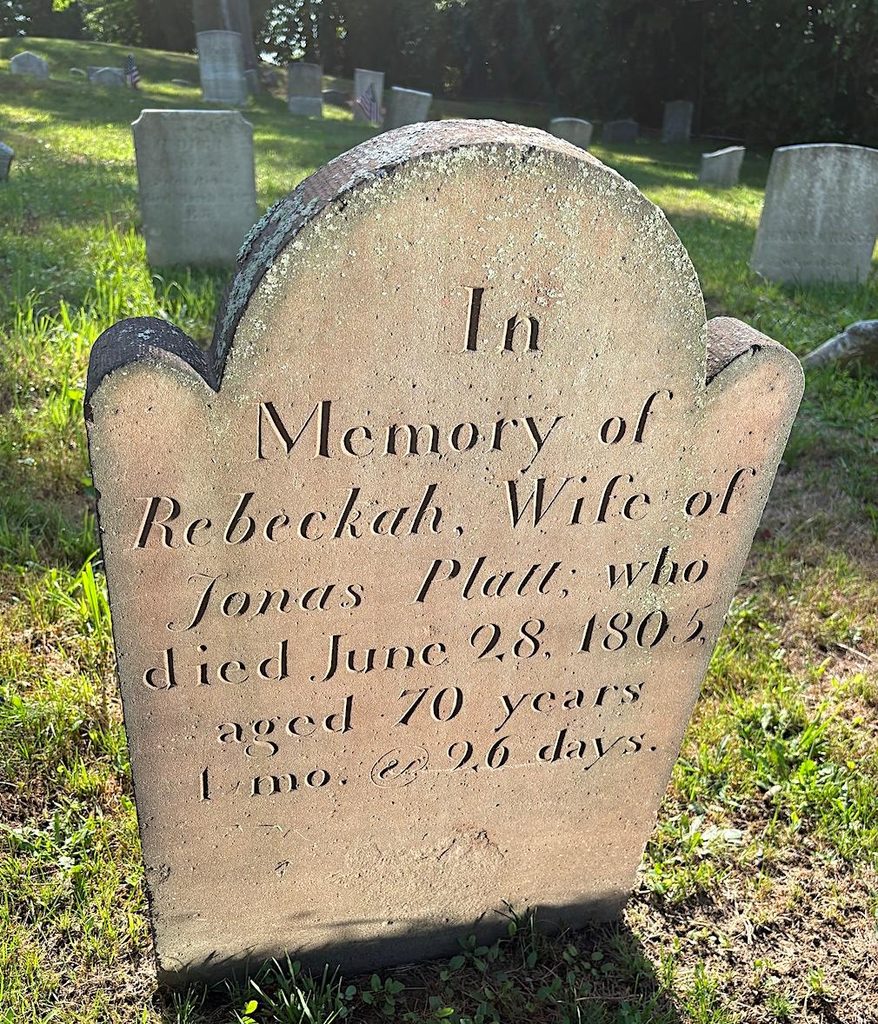
According to data listed on Find A Grave, Jonas was baptized on December 3, 1727. He had three younger siblings, Zerviah, Mary, and Zebulon. Mary passed away at the age of four when Jonas was about twelve years old. Jonas and Rebecca (Rebeckah) Bennett (1735-1805) were married on December 12, 1754. As per the Long Island Genealogy Data Base, Reverend Ebenezer Prime (see) of the First Church in Huntington officiated the ceremony. This database records that the couple had two daughters, Rebecca (Rebeckah) and Judith. However, according to his Abstract of Wills, the couple’s children also included Amos, Judah and Surviah (Luviah?).
In The Refugees of 1776 from Long Island to Connecticut, Frederic Gregory Mather lists Jonas among the many signers of the Huntington Articles of Association of May 8, 1775. On May 8, 1775, 403 men, most of them Huntington residents (a few were from Islip), “shocked by the bloody Scene” that had occurred just weeks before at Lexington and Concord in Massachusetts, where patriot Minutemen and British regulars had engaged in a bloody armed struggle, put their signatures on Huntington’s Articles of Association. Only 37 Huntington residents, either Loyalists or those wanting to stay out of the fray, refused to sign. The Articles noted that the signers affirmed their “Love to our Country,” agreed “to whatever Measures may be recommended by the Continental Congress; or resolved upon by our Provincial Convention, for the Purpose of preserving our Constitution, and opposition to the Execution of the several arbitrary, and oppressive Acts of the British Parliament,” and prayed for “a Reconciliation between Great-Britain and America.” The actions of these associators were seen by both patriots and the British as a step towards rebellion. The fact that these men signed these Articles, placing themselves in danger of British retaliation, including imprisonment, seizure of their property, and exile from Long Island, is proof of their patriotic service.
In his March 29, 1928 submission to The Empire State Society of the Sons of the American Revolution (SAR) Supplemental Application, Jonas’s great-great-great grandson, Reginald Rogers, affirms that Jonas’s service during the war was his patriotic signing of the Articles of Association by referencing Mather’s documentation on page 1063 from The Refugees of 1776 from Long Island to Connecticut.
After the war, Jonas and his family continued to reside in Huntington. As per the 1790 United States federal census, his household consisted of six members. The 1800 United States federal census, which erroneously transcribed his name as Janas), records seven members in his household. As per the Long Island Genealogy Data Base, Jonas died on December 10, 1804 in Huntington, Long Island. According to the Suffolk County, New York Probates Abstract of Wills, Jonas named his wife Rebeckah, daughters Rebeckah and Mary, Judah and Surviah (Luviah?) and son, Amos, as heirs. The probate took place on April 1, 1805. Jonas and Rebeckah are interred at the Old Burying Ground in Huntington.