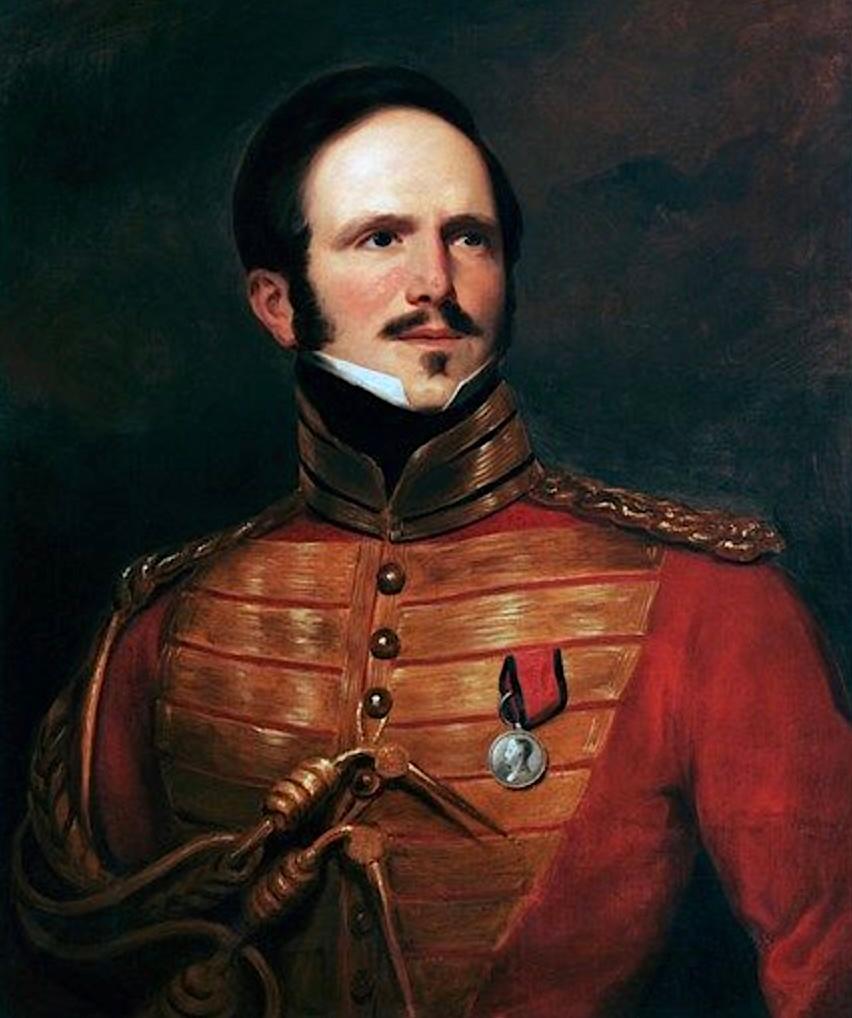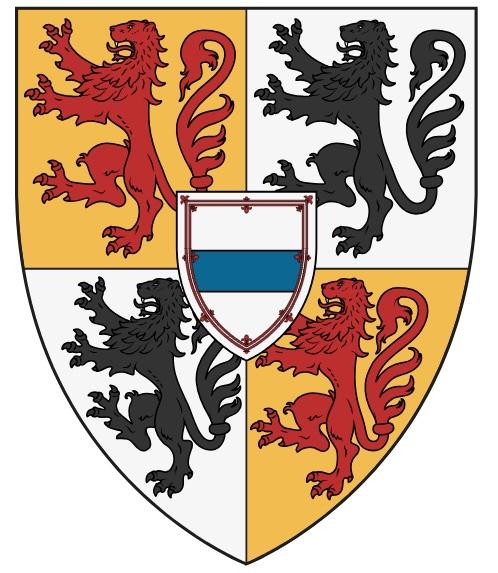
WEMYSS , JAMES (1748-1833). Lieutenant colonel, British Army. Although he fought fiercely against the independence of the United States, James Wemyss (pronounced weemz) chose later in life to return to the newly-independent United States, spending the last years of his life in Huntington.
James was born in Edinburgh, Scotland, Kingdom of Great Britain, on November 7, 1748 (October 27, 1748, per the old Julian calendar, which was in use in Britain until the Calendar (New Style) Act of 1750), the son of James Wemyss and Elizabeth Wylie, both born in 1721. According to the Geneanet online database, his paternal grandparents were Alexander Wemyss and Elizabeth Welsh, both born in 1702. His sisters were Elizabeth (1748-1783) and Janet, born in 1751, per family tree records.
James was baptized on July 19, 1749, in Ceres, a village in Fife, Scotland. At 18 years of age, in 1766, he purchased an ensign’s commission in the 40th Regiment of Foot, a British infantry regiment, and embarked on a military career in His Majesty’s Army, according to Gene Procknow’s article “Benedict Arnold and James Wemyss: Similar Experiences Contrasting Legacies” (July 1, 2019) in the online website Journal of the American Revolution, https://allthingsliberty.com/2019/07/benedict-arnold-and-james-wemyss-similar-experiences-contrasting-legacies/. In 1767, James purchased a lieutenancy and, in 1771, a captaincy, commanding a battalion of grenadiers.
On June 24, 1770, according to the section concerning James Wemyss entitled “Friends, Comrades and Enemies” (2020), on the losthistory.net website at https://losthistory.net/bansite/friends/wemyss.html, James married Rachel (or Rachael) Wemyss, daughter of William Wemyss of Cuttlehill, Fife, Scotland, in Edinburgh. Rachel may have been James’s first or second cousin. Their son Alexander was baptized on August 21, 1771, in Aberdour Parish, Fife.
James arrived in Boston, Massachusetts in June 1775, during the Siege of Boston, and commanded a battalion of grenadiers there. In 1776, serving as an aide-de-camp to General James Robertson, Wemyss was present at the Battle of Long Island Battle of Brooklyn), August 27, 1776, the first major battle of the American Revolution after the 13 colonies separated from Great Britain with their Declaration of Independence. At that battle, British forces routed General George Washington’s Continental Army in the largest engagement of the American Revolution and came close to ending the Revolutionary War right there in Brooklyn.
Several selected writings of then Major James Wemyss about this battle, transcribed by Jared Sparks, historian and former president of Harvard University in the 18th century, are compiled at the researchingtheamericanrevolution.com website. These candid and no-holds-barred comments seem to be very much in character for James. For example, in the entry “Wemyss’s Evaluation of the Sir William Howe’s Performance in and around New York City during the 1776 Campaign,” he brought up misconduct allegations against General William Howe and his performance. He, like other British officers on the scene, blamed Howe for allowing Washington’s forces to escape from Brooklyn to New York. “By this fatal error, a beaten and panic struck enemy were allowed to escape in the night to New York, without the smallest molestation.” This successful escape by the Americans helped repair low American morale, according to Britannica.com’s online entry about that battle. James went on to complain further about Howe’s unfitness for leading in a war, as well as the war in general:
To the incapacity and misconduct of Sir Wm. Howe, in the above circumstances as well as in many others and perhaps unequalled in the history of modern warfare, at the beginning of a conflict with a divided people, altogether unprepared for a contest with the Mother Country may be ascribed in no small degree the issue of a war begun and conducted without ability or system, although with great Bravery; in which every Department were allowed to vie with Each other in the most effectual means of making immense fortunes; by carrying a successful war on the Treasury of their Country.
The next year, James served under Lieutenant-General William Tryon during the Battle of Ridgefield, Connecticut, and was slightly wounded. He later commanded the Queen’s Rangers, a regiment composed of colonial loyalists, taking the provincial rank of major, and led them at the Battle of Brandywine, Pennsylvania, where he was again wounded. Wemyss’s Rangers seem to have earned a stellar reputation, according to a notice printed in The Pennsylvania Ledger of December 3, 1777: “No regiment in the army has gained more honour this campaign than Major Wemys’s [sic] Rangers: they have been engaged in every principal service, and behaved nobly, indeed most of the officers have been wounded since we took the field in Philadelphia.” Because he was not promoted, James resigned this command, but in August 1778, he became a major in the 63rd Regiment of Foot, serving in and around Stony Point, New York.
James was then transferred to South Carolina and was at the Siege of Charleston in 1780. During that siege, James illustrated a prickly temperament, an inability to get along with fellow officers. He brought up Captain Hayes St. Leger, a subordinate officer, to court martial for behavior termed mutinous and disrespectful. St. Leger was later acquitted of mutiny and found guilty of disrespect, for which he was reprimanded in public, as detailed by Lieutenant-General Banastre Tarleton in his A History of the Campaigns of 1780 and 1781 in the Southern Provinces of North America (1787.) In the section devoted to James Wemyss on the website Losthistory.net, it is written that an officer who was present at the time remarked that the mutiny charges were ridiculous and, later that year, General Charles Cornwallis transferred another officer out of the 63rd Regiment because he and Wemyss were “not on very good terms.”
Afterwards sent to Georgetown, South Carolina by General Cornwallis to reinstall British authority, James carried out expeditions against Francis Marion, the “Swamp Fox.” William Dobein James, who served with Marion and who wrote a biography of him, Swamp Fox: General Francis Marion And His Guerilla Fighters Of The American Revolution, described Wemyss’s actions in South Carolina:
The country through which Wemyss had marched, for seventy miles in length, and at places for fifteen miles in width, exhibited one continued scene of desolation. On most of the plantations every house was burnt to the ground, the negroes were carried off, the inhabitants plundered, the stock, especially sheep, wantonly killed, and all provisions, which could be come at, destroyed.
Under James’s command, the British forces attempted a surprise attack at Fishdam Ford against an encampment of patriot militia around one o’clock in the morning of November 9, 1780. The attack failed because of heightened security in the Americans’ camp and because James did not wait until dawn to attack. Wemyss was captured and imprisoned, with wounds so severe – musket balls penetrated both of his legs and one shoulder, as detailed in Gene Procknow’s article in the Journal of the American Revolution website – that he had to end his wartime field service, possibly having lost the use of one arm. James eventually held administrative roles and carried dispatches. However, even in defeat, his fellow officers praised him, with General Cornwallis writing to Banastre Tarleton that James’s 63rd Regiment “behaved vastly well,” as found in The History of the Late 63rd, West Suffolk, Regiment (1884.) His superiors thought highly of his military performance. In a letter written by General James Robertson to Field Marshal Jeffery Amherst on May 8, 1781, included by Milton M. Klein and Ronald W. Howard in 1983 in The Twilight of British Rule in Revolutionary America: The New York Letter Book of General James Robertson, 1780-1783, he noted: “No man knows better what has been done or what may be expected to be done – his reports may safely be relied on.”
James became known as the “Second Most Hated British Officer in the South,” as termed by General Banastre Tarleton, the most hated and the leader of the British Legion during the southern campaign of the war. In a November 12, 1780 letter from American Brigadier General H.W. Harrington to British Lieutenant Colonel George Turnbull, included in The Cornwallis Papers: The Campaigns of 1780 and 1781 in The Southern Theatre of the American Revolutionary War, Volume III, edited by Ian Saberton (2010), Harrington referred to Wemyss’s raid into the Pee Dee region of South Carolina, citing the “wanton cruelties committed on Peedee by Major Wemyss” and adding that “Major Wemyss here played the petty tyrant.”
In 1780, during his campaign in South Carolina, James reported that he had burned houses and plantations and executed deserters and militia defectors. He noted that he regularly destroyed property suspected of use by patriot rebels. He earned his dark reputation by burning suspected rebel homes, hanging those deemed to be traitors to the Crown and destroying local churches, which he referred to as “sedition shops,’’ as Harry Schenawolf wrote in his September 6, 2024 article, “Major James Wemyss: Among Most Hated British Officers, found in the online website Revolutionary War Journal at revolutionarywarjournal.com/major-james-wemyss-among-most-hated-british-officers/.
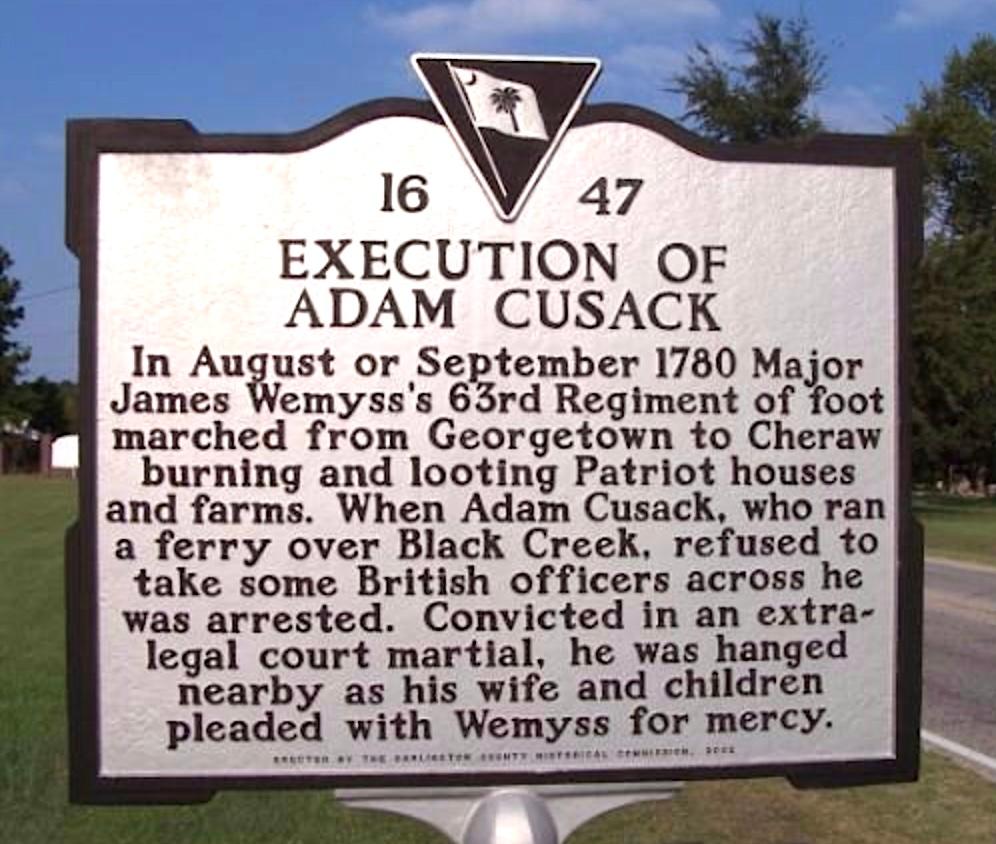
In one instance, a patriot named Adam Cusack was executed under James’s orders. A historical roadside marker, in Society Hill, South Carolina, erected by the Darlington County Historical Commission, memorializes this unfortunate event. When Cusack, a ferryman, refused to transport British officers across Black Creek, a tributary of the Savannah River, he was arrested, court martialed, and hanged while “his wife and children pleaded with Wemyss for mercy.” After Dr. James Wilson pled in vain that Cusack’s life be spared, British forces burnt Wilson’s house in retaliation. Wemyss is also thought to have ordered the burning of a church in Indiantown, South Carolina, as noted in Banastre Tarlton’s History of the Campaigns of 1780 and 1781 in the Southern Provinces of North America. General Cornwallis wrote of Wemyss that though “he was in the late instance a mad trooper, he is certainly in the main a sensible and useful officer.”
Conversely, in James’s favor, as also written by Harry Schenawolf in his September 6, 2024 online article in Revolutionary War Journal, “historian Gene Procknow shed some light on Wemyss’s callous legacy by writing, ‘much of Wemyss’s reputation comes from early 19th century American historians who sought to burnish the reputations of the equally brutal Rebels and to demonize the British. Probably, Wemyss’s behaviors were no different than Rebel commanders during this period of intense neighbor on neighbor civil war.’”
According to the Revolutionary War Journal of September 6, 2024, revolutionarywarjournal.com/major-james-wemyss-among-most-hated-british-officers/, sums up James Wemyss’s service as follows:
. . .for most of the war, Wemyss did not have the opportunity to wage a personal, savage, and sadistic retribution against those who supported his enemy. Not until early September, 1780. And when turned loose for barely a short two weeks, he made his horrific mark on the war. But for whatever goal Wemyss’ superiors expected, the avenging hellhound achieved the opposite, becoming Francis “Swamp Fox’s Marion’s most successful recruiting officer.
James wrote extensively regarding the British army, where he shared his frank opinions of its officers and their campaigns. Later in life, he “penned a document harshly disparaging over fifty British officers including the three British Commanders-in-Chief.” He described the officers candidly and bluntly: Major General Pattison was “vain, pompous and useless;” Major General Cleveland “an old officer, good for nothing.” These are recorded in Assessment of the Abilities of the British General Officers During the American Revolution in the online website “Researching the American Revolution” at researchingtheamericanrevolution.com/british-maj-james-wemyss-manuscripts/.
On January 4, 1781, General Cornwallis reported that James was still a prisoner; he was probably exchanged sometime that month since he was soon sent to New York to deliver dispatches. As recounted by Harry Schenawolf in his September 6, 2024 online article in Revolutionary War Journal, James remained in New York until May 1781 when General Henry Clinton, then commander-in-chief in North America, sent James to England with dispatches and to convalesce. Landing in London on June 28, 1781, James then left for Scotland, where he arrived soon before his wife’s death on August 1, 1781, at Bucclyvie-house, in Fife, as recounted by Harry Schenawolf, genealogical records, and on losthistory.net. After this sad event, and perhaps driven by it, James, carrying dispatches, returned to New York and his army duties.
Appointed deputy adjutant general in the southern theater, James negotiated prisoner exchanges in South Carolina during the British evacuation and consolidated British forces along the coast from remaining outposts. He assisted in the general evacuation of Charleston and all southern forces and returned to New York on January 12, 1783, as Harry Schenawolf wrote in his online article in Revolutionary War Journal.
After finally receiving a promotion to lieutenant colonel and formal command of the 63rd Regiment of Foot (although he had been acting as the unit’s leader for a decade), James returned to England. He sold his commission on July 31, 1789, due to poor health but also bitterness over watching inferior and junior officers promoted over him. As detailed in Gene Procknow’s article in the online Journal of the American Revolution, he bought an agricultural estate in Scotland for 10,000 pounds, funded solely by his family’s money and officer’s wages accumulated during the war, but the property failed financially. According to Schenawolf, James remarried and, due to worsening finances, James and his second wife emigrated to America – a country whose independence he had fought so hard against but where living was less expensive than in Britain – sometime between 1795 and 1799. In the New York, New York Ward Jury Census, 1819, James is listed as being 71, with the occupation of “gentleman,” residing at 7 Frankfort Street.
Soon settling on a small farm in Huntington, Long Island, James lived mostly in obscurity, scraping out a meager living, augmented by a British military pension in 1825 that was renewed several times, per the losthistory.net website. In 1832, also according to losthistory.net, he wrote about his religious beliefs. Having maintained a formal connection to the Presbyterian Church, James, in his later years, turned to Unitarianism as “a private philosophy.”
In the years after the Revolutionary War, Wemyss continued to suffer from his battlefield wounds. In 1832 James suffered a stroke, which prevented him from using his left side and affected his speech. In a letter to Earl Grey, Prime Minister of the United Kingdom, on November 25, 1832, he wrote:
I . . . flatter myself with a belief that a great and generous nation will not allow an Old and faithfull [sic] Servant to perish in misery and want in a foreign Country and request that whatever relief y. L [your Lordship] may think necessary to grant, I may be authorized at the same time to draw for the amount, being in great want of Clothing, and [every] necessary of life to protect and support a . . . helpless Old Man from the rigor of an american Winter.
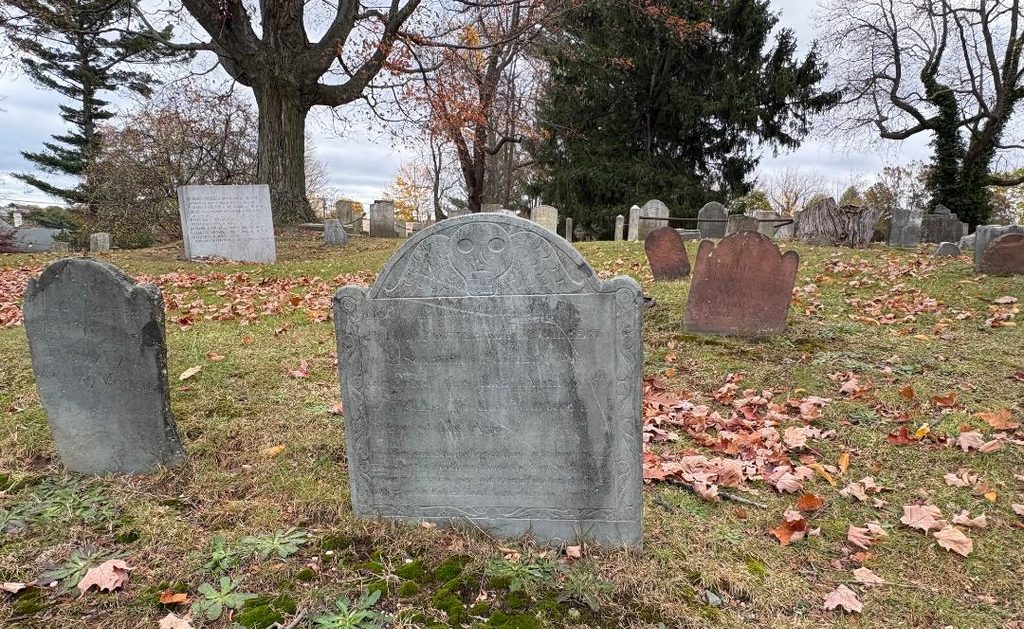
James died on December 17, 1833, and was interred at Huntington’s Old Burying Ground on Main Street in Huntington Village. Josephine C. Frost, in her 1911 compilation of cemetery inscriptions there, recorded his epitaph: “Lt. Col. James Wemyss, a native of Edinberg (sic), Scotland, formerly a distinguished officer in the service of his country, died at Huntington, L.I., Dec. 16, 1833. Age 85 years.” That gravestone is no longer visible.