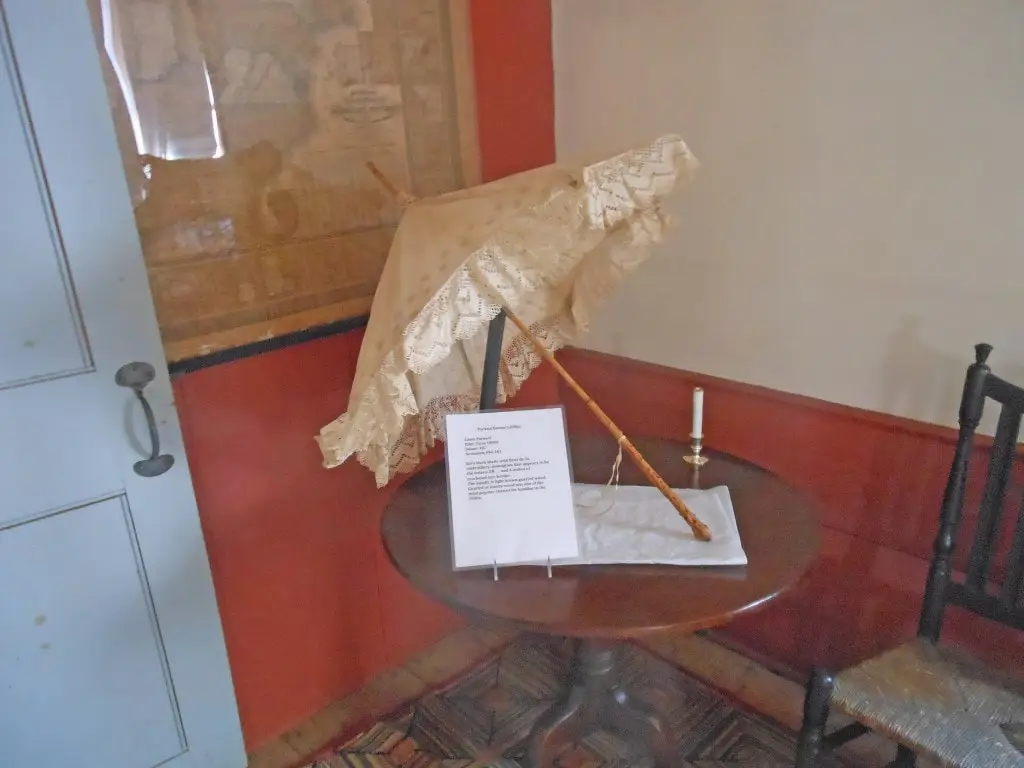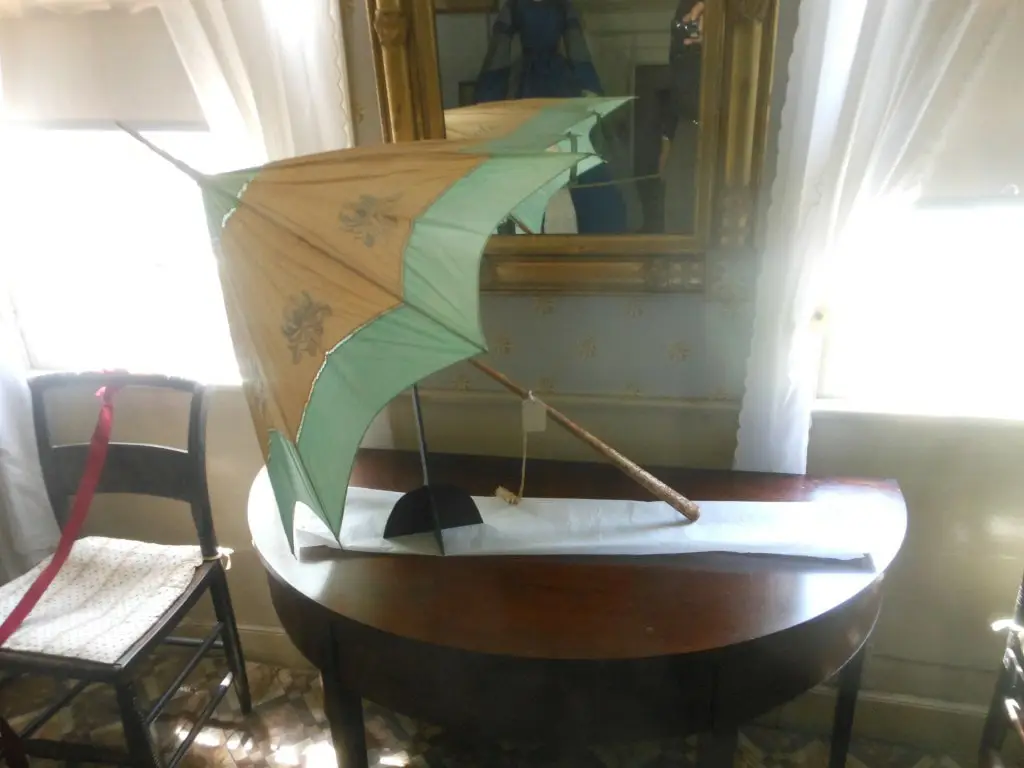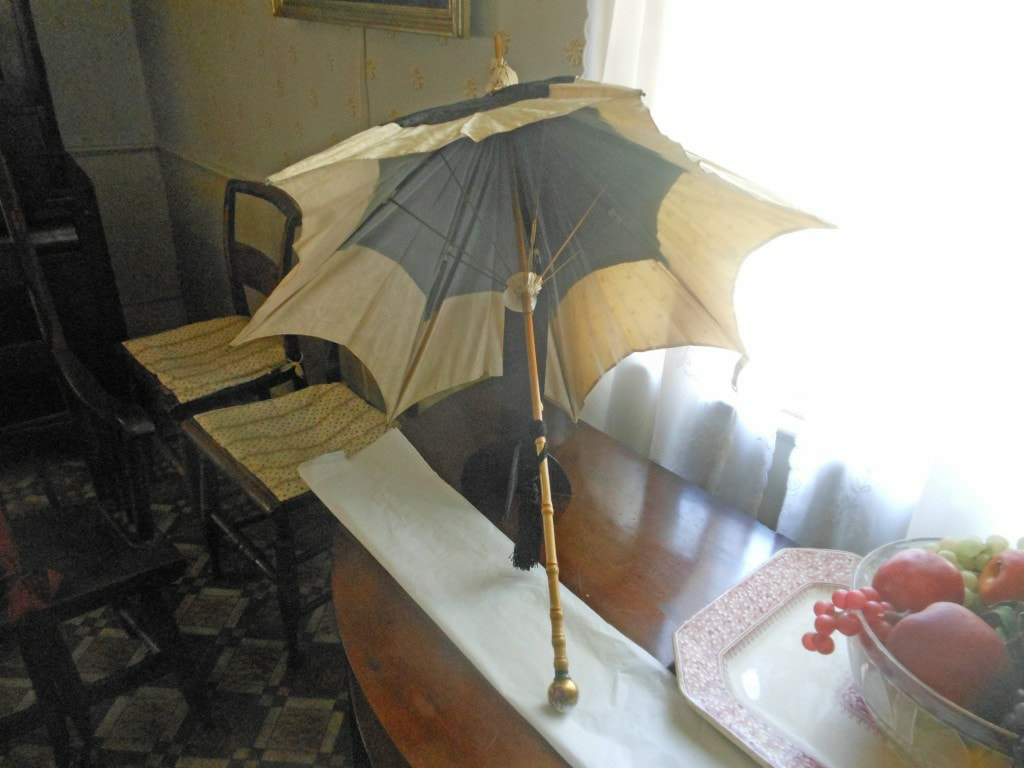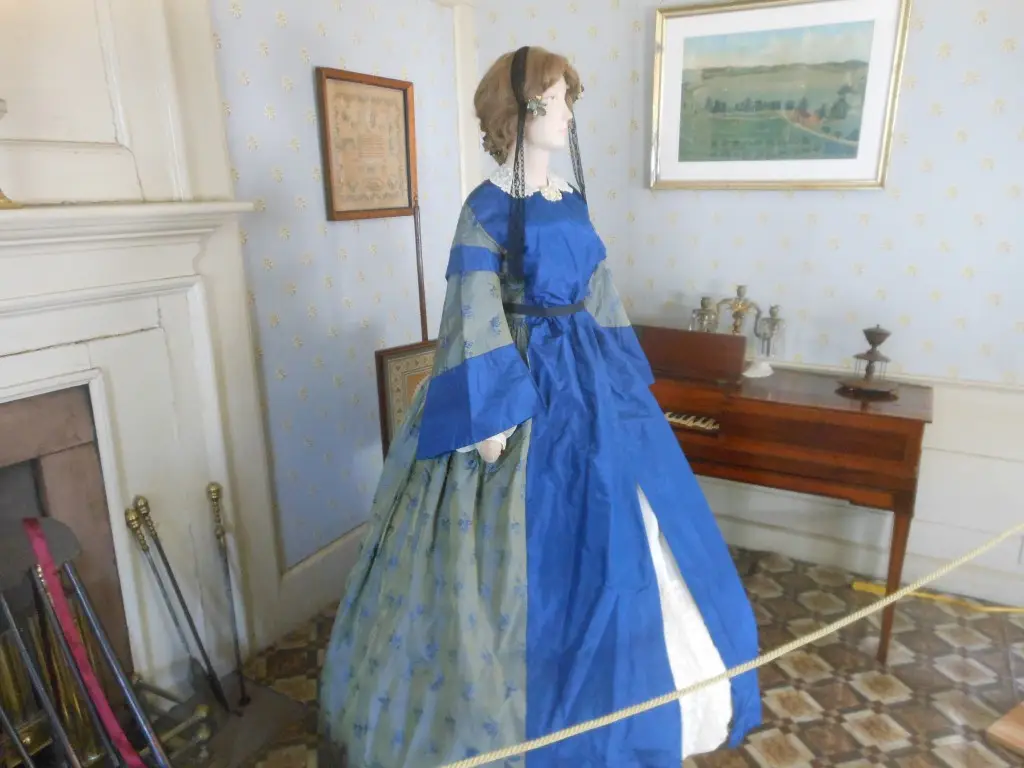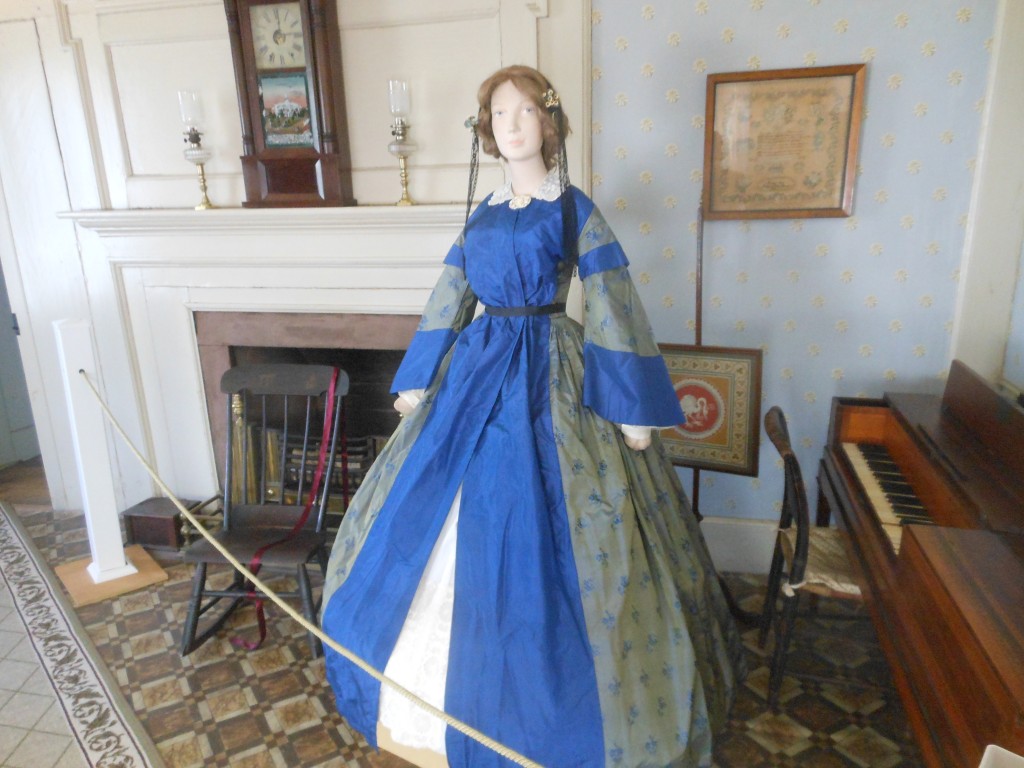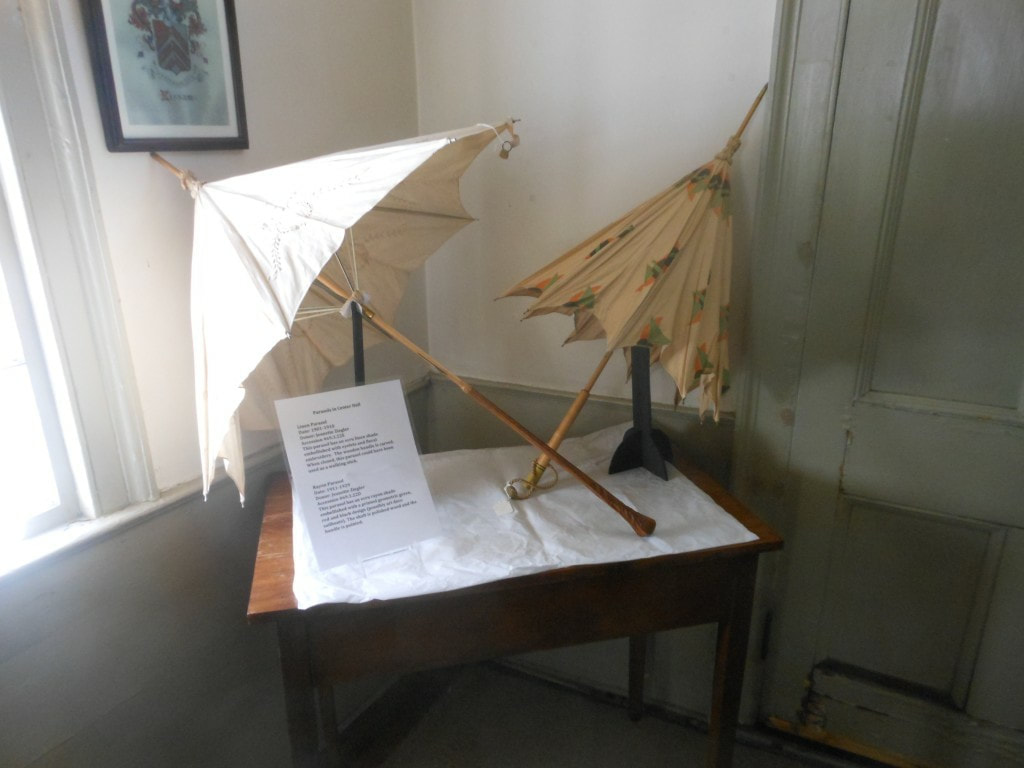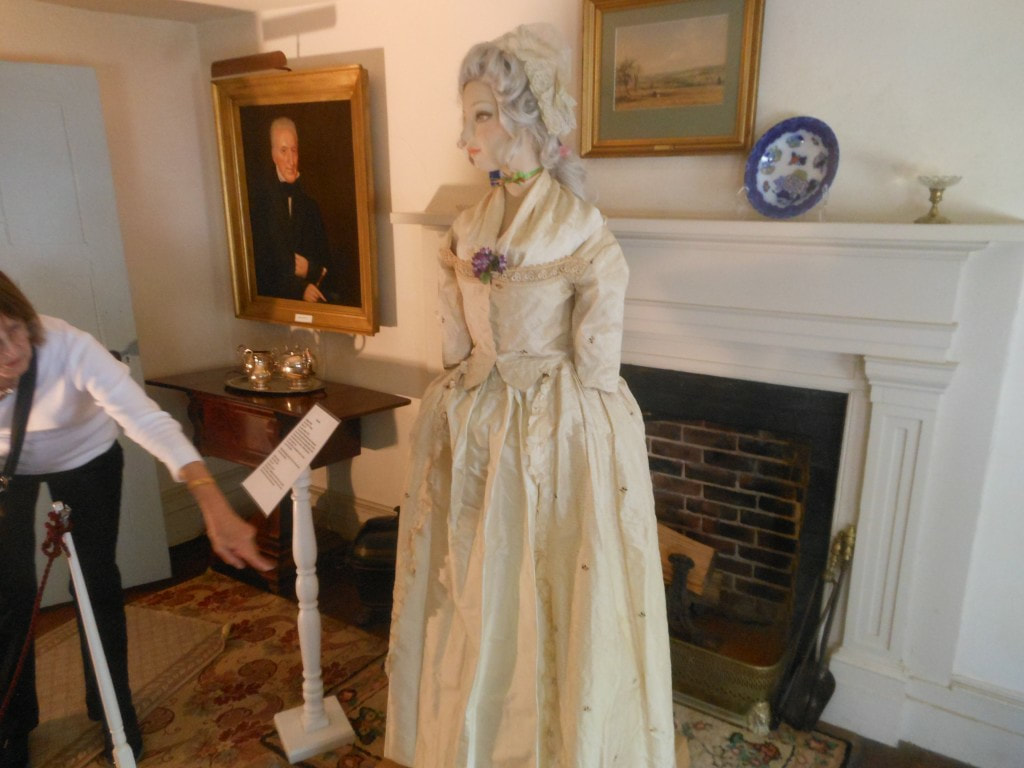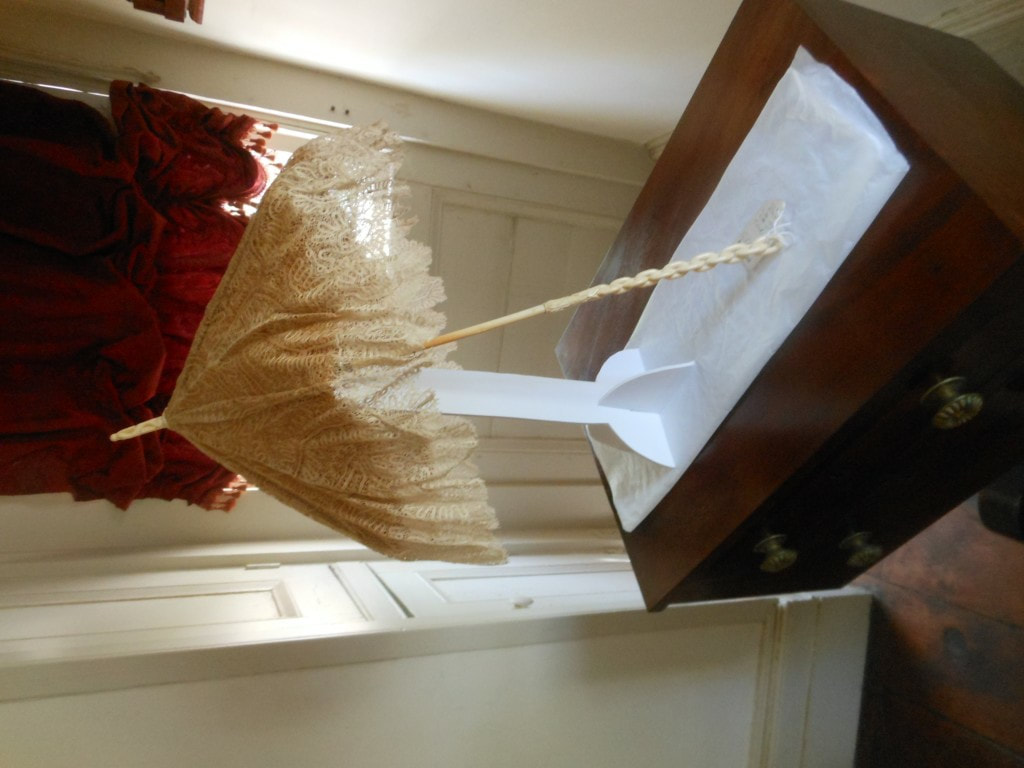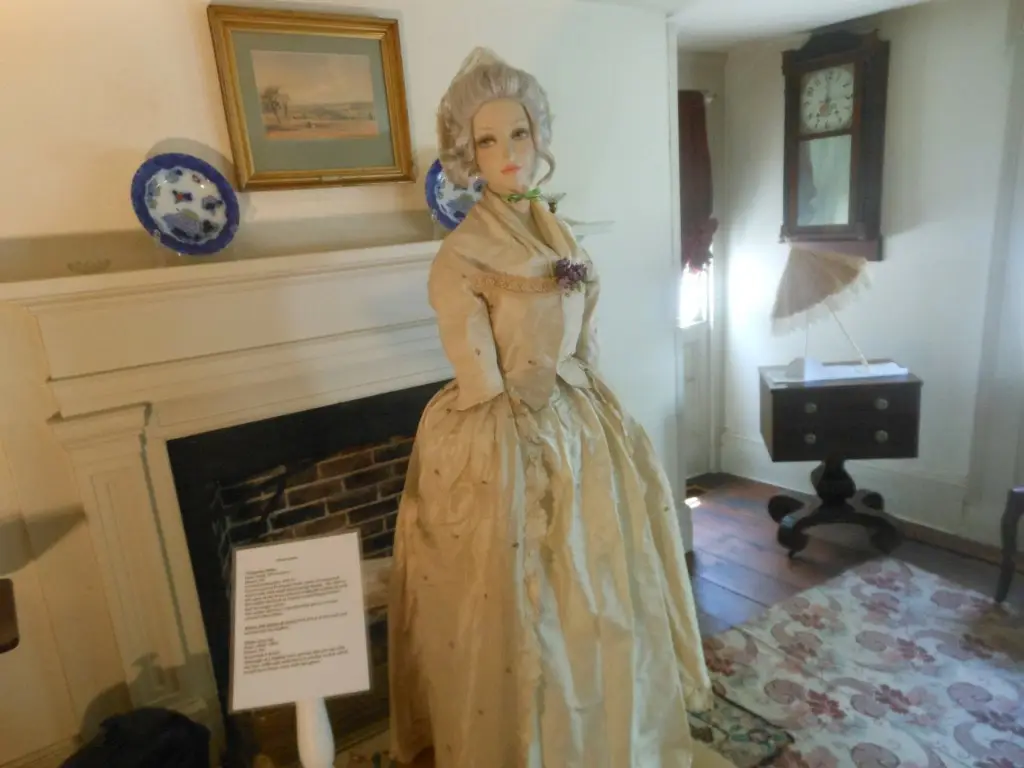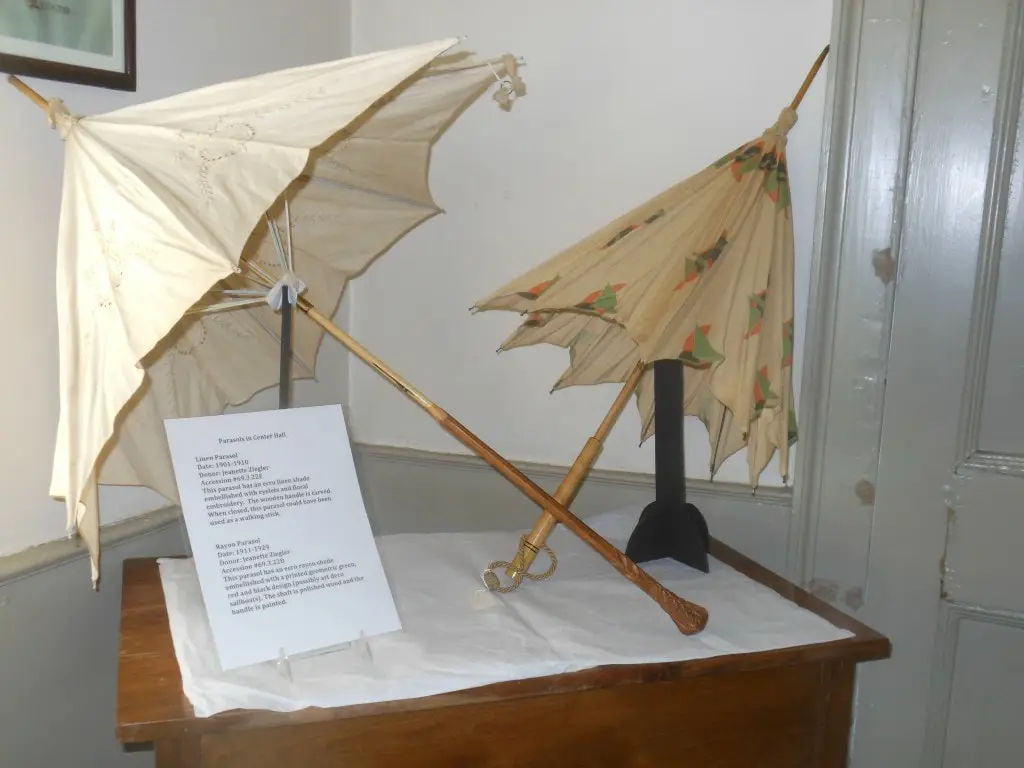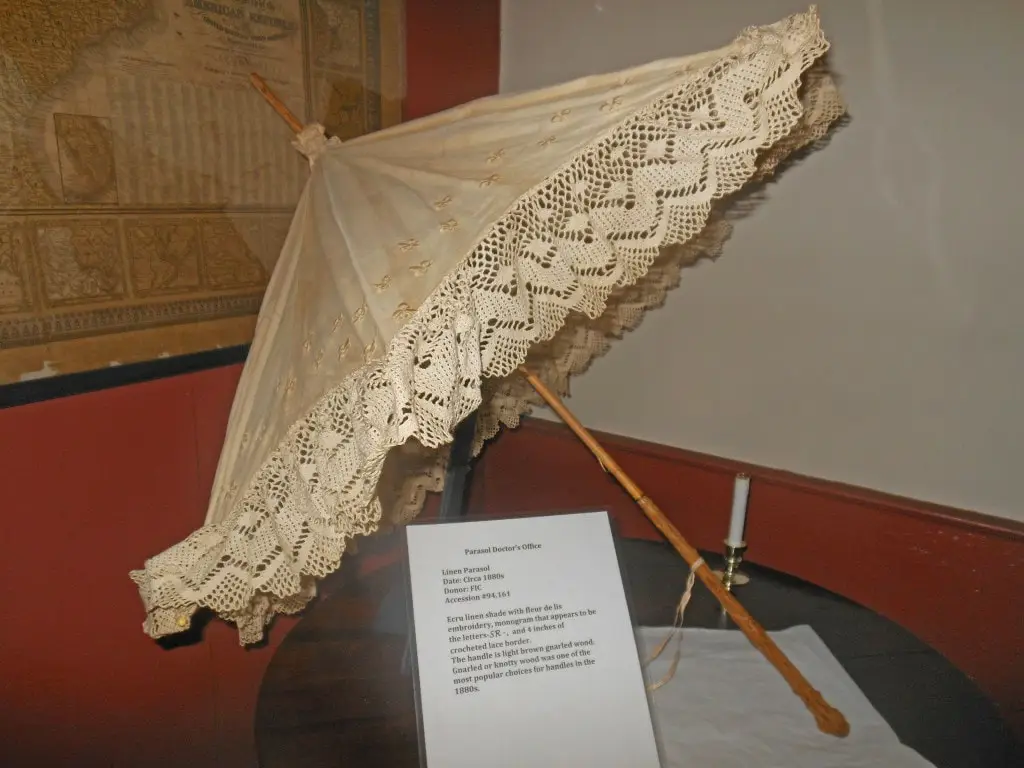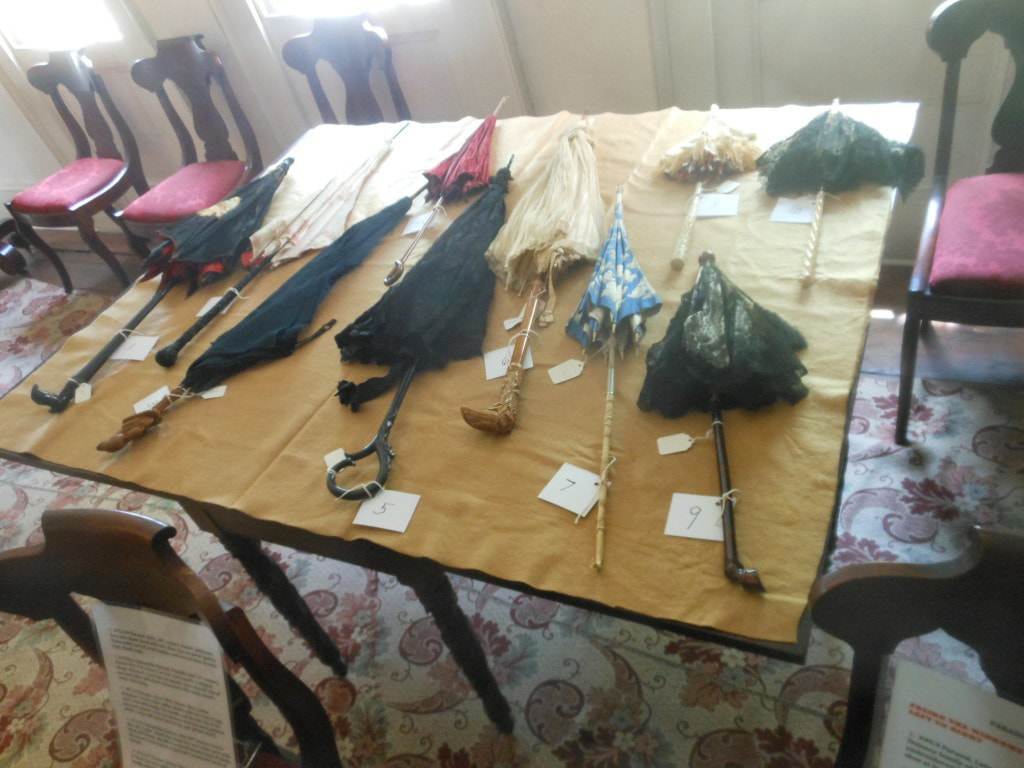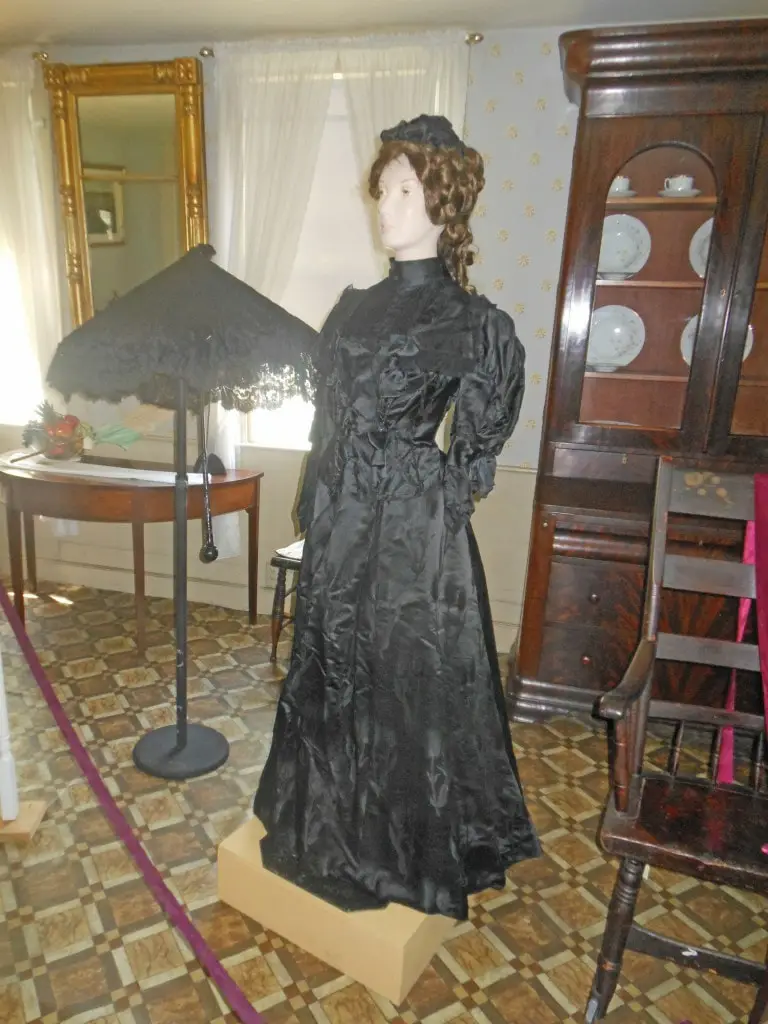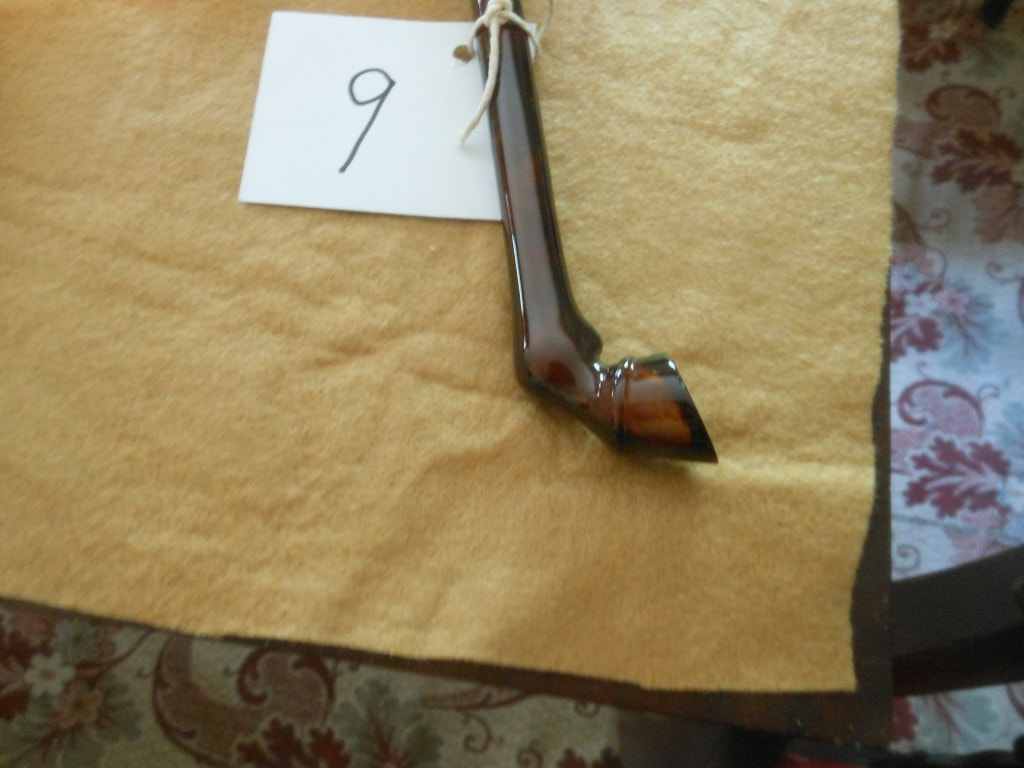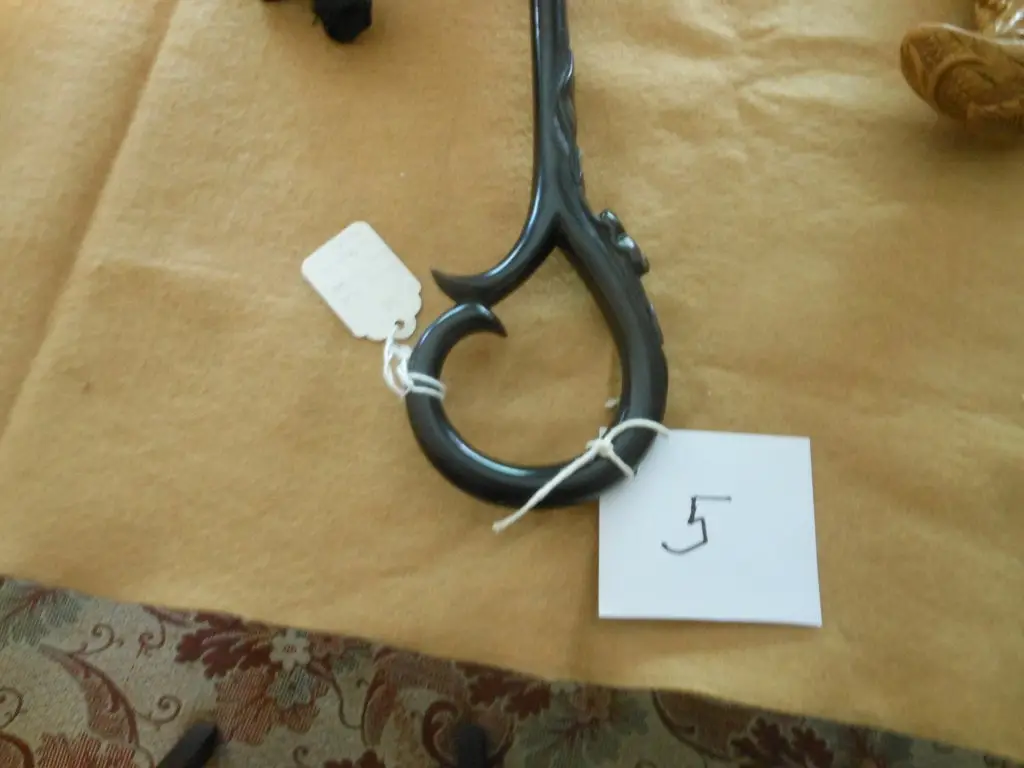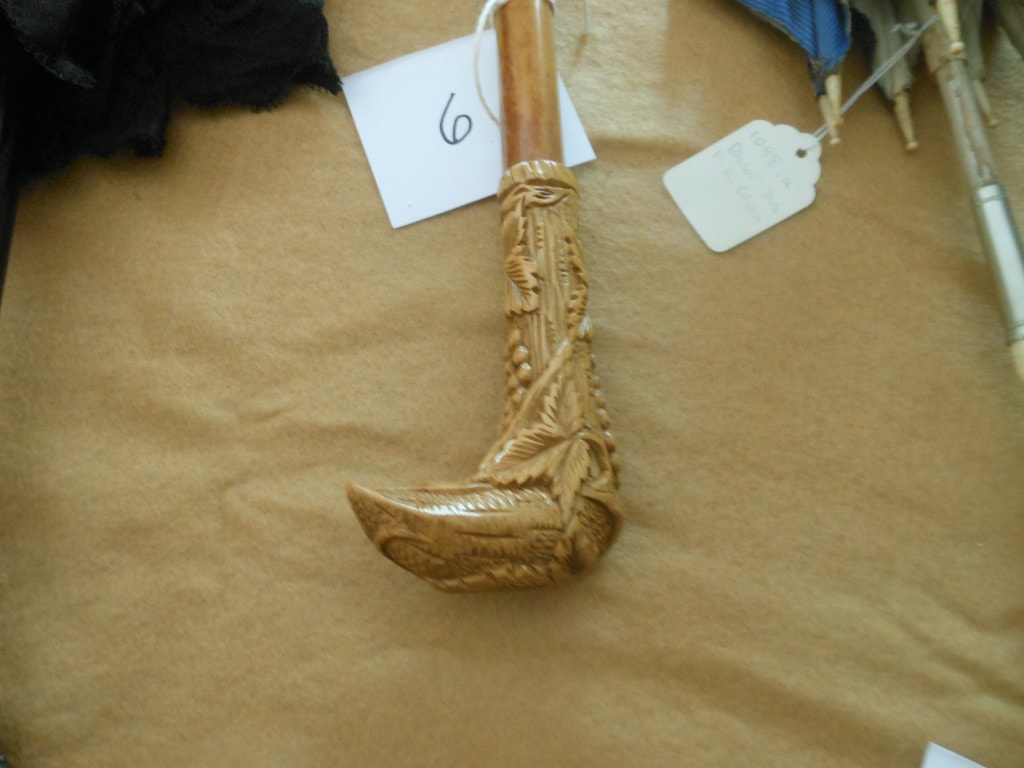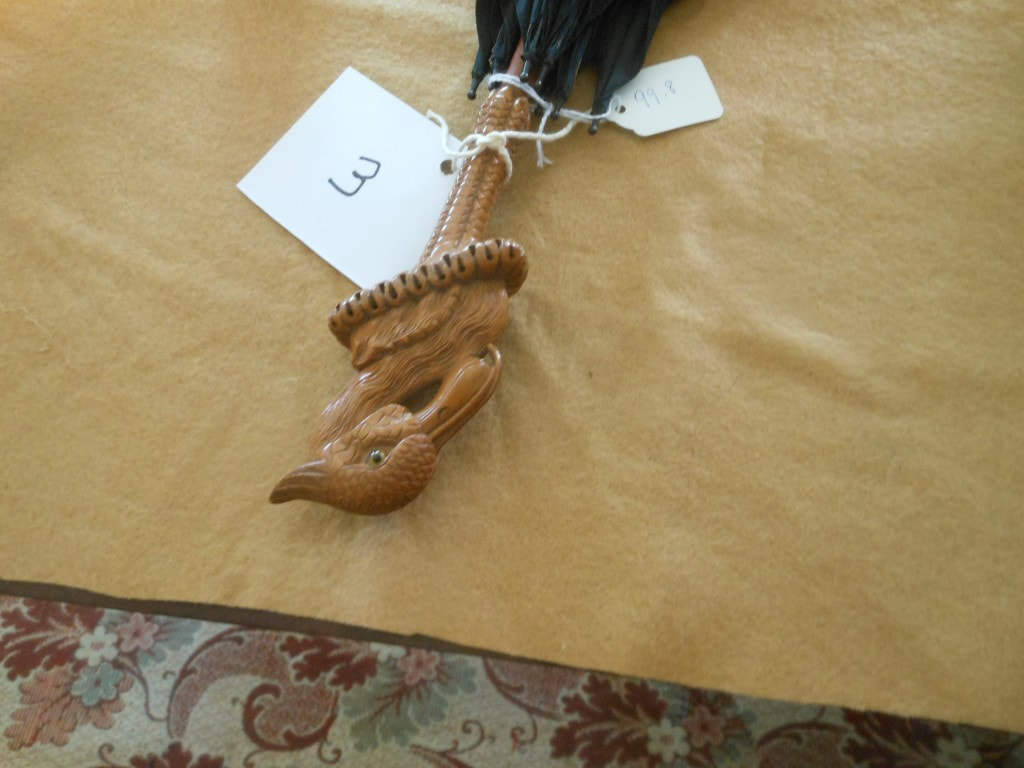

In this exhibit we featured three gowns that we consider being “jewels of our collection”. Additionally, we chose to highlight a seldom-displayed selection of antique parasols.
These gowns beautifully fit into our title “promenade” which means to take a leisurely walk, ride, or drive in public,especially to meet or be seen by others. The “ladies” in our exhibit would have used parasols while wearing these gowns to promenade in the park or while riding in their carriages.
A parasol is defined as a light, usually small umbrella Latin “umbra” (“shade”) carried as protection from the sun. The word parasol comes from the Latin words “parare” (“to shield”) and “sol” (“sun”).
The history of parasols and umbrellas goes back thousands of years in Egypt, China and India where the use has been for protection from the sun and its heat. Only in the past few hundred years have umbrellas been used for rain protection. But it was during the Italian Renaissance of the 16th century that umbrellas and parasols were introduced to Europe. At first the umbrellas and parasols were large, used interchangeably and usually carried by a servant to protect the wealthy from rain and sun.
In this exhibit our earliest parasols date to the 1860s and the others date to the early, mid and late Victorian era and through the 1930s.