PLACE, WILLIAM PLEAS (1737-1827). Associator and Huntington resident during the British occupation of the town throughout the Revolutionary War. As per his family tree posted on Ancestry.com, William’s name is listed as William Pleas Place; Pleas being the spelling of his father’s surname. He was born in Huntington to William Pleas/Place (1705-1755) and Zerviah Brotherton (1717-1770). His family tree lists siblings: Thomas Pleas (1738-1827); Morris (or Maurice) Pleas (1742-1830); and Ruth Pleas (1754-1774). William’s family surname is usually spelled as Place but also appears as Pleas or Please. The family postings on Find A Grave and Geneanet use the name William Place.
As per Frederic G. Mather in The Refugees of 1776 from Long Island to Connecticut (1913), pages 1062-1063, William Pleas, apparently the man who is the subject of this biography, is listed as among the signers of the Huntington Articles of Association in his community. On May 8, 1775, 403 men, most of them Huntington residents (a few were from Islip), “shocked by the bloody Scene” that had occurred just weeks before at Lexington and Concord in Massachusetts, where patriot Minutemen and British regulars had engaged in a bloody armed struggle, put their signatures on Huntington’s Articles of Association. Only 37 Huntington residents, either Loyalists or those wanting to stay out of the fray, refused to sign. The Articles noted that the signers affirmed their “Love to our Country,” agreed “to whatever Measures may be recommended by the Continental Congress; or resolved upon by our Provincial Convention, for the Purpose of preserving our Constitution, and opposition to the Execution of the several arbitrary, and oppressive Acts of the British Parliament,” and prayed for “a Reconciliation between Great-Britain and America.” The actions of these associators were seen by both patriots and the British as a step towards rebellion. The fact that these men signed these Articles, placing themselves in danger of British retaliation, including imprisonment, seizure of their property, and exile from Long Island, is proof of their patriotic service.
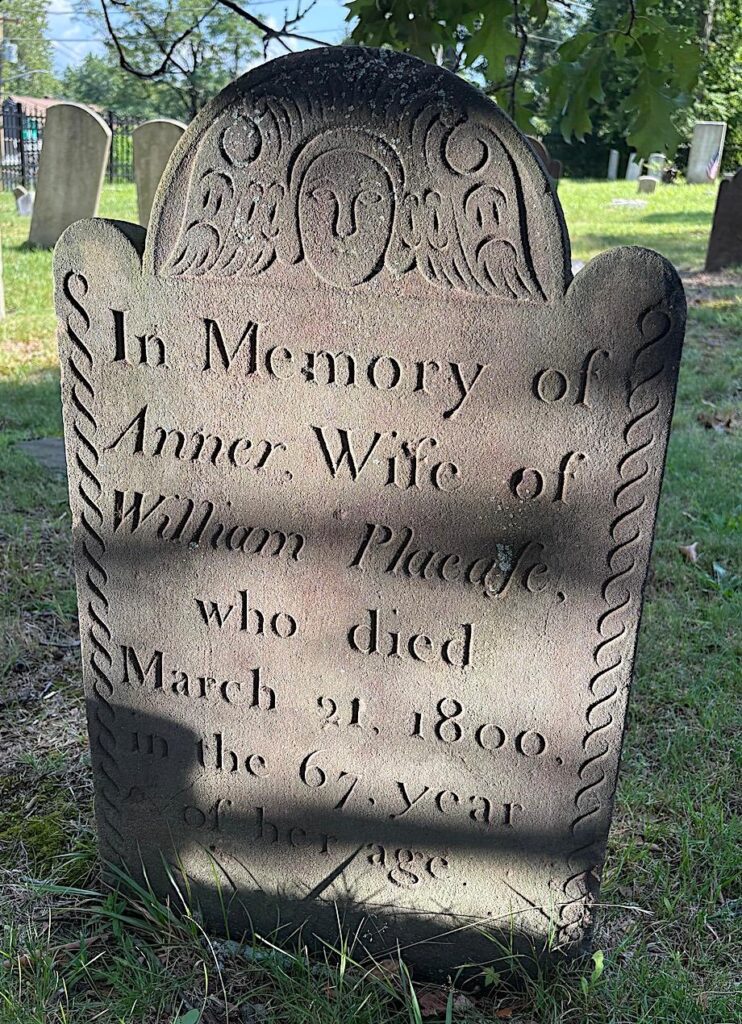
On December 1, 1760, William married Ann (Anna) Totten (1733-1800) in Huntington. The couple had many children: Mary Ann (1759-1810); Hannah (1761-1823); Eunice (1768-1840); Morris (1771-1815); John (1773-1839); Oliver (1774-1830); Joseph (1777-1839); Aaron (1779-1830); Oliver (1780-1830); and William (1783-1808). The family tree lists the children’s birthplace as Huntington. Mary Ann’s christening is recorded in England, Select Deaths and Burials, 1538-1991. The Geneanet Community Trees index records William’s marriage to Anna Totten and names all children except Mary Ann.
William was a resident of Huntington during the British occupation after the disastrous defeat of General George Washington and his Continental Army at the Battle of Long Island (Battle of Brooklyn) on August 27, 1776. As per the Huntington Town Records of December 25, 1781, William was a guard at the Town Spot on December 4 of that year; the residents had a pay a fine of ten shillings if they failed to appear for duty. The Town Records also show that at the near close of the war in 1782, Willaim’s property was valued at £60, a sum about mid-range when compared to his contemporaries.
The censuses of 1790, 1800, 1810 and 1820 show that William was a Huntington resident. The 1790 census reports that Wm Place was the head of the household comprised of eight members: two free white males over 16, two free white males under 16, and four free white females. The U.S. Tax Assessment Rolls of Real and Personal Estate for 1799 in Huntington shows that William Please owned $1,100 in real estate (the equivalent of about $30,000 today) and paid $1.14 in taxes. The 1800 census reports that William Place of Huntington had four household members: one free white male under ten, one free white male 16-25, one free white male over 45 and one free white female ages 16-25. At the time of the 1810 census, William’s household was comprised of one free white male aged 10-15, one free white male aged 16-25, one free white male over 45 and one other free person. As per his Find A Grave page, William married the twice-widowed Sarah Titus in 1815. At the time of the 1820 census, William was still residing in Huntington. One white male and one white female over 45 lived in the household along with two colored enslaved people.
According to a family tree at Ancestry.com, Sarah Titus married Thomas Conklin in 1777 in the Village of Fresh Pond, a part of the Town of Huntington. After Conklin’s death, Sarah married a Mr. Douglas in Huntington, but he died just a few months later. She then married William Place in 1815. When William died, Sarah moved to Williamsburg, Brooklyn, to live with her daughter. In 1845, Sarah, then 92 years old, applied for a widow’s pension based on the Revolutionary War service of Thomas Conklin; a pension was granted.
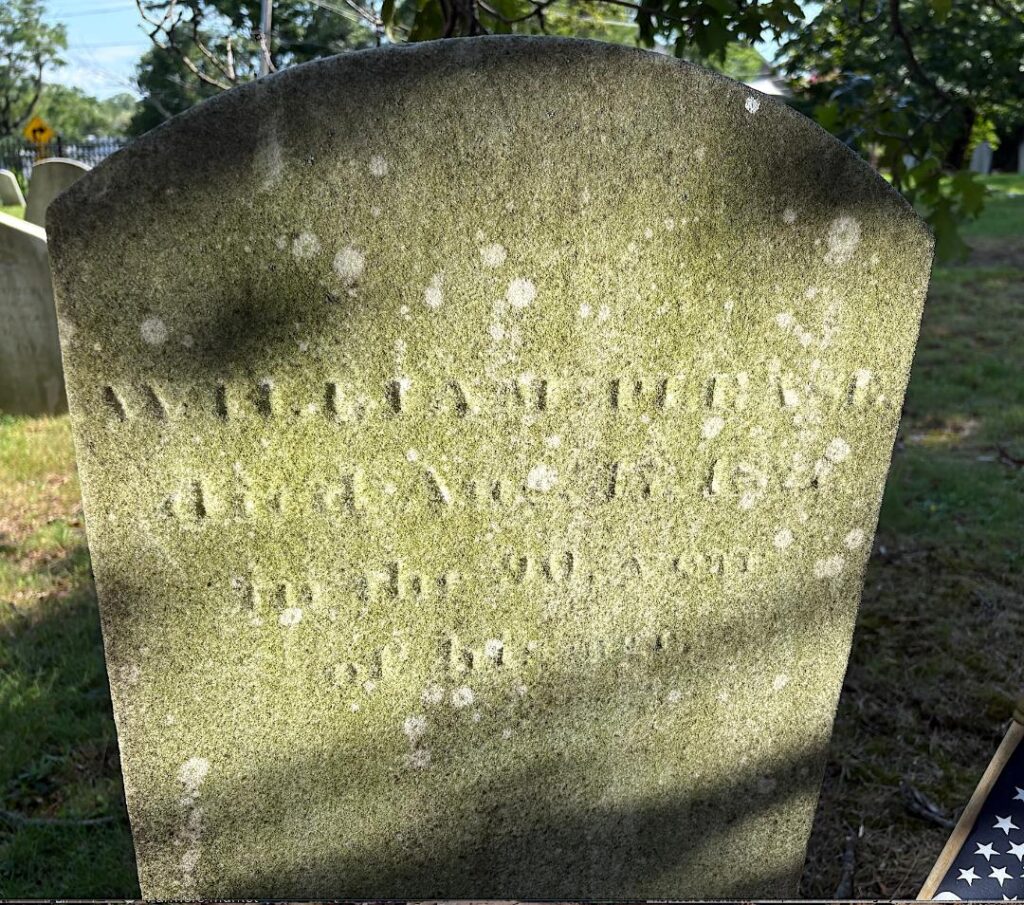
William died August17, 1827, and is buried in the Old Burying Ground in Huntington. William’s second wife Sarah died in Williamsburg, Brooklyn, in 1843. Neither of them has a gravestone inscription listed in Josephine Frost’s 1911 listing of all those in the Old Burying Ground.