(1754-1831). Lieutenant or lieutenant colonel, Suffolk County Militia, 1st Regiment of Minutemen, Colonel Josiah Smith’s Regiment; associator, Huntington, New York. As per Timothy’s timeline on the Geneanet website, he was born on January 1, 1754 in Hashamomack, (a part of Southold in Suffolk, New York), to Ruth née Ketcham and Timothy Conklin Sr. He was baptized in Huntington on February 10, 1754. Timothy was the eldest of five siblings; he had three brothers and one sister. Timothy’s family was well established in Huntington. Data from the Huntington Town Records indicate that his great-great grandfather, John Conklin, journeyed from Nottinghamshire, England to Huntington with stops at Salem and Southold. An excerpt from a Town Meeting on February 4, 1660 states (with original spelling):
it was a greed that Timothy Conklen (son of aforementioned John Conklin) shalle keepe both his own hom lots and his fathers and to lay down all Commonig and medowe be longing to his own hous.
According to Huntington, Long Island, NY, History, Huntington, incorporated in 1666, was a peaceful town, intent on maintaining its independence, and openly defying an order to contribute to the repairs of a New York fort as early as 1670. The author, Peter Ross, details:
In this Huntington was outspoken from the first, and was most pronounced and determined in its adoption of the patriotic cause. At a town meeting held June 21, 1774, it was declared, among other things: “That every freeman’s property is absolutely his own, and no man has a right to take it from him without his consent, expressed whether by himself or his representatives. That, therefore, all taxes and duties imposed on His Majesty’s subjects in the American colonies by the authority of Parliament are wholly unconstitutional and a plain violation of the most essential rights of British subjects…And we hereby declare ourselves ready to enter into these or such other measures as shall be agreed upon by a general congress of all the colonies.”
Within this historical account, Timothy is among those listed who would lead a local “war committee” in 1776:
There was thus, so far as the surface indications go, no thought of separation; but as events unfolded themselves and militia companies were formed and drilled, independence became the issue, and 100 pounds of gunpowder was sent by the Provincial Congress to Huntington in September 1775. On June 20, 1776, a local war committee was chosen, consisting of Joshua Ketcham, John Buffet, Platt Conklin, Platt Carll, Josiah Wood, Wilmot Oakley, Jesse Brush, Timothy Ketcham, Gilbert Fleet, Richard Conklin, Jonas Rogers, Thomas Wicks, Benjamin Y. Prime, Timothy Conklin, Solomon Ketcham, David Rusco, Henry Smith, Gilbert Potter.
The Refugees of 1776 from Long Island to Connecticut, by Frederic Gregory Mather, published in 1913, at page 308. reports that Timothy Conkling (sic) of Huntington was born in 1754, married Mary, signed the Association of 1775 protesting oppression by the King, and served as a lieutenant in Colonel Smith’s regiment. On May 8, 1775, 403 men, most of them Huntington residents (a few were from Islip), “shocked by the bloody Scene” that had occurred just weeks before at Lexington and Concord in Massachusetts, where patriot Minutemen and British regulars had engaged in a bloody armed struggle, put their signatures on Huntington’s Articles of Association. Only 37 Huntington residents, either Loyalists or those wanting to stay out of the fray, refused to sign. The Articles noted that the signers affirmed their “Love to our Country,” agreed “to whatever Measures may be recommended by the Continental Congress; or resolved upon by our Provincial Convention, for the Purpose of preserving our Constitution, and opposition to the Execution of the several arbitrary, and oppressive Acts of the British Parliament,” and prayed for “a Reconciliation between Great-Britain and America.” The actions of these associators were seen by both patriots and the British as a step towards rebellion. The fact that these men signed these Articles, placing themselves in danger of British retaliation, including imprisonment, seizure of their property, and exile from Long Island, is proof of their patriotic service.
Further, New York in the Revolution, As Colony and State, by James A. Roberts, published in 1898, page 169, lists him as a lieutenant in the Suffolk County Regiment, First Regiment of Minute Men, Colonel Josiah Smith’s Regiment. However, as per the Headstone Applications for Military Veterans, 1861-1985, Timothy served as lieutenant colonel in Colonel Josiah Smith’s 1st Regiment of Suffolk County Militia. The Military Minutes of the Council of Appointment of the State of New York confirms that Timothy served as the lieutenant colonel of Colonel John (sic) Smith’s Suffolk County Militia. The online Sons of the American Revolution “Patriot Search System” confirms his service in Josiah Smith’s regiment, though it states his rank as lieutenant rather than lieutenant colonel. According to the Daughters of the American Revolution online “Genealogy Research,” in 1778 Timothy signed an oath of allegiance to the King; many residents, often under duress, signed this oath during the British occupation.
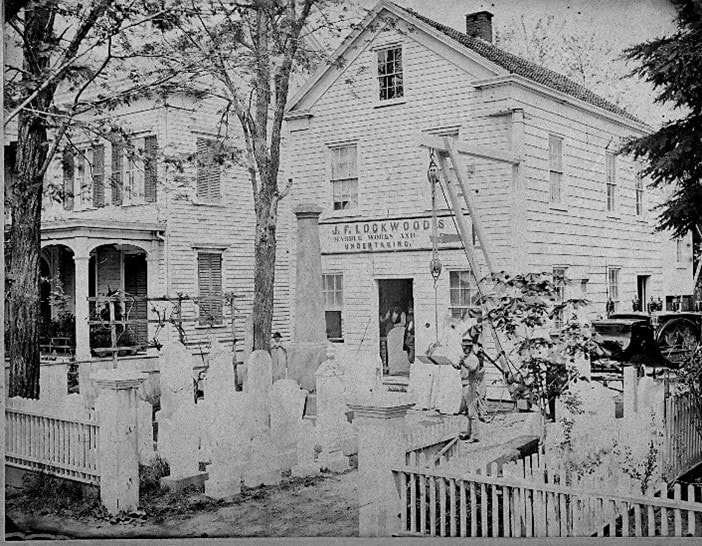
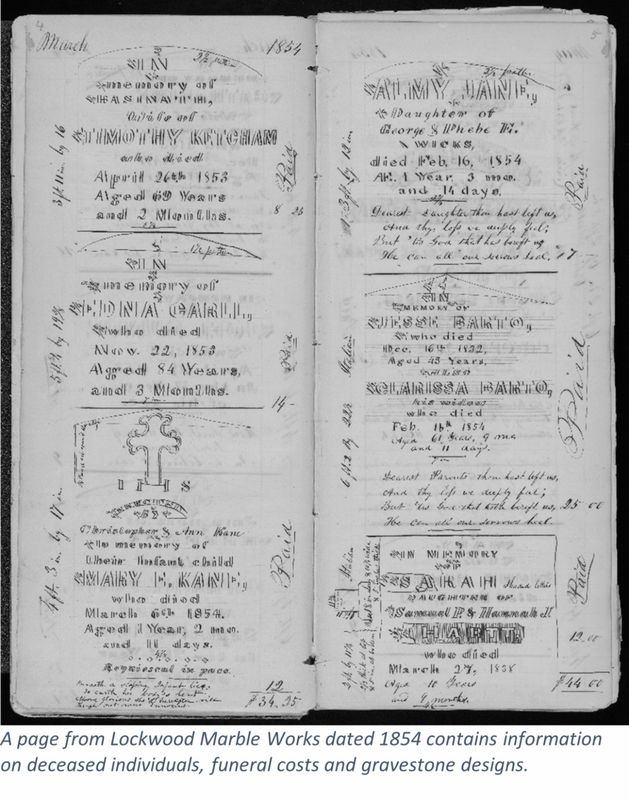
As per a report in the Long Islander of June 5, 1908, a parade was held, featuring several bands, to Huntington’s Old Burying Ground, where Timothy’s grave, as well as those of other patriots, were adorned with flowers. On Douglas Conklin’s February 1911 submission on the Sons of the American Revolution Membership Applications, he stated that, as of that year, a gravestone in Huntington’s Old Burying Ground marked Timothy’s burial spot with “A Patriot of the American Revolution” carved into it.
On August 2, 1973, Rufus B. Langhans, the historian for the Town of Huntington, applied for a military veteran’s headstone for Timothy, listing his rank as colonel. However, the gravestone that was ultimately issued by the Department of Veterans Affairs, and still stands in the Old Burying Ground, lists his rank as lieutenant. On the application, Langhans cited that Timothy is buried at the Old Burial Ground in Huntington and that his date of enlistment and date of discharge are unknown.
On February 8, 1776, Timothy and Mary Platt were issued a marriage license by the secretary of the Province of New York. The couple was married on February 15, 1777, in Huntington. According to Timothy’s Find A Grave page, Mary was the twin sister of Sarah Platt; Sarah married Timothy’s brother Ezra Conklin (see). Mary and Timothy had ten children. According to the 1790, 1810 and 1830 federal censuses, Timothy resided in Huntington with seven to ten members of the household, including one enslaved person in the 1790 census, throughout those years. Timothy passed away on December 17, 1831. Mary died in 1838.