CONKLIN (or CONKLING), THOMAS (1731-1802). Private, Colonel Josiah Smith’s Suffolk County Militia, 1st Regiment of Minutemen, Captain John Wickes’s Company; associator, Huntington, New York. The name Conklin, or Conkling, was widespread on Long Island in British Colonial New York. According to a family tree on Ancestry.com, Thomas Conklin of Huntington was born in 1731 to Thomas Conklin and Abiah Hubbard, followed by seven siblings. Thomas was married in 1752, at the age of 21, to Mary Naomi Conklin, probably a cousin, the daughter of a Captain John Conklin(g). The couple had ten children over the next 20 years. Mary died in 1775. The next year, Thomas married Rebecca Hulsey and added a son, Benjamin, to the family. Geneanet Family Trees confirm his life dates, the names of his parents, and the names of his wives.
In May 1775, Thomas, along with the majority of Huntington’s householders, signed Huntington’s Articles of Association, a petition protesting taxes imposed on the colonists by Great Britain. While the petition was not meant as a statement of independence from British rule, Huntington’s citizens did begin to arm themselves for the possibility of war. Only 37 Huntington residents, either Loyalists or those wanting to stay out of the fray, refused to sign. The Articles noted that the signers affirmed their “Love to our Country,” agreed “to whatever Measures may be recommended by the Continental Congress; or resolved upon by our Provincial Convention, for the Purpose of preserving our Constitution, and opposition to the Execution of the several arbitrary, and oppressive Acts of the British Parliament,” and prayed for “a Reconciliation between Great-Britain and America.” The actions of these associators were seen by both patriots and the British as a step towards rebellion. The fact that these men signed these Articles, placing themselves in danger of British retaliation, including imprisonment, seizure of their property, and exile from Long Island, is proof of their patriotic service.
According to the 1913 publication, The Refugees of 1776 from Long Island to Connecticut (1913), by Frederic Gregory Mather, Thomas (listed with his last name spelled “Conkling”) served in Colonel Josiah Smith’s First Suffolk County Regiment of the New York Militia, and in Terry’s Regiment. The same source notes that he would, after being freed from imprisonment, serve in the 3rd Line, “probably” in the 5th Line, and “perhaps” in the 2nd Orange.
As per Mather, during the Revolutionary War Thomas fled British-controlled Huntington for Connecticut (citing Henry Platt’s “Huntington Address” of 1876), and took part in boat raids from Connecticut on British-occupied Long Island. In 1780, Thomas, along with others, was captured by the British in a wood-boat on Long Island Sound and was imprisoned at Hartford, Connecticut. Mather writes: “It was stated that he would aid the American cause, if liberated.” Indeed, according to the 1911 Sons of the American Revolution application of his descendant, Douglas Conklin, when, that same year, Congress “made a requisition upon several states for monies, etc.,” Thomas made a patriotic contribution.
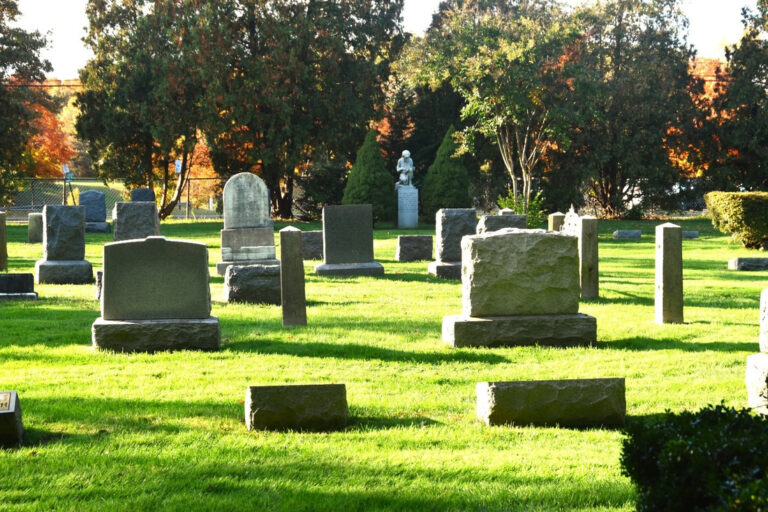
According to “New York, Genealogical Records, 1675-1920,” Thomas’s death year was 1802 and his burial was in Huntington. The Daughters of the American Revolution Lineage Book, Volume 63 (1907), confirms his life dates, his service with Wickes’s Company, and that he was born and died in Huntington. According to Cemetery Inscriptions from Huntington, Long Island, compiled by Josephine C. Frost in 1911, the inscription on his gravestone at Huntington’s Old Burying Ground reads, “Thomas Conklin, died March 25, 1802, Age 71 years, 11 months, 26 days.” That gravestone appears to have survived at the Old Burying Ground. However, in 1973, Huntington Town Historian Rufus Langhans applied for a Department of Veterans Affairs gravestone for the Thomas Conklin who is the subject of this biography, listing his rank as “major.” This was in error; Major Thomas Conkling is not interred in Huntington’s Old Burying Ground. There were two Suffolk County residents named Thomas Conkling in this period. Note that Mather states, with respect to the Thomas Conkling who was referred to as “major:” “His title probably came from colonial service.” As per Find A Grave, Major Thomas Conkling was born in 1728 in Southold, died in 1789 in Mattituck, and is interred at Jamesport. All three of those towns are in Suffolk County on Long Island’s North Fork, within a few miles of each other; they are 50-60 miles from Huntington. Further, as per “U.S. Presbyterian Records, 1701-1970,” “Maj. Thomas Conkling” married Hannah Demmon, in the Mattituck Presbyterian Church, not Mary or Rebecca.