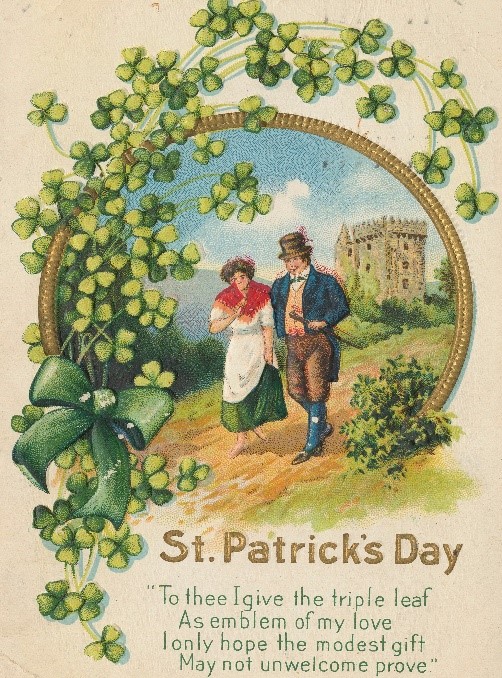
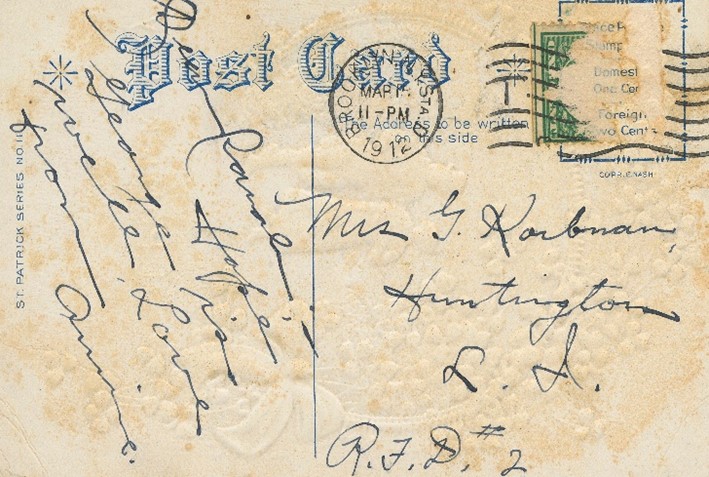
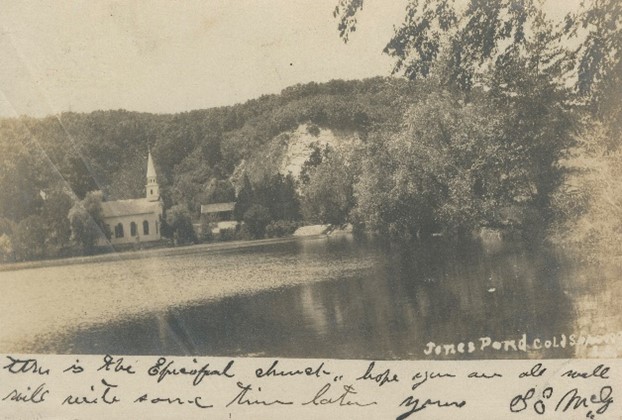
Above, St. Patrick’s Day Postcard, (circa 1907-1910), published by E.Nash, an illustrator and publisher of high quality holiday postcards. The card represents the “Divided Back Era” of early postcards. In March 1907, congress passed an act allowing privately produced postcards to have messages on the left half of the card. The next day the Postmaster-General issued Order No. 146 echoing the congressional act. Prior to 1907, the “Undivided Back Era,” messages were not allowed on the back of postcards and sometimes messages were scribbled on bottom of the image side.
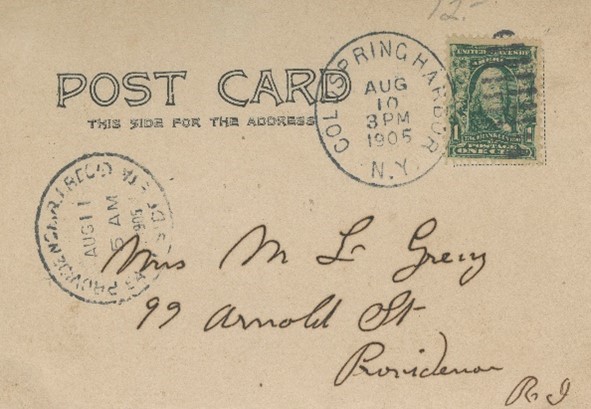
Below is an example of “Undivided Back Era” postcard.
St. Patrick’s Day in America
St. Patrick, a Roman Briton born in the 4th century, was allegedly kidnapped by pirates and taken to Ireland as a slave. Little is known about his early life except that he escaped and later returned to convert Ireland to Christianity by establishing monasteries, churches, and schools. Celebrated as the patron saint of Ireland, his feast day was primarily a religious holiday, not a celebration of Irish culture. It was not until the late 19th century when a growing sense of Irish nationalism precipitated the first St. Patrick’s Day parade in Ireland. However, the very first parade in the United States was much earlier. Irish immigrants to the United States essentially changed the religious nature of the day to a secular celebration of “Irishness,” in which all could participate. Boston held its first St. Patrick’s Day parade in 1737 and New York City in 1762.
However, there is now some question whether these were the earliest parades. According to a January 21, 2022, article in IrishCentral (https://www.irishcentral.com) by Frances Mulraney, the first St. Patrick’s Day parade was in St. Augustine Florida in 1601. An expenditure log unearthed in a Spanish archive includes notes about the celebration describing St. Augustine residents parading through the city celebrating the saint.
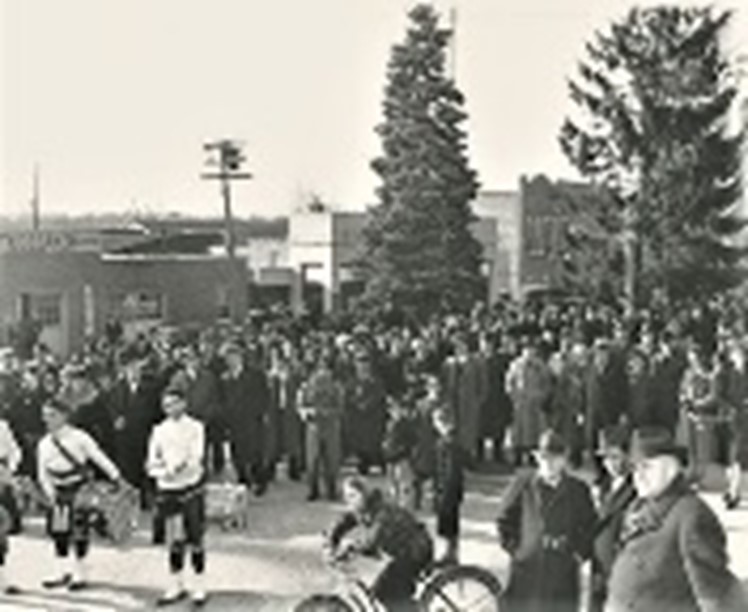
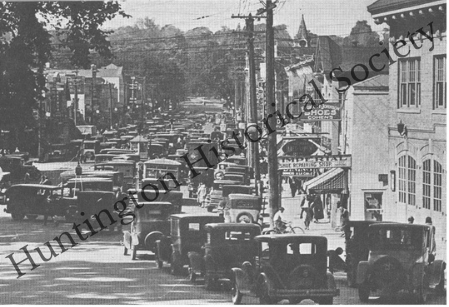
Huntington’s first St. Patrick’s Day parade was much, much later. According to the Huntingtonian it was 1935, but according to Newsday it was 1930. The first parades were organized by the Irish American Social Club which met at Finnegan’s.