HUNTINGTON DURING THE REVOLUTIONARY WAR
By Jeffrey I. Richman, Trustee, Huntington Historical Society
2026
OVERVIEW
Frustration amongst the British colonists of North America with the far-off Parliament of Great Britain imposing taxes on them had been building as early as the 1760s. Huntington, and much of Suffolk County, were hot spots of opposition to this taxation imposed by men who had not been elected by the colonists. As Eleanor S. Dennis wrote in her master’s thesis, The Town of Huntington During the War of Independence: A Political and Social Study, unpublished, 1962, page 37, “the towns of Suffolk County sided strongly with the rising party which advocated home rule and resistance to the English Crown.” But Huntington residents would pay severely for their opposition, being occupied and oppressed by British, Hessian, and loyalist troops, starting in 1776 and not ending until 1783.
OPPOSITION TO THE STAMP ACT OF 1765
On February 24, 1766, a town meeting was held in Huntington at the house of Nathaniel Williams, as reported in The Newport (Rhode Island) Mercury, during which it was resolved that King George III was “our rightful and lawful King,” that the townspeople were loyal to him and were willing to assist him with their “blood and treasure,” but that “we are fully persuaded, the iron hand of oppression is making large attempts upon our sacred liberties and privileges, under the appearance of an act of Parliament called the Stamp Act.” They continued: “That, if we tamely submit to the execution of the Stamp Act, all pretences to civil liberty will be irrevocably gone, and we and our posterity will be as absolute slaves . . . . The resolution went on to say that Huntingtonians enjoyed two cornerstone rights “of every freeborn Englishman” which they were unwilling to surrender: “of being taxed by none, but representative of his own choosing; and being tried by none, but his fellows, in a jury.” They further resolved to appoint a committee to cooperate with the Sons of Liberty in New York City and others “in Connecticut or elsewhere.” A month later, the Stamp Act was repealed by the British Parliament and matters quieted down in Huntington.
Note that in the above quotation, and throughout quotations in this history, the spelling and punctuation of the original are used.
HUNTINGTON’S 1774 DECLARATION OF RIGHTS
But opposition in Huntington to taxation imposed from afar by officials for whom no locals had voted, remained strong into the 1770s. On June 21, 1774, Huntington’s inhabitants felt compelled to adopt its Declaration of Rights. It began, “That every freemans property is absolutely his own and no man has the right to take it from him without his Consent, Expressed Either by himself or his representatives.” It went on to conclude “That therefore all taxes and duties imposed on His Majesties Subjects in the American Colonies by the Authority of Parliament are wholly unconstitutional and a plain violation of the most Essential rights of British subjects.” It objected to the British closing the Port of Boston to punish its rebellious inhabitants as “subversive” of “Constitutional Liberty.” It concluded, “That it is the opinion of this meeting that the most Effectual means for obtaining a Speedy repeal of Said acts will be to break off all Commercial intercourse with Great Britain, Ireland, and the English West Indies Colonies.” The signers pledged to support any further measures adopted by the “General Congress of the Colonies” and appointed a town committee of three to coordinate with other towns in the Colony of New York.
HUNTINGTON’S ARTICLES OF ASSOCIATION OF 1775
Just a few months later, on October 20, 1774, the Continental Congress, with representatives from 12 of the 13 British colonies (Georgia did not send a delegation), adopted an “Association” against the English economy, launching a boycott of exports to England and imports from it. As a result, a year later, English exports to the colonies had been wiped out, shrunk by 97%. Dennis, pages 38-39.
Colonists’ resistance to what they perceived as arbitrary British rule continued to escalate. In “Huntington and the Articles of Association,” Huntington Town Historian Robert Hughes wrote in 2025, on the Huntington History website, that just days after Massachusetts Minutemen engaged in bloody battle with British forces at Lexington and Concord, Huntington town residents voted for their own military preparations: “that there should be eighty men chosen to Exercise and be ready to March.” Soon thereafter, New York City’s inhabitants adopted Articles of Association supporting their Massachusetts brethren while also proposing measures “for the Purpose of preserving our Constitution, and opposition the Execution of the several arbitrary, and oppressive Acts of the British Parliament.”
It was just over a week later, on May 8, 1775, that 403 men, most of them Huntington residents (and a few from Islip), signed Huntington’s Articles of Association; 37 Huntington residents, either loyalists or those wanting to stay out of the fray, refused to sign. Hughes notes that, based on records of that time, the best estimate is that there were then 423 households in Huntington; 403 of 423, 95%, represents overwhelming public support for the patriot cause.
The Huntington Articles of Association prayed for peaceful reconciliation. They read as follows:
Persuaded, that the Salvation of the Rights and Liberties of America, depends, under GOD, on the firm Union of its Inhabitants, in a vigorous Prosecution of the Measures necessary for its Safety; and convinced of the Necessity of preventing the Anarchy and Confusion, which attend a Dissolution of the Powers of Government; We, the Freeholders and Inhabitants of [Huntington] being greatly alarmed at the avowed Design of the Ministry, to raise a Revenue in America: and, shocked by the bloody Scene, now acting in the Massachusetts Bay, DO, in the most solemn Manner, resolve, never to become Slaves; and do Associate under all the Ties of religion, Honour, and Love to our Country, to adopt and endeavor to carry into Execution, whatever Measures may be recommended by the Continental Congress; or resolved upon by our Provincial Convention, for the Purpose of preserving our Constitution, and opposition the Execution of the several arbitrary, and oppressive Acts of the British Parliament; until a Reconciliation between Great-Britain and America, on Constitutional Principles, (which we most ardently Desire), can be obtained; And that we will in all Things follow the Advice of our General Committee, respecting the Purposes aforesaid, the Preservation of Peace and good Order, and the Safety of Individuals, and private property.
The fact that these men signed these Articles, which were widely seen as a possible step towards rebellion, placing themselves in danger of British retaliation, including imprisonment, seizure of their property, and exile from Long Island, demonstrates the strength of their commitment to the possibility of a break with Great Britain.
In May 1775, male inhabitants of Suffolk County were asked to sign a similar Association that had come out of New York City. As per Frederic Gregory Mather in The Refugees of 1776 from Long Island to Connecticut, published in 1913, pages 1054-1065, 2834 Suffolk men signed (92%); 236 (8%) refused to do so. In contrast, Kings County residents, at about the same time, petitioned Royal Governor William Tryon of the Colony of New York and pledged their loyalty to the King. Mather, page 142.
THE HUNTINGTON MILITIA PREPARES FOR WAR
Early in 1775, two regiments of Suffolk County militia—local citizen-soldiers–were organized, one from the eastern part of the county, the other from the west (in which Huntington militiamen would serve). It was intended that they would fight with the Continental Army against the British. Mather, pages 88, 992. In July 1775, George Washington took command of the Continental Army in Massachusetts and besieged the British forces occupying Boston. On September 11, 1775, Huntington town residents elected officers to lead three of their companies of militia. Huntington Town Records, Including Babylon, Long Island, N.Y., With Introduction, Notes and Index by Charles R. Street (1889), Volume III, page 2, By April 1776, the Western Regiment of Suffolk County, including Huntingtonians, had 1030 men and officers under arms. Mather, pages 88, 939.
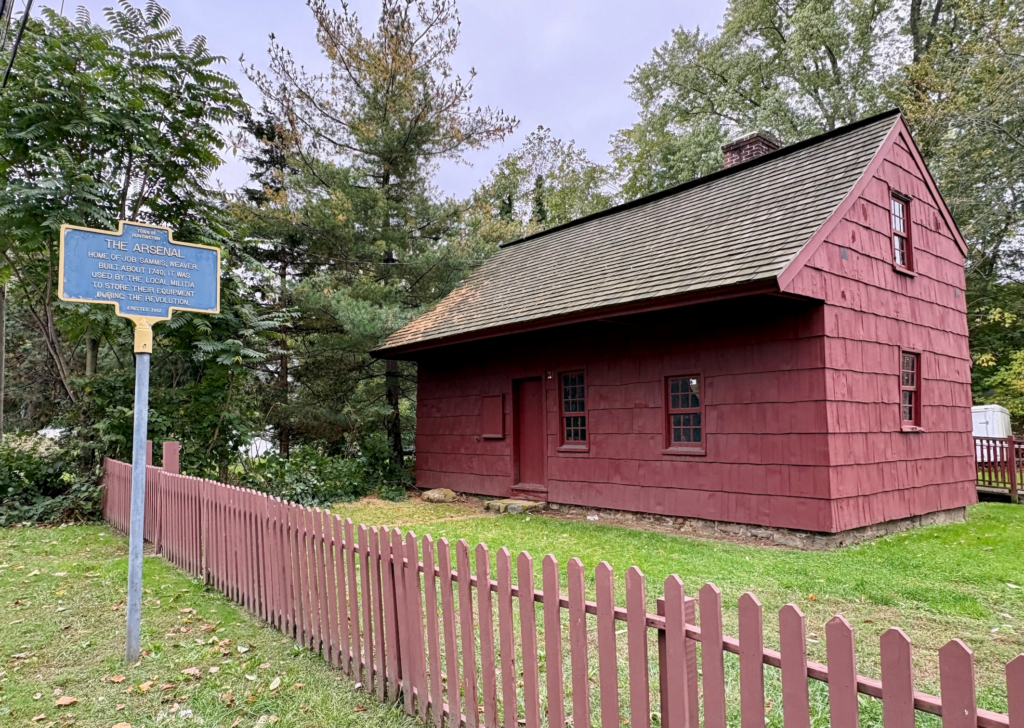
The Arsenal, just south of Huntington’s Village Green, was the home of Job Sammis, a weaver, during the Revolutionary War. It was there that Huntington’s militia, preparing for the possibility of war with the British, stored its gunpowder and arms. Gunpowder was needed to fire muskets and cannon; it was a precious commodity supplied to Huntington militiamen by the New York Provincial Congress in 1775 and 1776. In August 1776, on the eve of the Battle of Long Island, militiamen gathered there to arm themselves before heading west to join the war. Sammis stayed in Huntington during its occupation by the British and their allies; he was at times forced to aid them as they stole from the locals. In 1974, as the Bicentennial approached, the building was purchased by the Town of Huntington, which restored it to its appearance at the time of the Revolutionary War. It is the only surviving 18th century arsenal on Long Island.
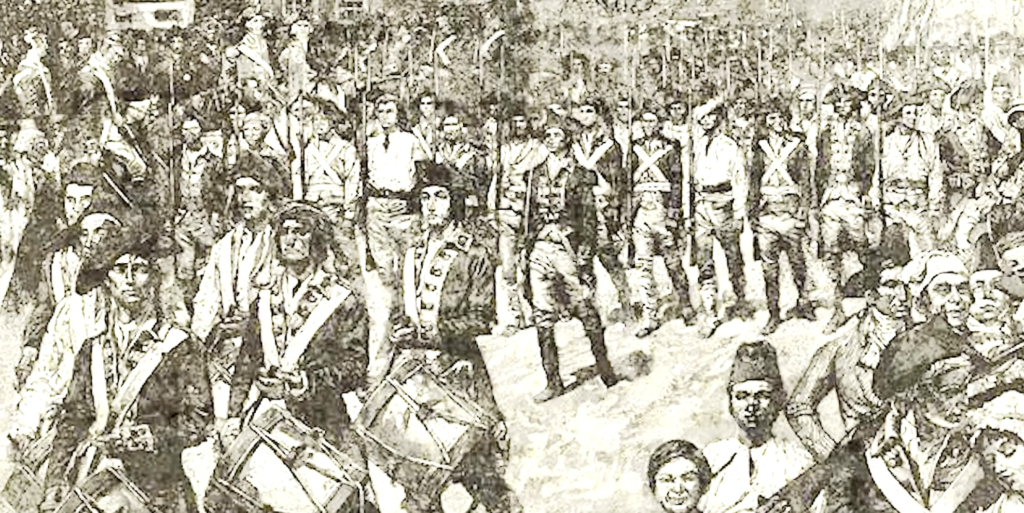
Revolutionary War militiamen.
THE BRITISH MILITARY BEGINS LONG ISLAND OPERATIONS
In the summer of 1775, British war ships gathered in Gardiner’s Bay, off the eastern end of Long Island. Foraging parties came ashore, seizing livestock and other supplies from the locals. The inhabitants requested protection from the invaders; little was done. Dennis, pages 72-74.
HUNTINGTON’S PATRIOTS ORGANIZE
On December 10, 1775, Huntington patriot leader Dr. Gilbert Potter sent a report to New York’s Provincial Congress on affairs in his town. He noted “slackness in military preparations, as also that we have great reason to believe all methods are being used by our neighbors to make them indifferent in this great contest.” He added that “there is not a sufficient number of men to effectually subdue Queens Co[unty],” which, as Potter well knew, was a loyalist stronghold. He also feared that loyalists were “making interest with our slaves and other servants.” Potter concluded with a personal note: “I have exerted myself in my station, but if nothing is done by your House, I must be obliged to desist: but as to myself as an individual, I am determined to live and die free.” Huntington Town Records, Volume III, page 3.
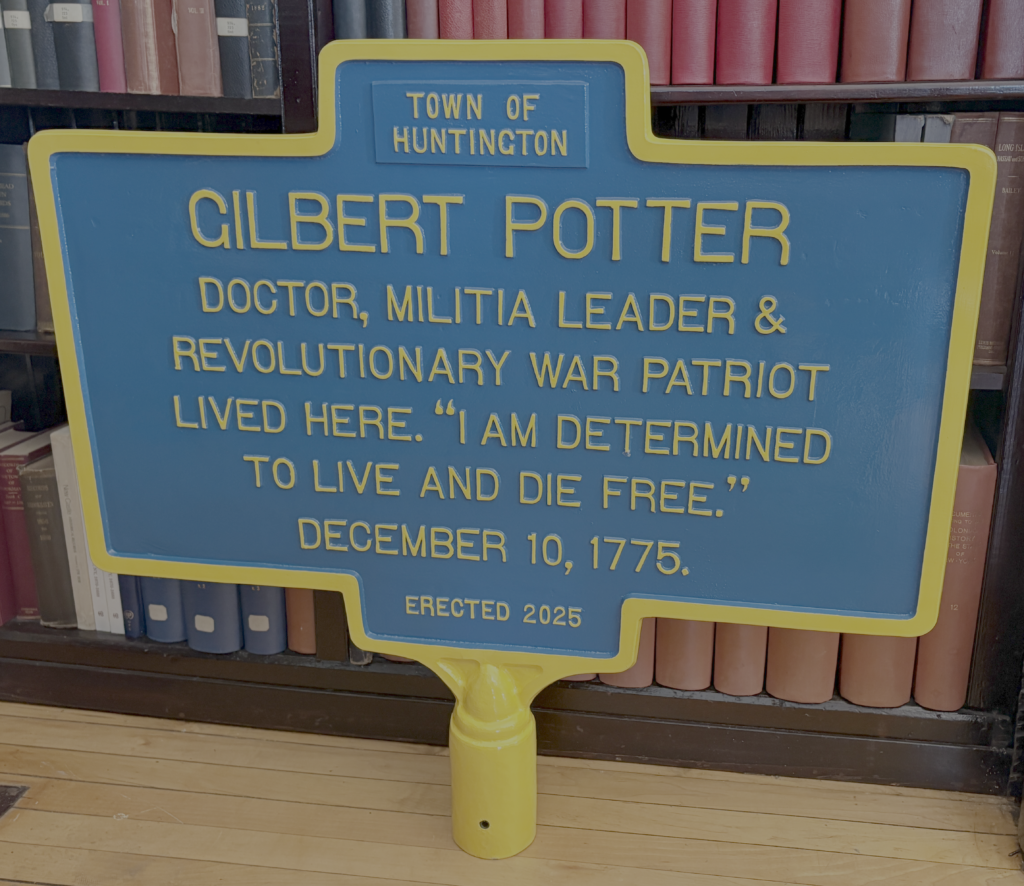
This historic sign is to be installed across from 65 Wall Street in Huntington to honor patriot Gilbert Potter.
WAR COMES TO AMERICA
Battles between patriot and British forces continued to escalate in 1775 and early 1776. In June of 1775, a pitched battle involving thousands of troops was fought outside of Boston; the Battle of Bunker Hill did not go well for the Americans, but both sides paid a heavy price in killed and wounded. An American patriot army invaded British Canada late in 1775; its efforts came to naught. The British Are Coming, by Rick Atkinson, published in 2019. The British tried to bring their military might—the greatest in the world–to bear in the southern colonies, with a military campaign under General Henry Clinton; his forces were bloodied and retreated to New York.
Washington, after successfully forcing the British out of Boston in March 1776, moved his Continental Army, and supporting militias, to New York City. That place was of tremendous strategic importance; leading patriot John Adams described New York City as the “Nexus of the Northern and Southern Colonies, as a Kind of Key to the whole Continent.” Washington hoped to hold New York City; the British were intent on taking it. Through the summer, British ships continued to arrive in New York Harbor, perhaps the greatest expeditionary force in history up until that time, discharging soldiers and sailors on Staten Island. By August 1776, they had 33,000 men, including 9,000 Hessian mercenaries, and 400 ships threatening Washington. The British prepared for an attack on George Washington’s Continental Army, which was thinly spread across lower Manhattan and Brooklyn, the western end of Long Island.
As the British gathered their forces in and about New York Harbor, and Washington dug in hopes of successfully repelling a British attack, the return of the Suffolk County Militia, also known as Colonel Smith’s Regiment, dated May 30, 1776, lists eight companies and a total of 403 men. Most of the men were fully armed; 16 lacked muskets and a few lacked bayonets. Drums, fifes, and colors were “deficient.” Huntington Town Records, Volume III, page 5. In a letter dated June 24, 1776, William Smith, chairman of New York’s Committee of Safety, writes that he has “no doubt the Continent proposes to protect the Island; that the militia of Suffolk County but little exceeds 2000,” but complains that guns are wanting. Huntington Town Records, Volume III, page 5, footnote.
THE DECLARTION OF INDEPENDENCE; HUNTINGTON CELEBRATES
Meanwhile, the Second Continental Congress gathered in the spring of 1776 in Philadelphia to draft a declaration of independence, listing at length the “repeated injuries and usurpations” inflicted by King George III to oppress his North American colonists and proclaiming an irrevocable break between “this country” and Great Britain. On July 2, it approved independence, 12-0, with the New York delegation abstaining. Journals of the Provincial Congress, Volume I, pages 474, 488, 490, 516-517.
It was on July 4, 1776, that the Declaration of Independence was made public by the Second Continental Congress. On July 9, troops of the Continental Army were mustered onto New York City’s Parade Ground, where officers read the Declaration to them, listing the “injuries and usurpations” of the King and proclaiming the “United States of America . . . as Free and Independent States.” A mob then marched down Broadway, where at Bowling Green they pulled down the statue of King George III. Much of the lead of the statue was taken to Connecticut, where it was melted down and cast as bullets to be used against the British.
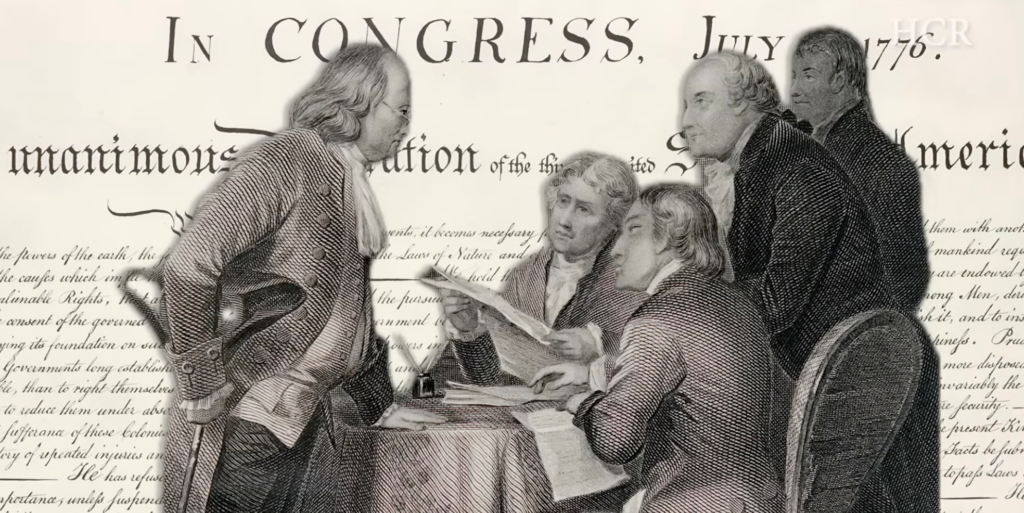
The Declaration of Independence was an indictment of the wrongs committed by King George III and an assertion of self-government.
It was two weeks later, on July 23, 1776, that Huntingtonians celebrated the news of the Declaration of Independence, as reported in Holt’s New York Journal:
Yesterday the Freedom and Independence of the Thirteen United Colonies was, with beat of drum proclaimed at the several places of parade, by reading the Declaration of the General Congress together with the Resolutions of our Provincial Convention thereupon: which were approved and applauded by the animated shouts of the people who were present from all the distant quarters of this district. After which the flag which used to wave on Liberty-pole, having Liberty on one side, and George III on the other, underwent a reform, i.e. the Union was cut off, and the letters George III were discarded, being publicly ripped off: and then an effigy of the Personage, represented by those letters, being hastily fabricated out of the base materials, with its face like [Governor] Dunmore’s [Negro][loyalist] regiment its head adorned with a wooden crown and its head stuck full of feathers like Carleton and Johnson’s Savages, and its body wrapped in the Union, instead of a blanket or robe of state, and lined with gunpowder which the original seems to be fond of. The whole together with the letters above mentioned, was hung on a gallows, exploded and burnt to ashes. In the evening the Committee of this town with a large number of the principal inhabitants sat around the genial board, and drank 13 patriotic toasts, among which were, The free and independent States of America; The General Congress; The Convention of the 13 States; Our principal military Commanders, and success and enlargement to the American Navy. Nor was the memory of our Late brave heroes, who have gloriously lost their lives in the cause of Liberty and their Country forgotten.
Huntington Town Records, Volume III, pages 6-7. Dr. Gilbert Potter, a devoted Huntington patriot, concluded the town’s celebration by quoting this ditty which refers to Great Britain as “John Bull”:
Rudely forced to drink Tea;
Massachusetts in anger.
Spills the Tea on John Bull;
John calls to bang her.
Massachusetts enraged
Calls her neighbors to aid
And give Master John a severe beating
Now, good men of the law, pray, who is in fault,
The one who began, or resent the assault?
“Old Times in Huntington, An Historical Address,” by Henry C. Platt, 1876.
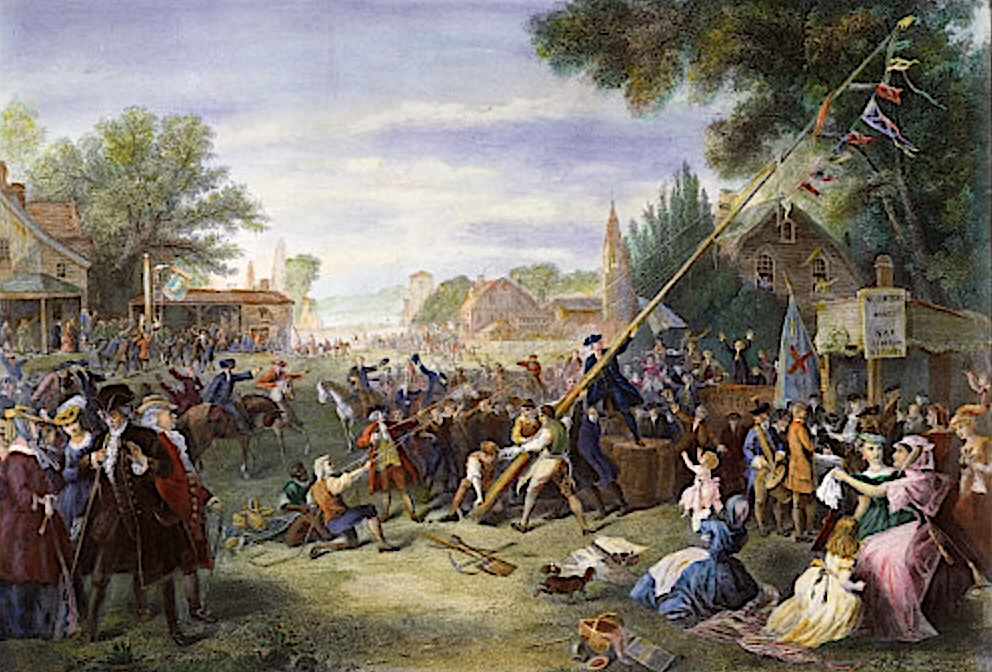
“Raising the Liberty Pole,” painted by Frederick Augustus Chapman, print by John C. McRae, 1876, depicts a scene that occurred in 1776 throughout America.
THE BATTLE OF LONG ISLAND LOOMS
As battle approached, it was “learned that the inhabitants of Kings County had determined not to oppose the British.” A committee was appointed, including Huntington’s John Sloss Hobart, a devoted patriot who served with the Sons of Liberty, the Committee of Correspondence, as well as a delegate to the Provincial Congresses, and likely was the author of Huntington’s 1774 Declaration of Rights, to direct efforts in Brooklyn “to secure the disaffected, to remove or destroy the grain, and if, necessary, to lay the whole country to waste.” Dennis, page 75.
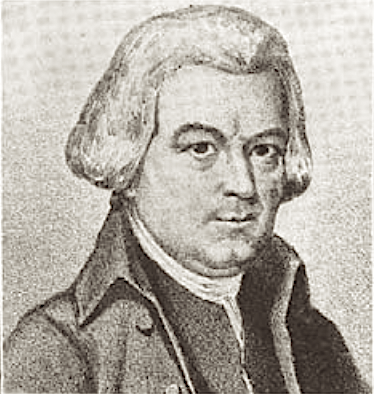
John Sloss Hobart (1738-1805), a leading Huntington patriot, owned much of Eaton’s Neck.
On August 24, 1776, Brigadier General Nathaniel Woodhull, commanding the militias of Suffolk and Queens Counties, was ordered by New York’s Provincial Congress to march half of the Western Regiment of Suffolk County’s Militia west to Queens County, to prevent stock and supplies from being seized by the British. This effort failed. However, Colonel Josiah Smith did march his Suffolk County Militia west, intending to join up with Washington’s Continentals at the west end of Long Island, positioned to meet the impending British attack. Dennis, page 81.
On August 26, 1776, as the great battle loomed, Gilbert Potter, one of Huntington’s most devoted rebels, wrote to patriot General Woodhull, informing him that “two ships, one brig and three tenders” had landed British regulars in the Wading River/Mount Sinai area, about 55 miles east of Huntington, and that they were “shooting cattle.” Major Smith of the Suffolk County Militia had ordered a detachment to head towards that landing, but the Huntington militia was gone, having headed west to meet the impending British attack in Brooklyn. Potter concluded his letter: “I have not ordered any men from here as yet, but am mustering them to make as good opposition as possible. We must have help here, every thing possible for me shall be done. I think Gen. Washington should be acquainted. Our women are in great tumult. Huntington Town Records, Volume III, pages 7-8.
In retrospect, the plan of Commander-in Chief of his Majesty’s Forces in North America, General William Howe, was clear: to distract Huntington and western Suffolk County militiamen by threatening their homes from the east, discouraging them from joining up with General George Washington’s Continental Army, which, with Washington unable to determine where the British would attack, was positioned to defend both Manhattan and the west end of Long Island, i.e. Brooklyn.
On August 22, the British began to position their forces on Long Island by landing approximately 20,000 men at Gravesend, along the southern coast of Brooklyn. The next day, British General William Howe issued a proclamation, offering the protection of his military to anyone who submitted to the King. As the British massed their troops at Gravesend and then moved up to Flatbush in Brooklyn, and along the western coast of Long Island, Suffolk County’s militiamen marched west to meet them. Lieutenant Colonel Gilbert Potter of Huntington led about 100 men into Jamaica, Queens, on August 25, 1776. Meanwhile, Major Josiah Smith led the rest of the Suffolk County Militia farther west. See Huntington Town Records, Volume III, page 9, footnote.
THE BATTLE OF LONG ISLAND
It was on August 27, 1776, just weeks after the Declaration of Independence was issued, that the largest battle of the Revolutionary War was fought at the west end of Long Island, just 30 or so miles from Huntington. Now referred to as the Battle of Long Island or the Battle of Brooklyn, on that date British Naval and Army forces attacked the elements of General George Washington’s Continental Army in Brooklyn. The battle was fought across Brooklyn and a small part of western Queens; Washington’s army was routed and, through poor generalship (this was the first time he commanded an army on a battlefield), he got it cornered with its back to the East River; had a nor’easter not prevented the British Navy from sailing up the East River, Washington’s route of retreat would have been blocked and the Revolutionary War would likely have ended right there within days. But, with the help of divine providence, Washington was able to secretly evacuate his army across to lower Manhattan, then up the island to Westchester and New Jersey, to fight until they triumphed in 1783.
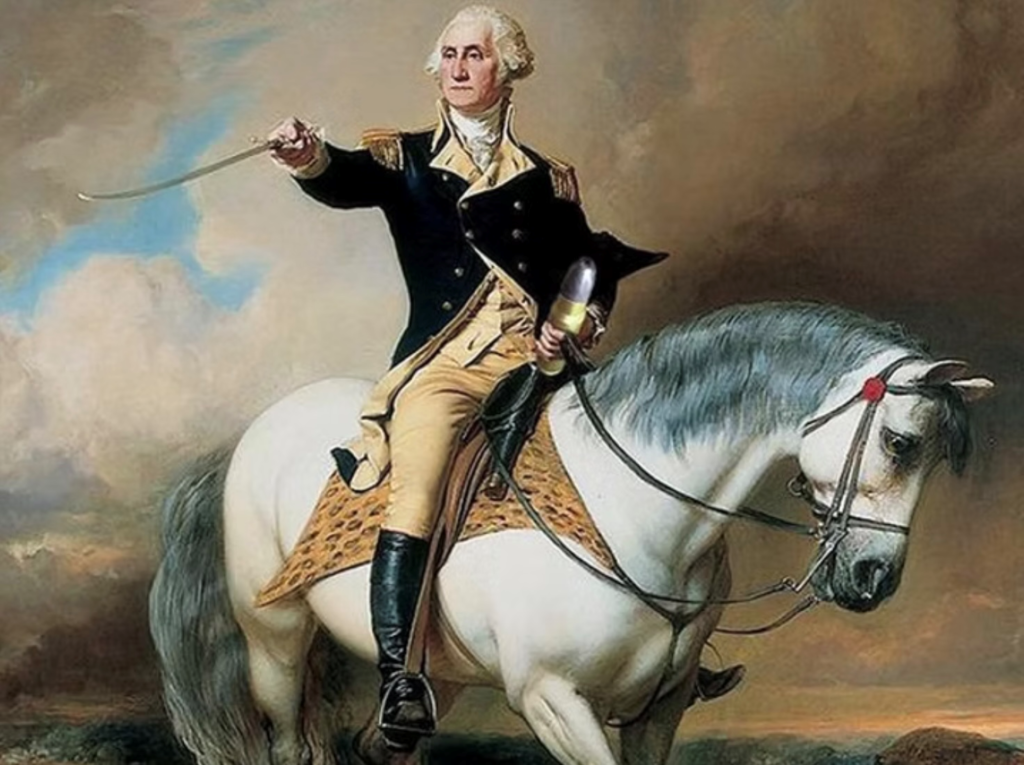
General George Washington commanded the Continental Army, and supporting militia, including elements from Huntington, at the Battle of Long Island. It did not go well. This was the first time Washington commanded an army in the field. His troops had never before been in combat, and many of them were ill and unable to fight. He was also outnumbered and the British Navy controlled New York Harbor, essentially unopposed. Nevertheless, Washington managed to save his army and, after years of battles and struggles, win the war.
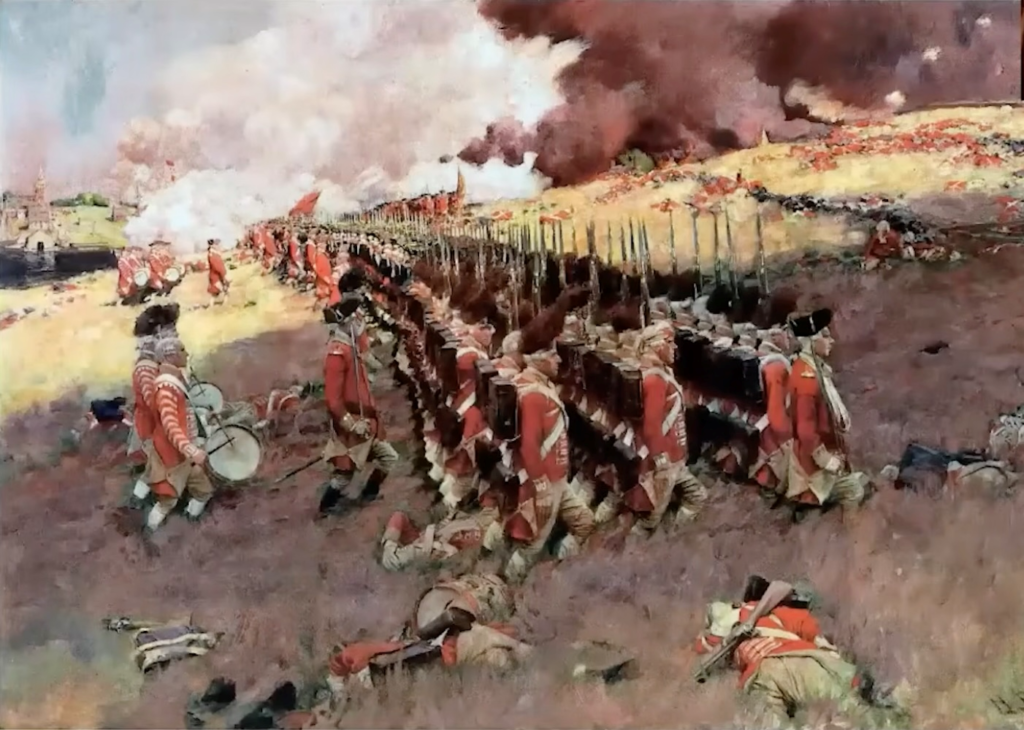
British soldiers in battle. The British Army was the strongest military force in the world at the time of the Revolutionary War.
THE SUFFOLK MILITIA MOVES INTO ACTION, THEN DISBURSES
Though the Suffolk County Militia, including elements of the Huntington militia, had gone west into Queens County to help meet the British threat as battle loomed, John Sloss Hobart and James Townsend reported in a letter to the Provincial Convention that when they arrived in Queens “to our unspeakable mortification . . . the militia had dispersed” and patriot General Nathaniel Woodhull, in command, had been captured (and would soon be dead). The livestock—mostly cattle and sheep—that had been gathered on Hempstead Plain to protect it from British seizure had been taken by the invaders. Dennis, pages 75-76. Hobart and Townsend retreated to Huntington, where they hoped to rally the militia.
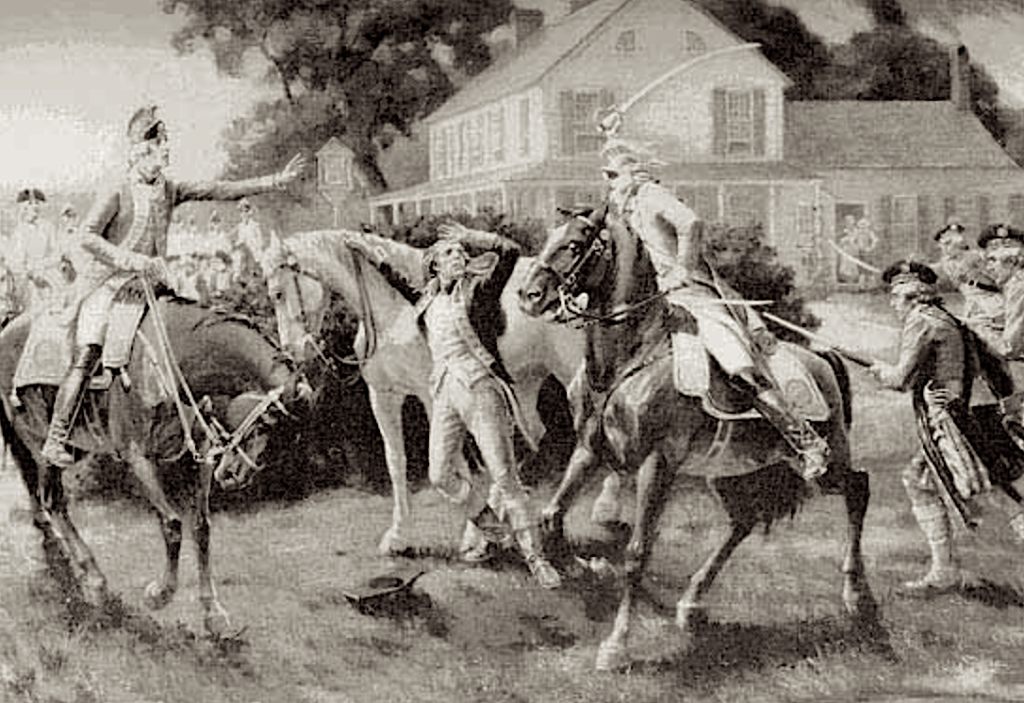
The capture of patriot General Nathaniel Woodhull. After his capture, a British officer demanded that he say, “God save the King.” When Woodhull replied, “God save us all,” he was assaulted with a sword, and died of his wounds three weeks later.
Suffolk County militiamen moved quickly after the disaster at the Battle of Long Island to mobilize to defend their homes, and their freedoms, against the British invaders. As per the account of Quartermaster Ebenezer Dayton, on August 29 orders were sent to the Brookhaven militia to march immediately to Huntington; “there appeared a high spirit among the men.” By the next day, three militia companies had gathered in nearby Smithtown. “Meanwhile the militia were uneasy and eager to march to Hempstead Plain to bring off the stock and make a stand in the woods E[ast] of the Plains.” That evening, Major Jeffrey Smith called his militia officers together and told them that it would be dangerous for them to march west “as their forces would not be sufficient to oppose the enemy, and he very much gave up the Island.” He concluded that “it would not be a good policy to incense a cruel enemy by being taken in arms; if they remained quietly at home they would fare better.” Huntington Town Records, Volume III, page 10. John Sloss Hobart proposed to rally the militiamen but noted that their leading officers were unavailable: “Col. Floyd is at Congress. Lt. Col. Potter is gone off. 1st Major Smith resigned; 2nd Major Brush is with us and begins to be in spirits.” Huntington Town Records, Volume III, page 9. Hobart wrote on August 31 that “A no. [number] of militia of this town are now under arms, but they complain their officers have left them.” Huntington Town Records, Volume III, pages 8-10. The Suffolk County militiamen soon dispersed to their homes. Huntington Town Records, Volume III, pages 10-11.
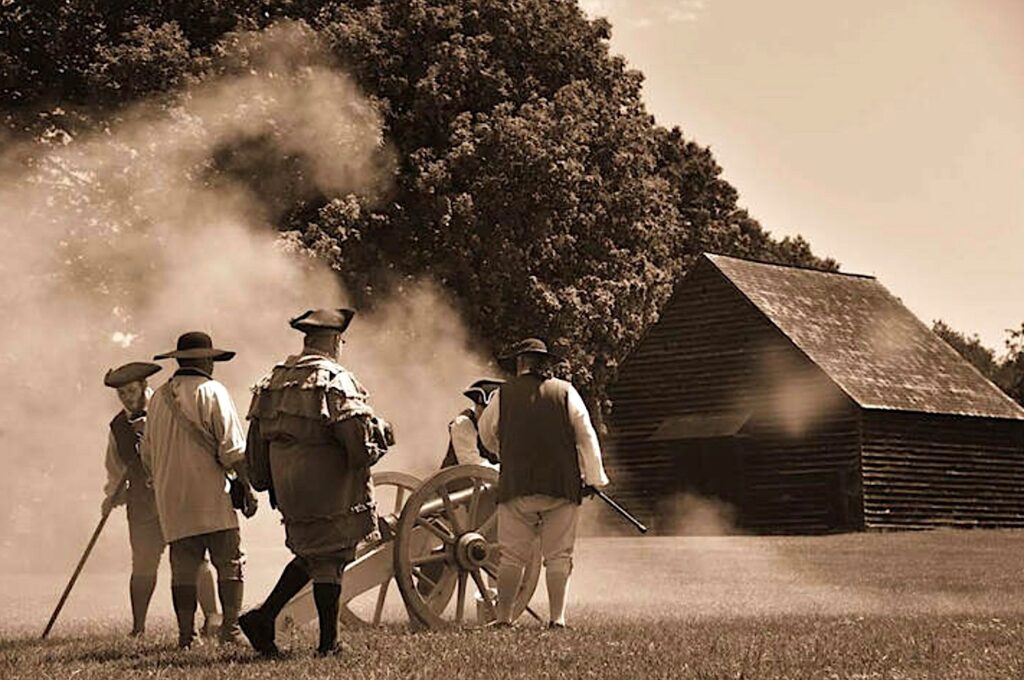
Re-enactors portraying Huntington militiamen. Photo courtesy of the Huntington Milita.
THE BRITISH OCCUPY HUNTINGTON AND THE OPPRESSION BEGINS
Within days, British troops occupied Huntington, but it remained a place of majority patriot sympathy and at the same time a gathering place for loyalist refugees protected by the British. In The Irony of Submission: The British Occupation of Huntington and Long Island, 1776-1783, published in 1992, Lois J. Meyer describes in detail what happened in Huntington during the Revolutionary War. According to History of New York During the Revolutionary War, Volume I, by Thomas Jones, written 1783-1789, published 1879, at page 359, Huntington was a “decent, complete, pretty place, with an Episcopal Church, and Presbyterian meeting-house.” That would soon change under the yoke of British occupation.
Matters in and around Huntington moved quickly in late August 1776. The day of the Battle of Long Island, August 27, 1776, British General William Howe, Commander-in-Chief, America, appointed William Erskine as brigadier general in command of eastern Long Island. Erskine almost immediately issued this proclamation:
. . . I do hereby strictly enjoin and order all persons whatsoever in your County of Suffolk, upon your peril, to use your utmost efforts to preserve the peace of said county; and that all Committee-men and others acting under the authority of the Rebels, immediately do cease and remain at their respective homes, that every man in arms lay them down forthwith and surrender themselves on pain of being treated as rebels; and I hereby exhort all persons to be aiding and assisting His Majesty’s Forces by furnishing them with whatever lays in their power.
Revolutionary Incidents of Suffolk and Kings Counties, by Henry Onderdonk, Jr., published in 1849, page 44.
The day after the disastrous Battle of Long Island, John Sloss Hobart and James Townsend arrived in Huntington with the news of Washington’s rout. “By August 30, 1776, Colonel Josiah Smith’s Regiment [the Suffolk County Militia] was so badly cut up and demoralized that the colonel disbanded them.” Dennis, page 86. Just two days later, New York’s Provincial Congress passed a resolution “recommend[ing] to the inhabitants of Long Island, to remove as many of their women, children and slaves, and as much of their live stock and grain, to the main, as they can; and that this Convention will pay the expense of removing the same.” Mather, page 695.
British General Erskine, eager to provision his forces, ordered that Long Island cattle, wagons, and horses be brought to him, “for all which they shall be fully paid, His Majesty having sent his army, not for the oppression, but for the protection of the inhabitants.” He went on to threaten that “unless they show a dutiful submission in all respects, and an immediate compliance with these orders . . ., I shall be under the necessity of marching the forces under my command without delay into the county, and lay waste the property of the disobedient, as persons unworthy of His Majesty’s clemency.” Huntington Town Records, Volume III, page 13.
Just two days later, the occupation of Huntington began with the arrival of the King’s 17th Regiment of Light Dragoons; they set up camp there. In the war years that followed, other British Army units, loyalists, and Hessians would occupy Huntington. Huntington Town Records, Volume III, page 21. Orders were soon given to call the local militiamen together to lay down their arms “and take the oath of allegiance to the King, and sign a
roll of submission disclaiming and rejecting the orders of Congress or committees, and to obey the legal authority of the Government.” Revolutionary Incidents, page 45. Simultaneously, the president of the Huntington Town Trustees advised that the local militia should be disbanded. Revolutionary Incidents, page 46.
The British quickly moved to tame local opposition, forcing inhabitants to take oaths of allegiance to the King. Those oaths affirmed “that I hold true and faithful allegiance to his Majesty King George . . . and hold an utter abhorrence of congresses rebellions, etc.” Early in November 1776 these signed oaths of allegiance were delivered from Suffolk County towns to Royal Governor William Tryon; according to Charles Street, these oaths “were concessions forced from a conquered people.” Huntington Town Records, Volume III, page 20.
Loyalist troops also moved with dispatch. Just one day after Washington’s retreat on the evening of August 29 into the morning hours of August 30, 1776, from western Long Island to Manhattan, Major General Oliver DeLancey, commanding loyalist troops on Long Island, wrote from Jamaica, Queens, that “His Ex[cellency] the Hon[orable] W[ilia]m Howe, Gen[eral] and commander-in-chief of all his Majesty’s Forces in N[orth] A[merica, from Nova Scotia to the Floridas,” called on all inhabitants of Suffolk County to “lay down their arms and again become loyal and obedient subjects.” In exchange for their “submission” he promised them “protection.” Huntington Town Records, Volume III, page 14.
“On September 2, 1776, the British established headquarters in Huntington as their strategic base for operations on Long Island for the duration of the Revolutionary War, and imposed excessive treatment upon the inhabitants to coerce them into complete submission.” Dennis, page 104. That same date, Israel Wood, president of the Town of Huntington’s trustees, wrote to the commander of the 4th New York Line of the Continental Army, urging him to disburse his regiment. Onderdonk, page 46.
Days later, loyalist General DeLancey issued a proclamation from Jamaica, noting that he had been authorized by British General Howe to “raise a Brigade of Provincials solely for the defence of the Island, to re-establish order and gov[ernmen]t within the same: to apprehend or drive all concealed rebels from among His Majesty’s well-affected subjects. . . .” DeLancey went on to offer any man who raised a loyalist militia company of 70 men three officer appointments—a captain, a lieutenant, and an ensign–and specified that those recruited were to “be paid and subsisted as the officers and soldiers are in the British pay.” He concluded with the hope that “the inhabitants of the county will cheerfully raise the men wanted for this service, as it will prevent the disagreeable necessity of detaching them . . . .” Huntington Town Records, Volume III, pages 14-15.
On September 5, DeLancey followed up with another order, directing that “all the fat cattle and sheep in Suffolk Co[unty] to be immediately driven down to Jamaica,” where they would be weighed and receipts for their seizure issued. Separate accounts would be kept for livestock belonging to “the people in actual rebellion, whose cattle must be forced down for the refreshment of the Kings troops.” He continued with a threat: “This order must be speedily obeyed, or the county will otherwise feel the resentment of the King’s Troops.” Civilians would be allowed to keep only as many livestock “as is necessary for their own subsistence.”
Orders soon followed that 1500 local men be recruited to serve with the British. Jones,page 264. By October 7, 300 British troops were in Huntington, assigned to get the local militia to join them. Mather, page 174.
MANY PATRIOTS FLEE TO CONNECTICUT
Though some Huntington patriots remained in their homes throughout the Revolutionary War, many, determined to escape British occupation, fled as quickly as possible to Connecticut. “The majority of [those who fled] had left their homes on short notice, with little provisions for the future, in money, clothing or food.” Dennis, page 141. As per a September 7 report to New York’s Provincial Congress, British forces were by then effectively preventing both people and cattle from leaving Long Island. Mather, page 695. However, British efforts to prevent escape soon failed. New York’s Provincial Congress asked for Connecticut’s help in aiding the flow of Long Island refugees. Connecticut’s Town of Guilford hired a captain and sloop in September to bring Long Island refugees, their property and livestock, across. Saybrook took similar actions. Dennis, page 91. Norwich and New London brought patriots and their possessions over, beginning in September. Dennis, page 93. In 1787, with the war over and accounts being settled, New York State authorized reimbursements to Long Islanders whose cattle had been sold by the Connecticut towns. Dennis, page 92.
Long Island patriots continued to flee to Connecticut as conditions under the British occupation deteriorated and the war dragged on. More than three years after Huntington was occupied by the British, The New London Gazette of September 22, 1779, reported that “last Friday 35 young men came from L.I. to Saybrook, who left their homes on account of being ordered to work on the fortifications on the West end of L.I., apprehending they should be ordered thence to the West Indies.” Onderdonk, page 87.
On September 18, 1776, only three weeks after the disastrous Battle of Long Island, Connecticut’s patriot Governor Jonathan Trumbull and its Council of Safety noted that “great numbers of our distressed friends, Inhabitants of Long Island, by advice and request of the Convention of New York have fled and escaped from the enemy there, and more are still expected from thence into this State in a destitute and helpless condition.” They advised Connecticut’s towns to financially support these refugees, subject to the action of the next session of the State Assembly. Mather, pages 167, 375.
THE BRITISH STEAL SUPPLIES FROM HUNTINGTONIANS
As the British forces settled into Huntington, locals were required to supply food for the soldiers, fodder for their horses, and wood for their cooking and to keep them warm through the winter. British Commissary of Forage John Morrison, on September 27, 1776, issued an order from New York City, demanding grain and straw from local farmers; “as to hay we must have the whole.” A system of reimbursement was set up, but it was largely for show, with little payment made. Huntington Town Records, Volume III, page 16, footnote. Morrison added that farmers who had fled their homes were to be “deemed Rebels and dealt with accordingly;” their property would be seized with no pretense that compensation would be made. Huntington Town Records, Volume III, page 17.
A corrupt system was quickly established by British commissaries, in which they issued certificates for their seizures of private property, but then made it virtually impossible for those holding the certificates to redeem them. Many farmers, frustrated in their efforts to be reimbursed, sold those certificates at a discount of 20% to 50%, so as to receive at least some payment. Dennis, pages 120-121. Judge Thomas Jones was a loyalist from Queens who graduated from Yale, served as Recorder of the City of New York, and was a judge of the Supreme Court of the Province of New York. After the Revolutionary War, he fled to England, where he wrote his history of that event. Concerning the corrupt fortunes made by British commissaries during that period, he wrote: “No wonder Commissaries in this department every two years returned to England richer than half the princes in Germany, leaving successors to make their fortunes in the same manner.” Jones, page 346.
Throughout the years of British occupation, the seizure of the property of “rebels” required no compensation. On April 4, 1780, Colonel J.B. Simcoe, an officer in the Queens Rangers, responded to complaints made to his superior officer that he had seized property from Huntingtonians without giving them receipts for reimbursement: “I did not give receipts to a Number of People on account of their Rebellious Principles, or absolute disobedience of the General Order—the inhabitants of the town of Huntington came under both descriptions.” Huntington Town Records, Volume III, pages 58-59.
JURY TRIALS DENIED; OATHS OF ALLEGIANCE REQUIRED
The British occupiers quickly set up a Court of Police for Long Island. It had broad powers to decide civil or criminal matters without a jury, denying locals a cherished right. The British also sought to have locals sign an Oath of Allegiance to the King. In Huntington’s Town Records there is a handwritten document, blank as to individual names and the specific date in 1776, in the name of Zophar Platt, “one of His Majestys Justices of the Peace for the County of Suffolk,” stating that (name and town to be filled in) “is duly Enlisted in the Company to be commanded by Thomas Conkling in his Majestys Service under the Command of Genl. Delancy. That I administered to him the oath of Fidelity; and that he Acknowledged the Clauss against Mutiny and desertion had been read to him . . . .” Below the oath, in what appears to be a 18th century handwriting, is written: “A True Copy of the Oath Administered to Each man of Thomas Conklings Company.” Huntington Town Records, Volume III, page 21.
On September 12, 1776, General George Washington held a council of war with the officers of his Continental Army. They decided to retreat from New York City (which at the time occupied only the southern tip of Manhattan). Some of Huntington’s militiamen who had been at the Battle of Long Island stayed with him and joined the retreat; others returned to their homes. Huntington Town Records, Volume III, page 17, footnote 1.
With Long Island now firmly in British hands, and Huntington occupied by British forces, Royal Governor William Tryon came to Huntington in October 1776, gathered the locals, and threatened them with imprisonment or banishment if they did not disavow their earlier acts. First Settlements of the Several Towns on Long Island, by Silas Wood, initially published in 1824, page 119. Cowed, Huntington’s Revolutionary Committee, on October 21, 1776, “being thoroughly convinced of the injurious and inimical tendency of our former meeting and resolutions,” recanted all “orders and resolutions” and dissolved itself. Huntington Town Records, Volume III, page 20.
Charles R. Street, who transcribed and compiled the Huntington Town Records in 1889, placed this footnote in those records, Volume III, page 23, for the spring of 1777:
The conquest of Long Island at this time had become complete. The British troops occupied barracks in Huntington village, and they made a storehouse of the meeting house [the Presbyterian Church], no public worship being allowed. Two companies of Provincials [Loyalists] had been mustered into service of the King and this force was quartered on the inhabitants of Huntington. Horses, cattle and forage of all kinds were taken, not only to supply the troops in the barracks here, but, as it was said, “for the refreshment of the King’s troops in New York.”
THE OLD FIRST CHURCH IS DESECRATED
What is today known as the Old First Church—the Presbyterian church on Main Street in Huntington—was widely known as a place of strong rebel sentiment. As a result, it was targeted relentlessly by British and loyalist troops during their Revolutionary War occupation. The pastor of that church, Reverend Ebenezer Prime, was an outspoken patriot. “‘A fearless advocate of independence,’ [he] gave sermons encouraging resistance against the British as a holy cause.” “Seven Years in Exile: The Long Island Refugees,” by Lora Horton Higgins; master’s thesis, University of North Carolina Charlotte, 2001, page 26. His congregants were overwhelmingly patriots. During the war, no worship was allowed in the church; occupying troops and horses were boarded inside it, its bells were stolen by the British, and its lumber was stripped. In contrast, “ . . . in Huntington most loyalists attended St. John’s Episcopal Church, where the members were encouraged to fight against their rebellious neighbors.” Higgins, page 25, citing John Staudt, “A State of Wretchedness: A Social History of Suffolk County, New York in the American Revolution” (Ph. D. dissertation, George Washington University, 2005), page 77.Re-e
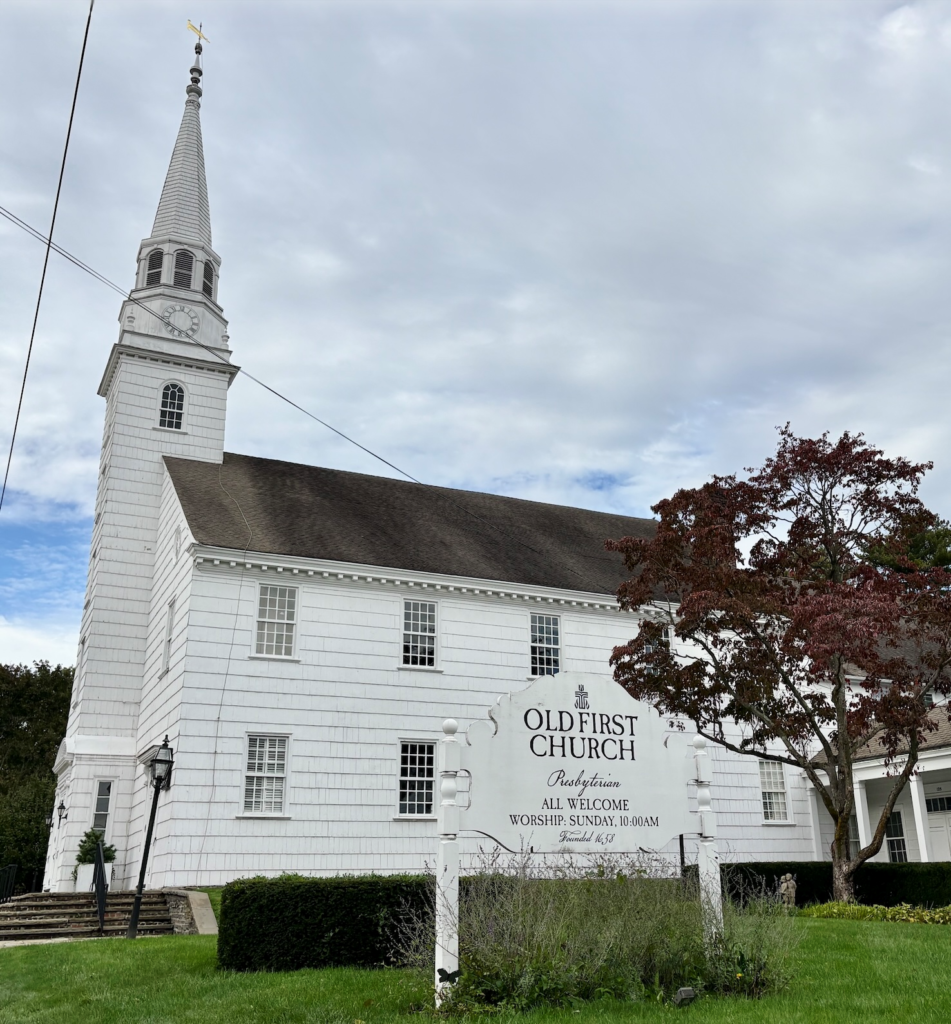
The Old First Church today.
REBEL REFUGEES ATTACK HUNTINGTON FROM CONNECTICUT
As the British occupation continued, many of the Huntington patriots who had fled to Connecticut returned across Long Island Sound in the hopes of bringing back to Connecticut their own property and/or raiding loyalists who were gathering in Huntington. This was dangerous work, typically involving the use of whaleboats. Whaleboats were about 30 feet long and could speedily move across the water, driven by anywhere from two to 10 rowers. They were light and quiet, perfect for secret raids. And both Connecticut and Long Island offered many inlets and coves where they could land unseen. Dennis, page 145. Sadly, many of these refugees, having retrieved their valuables, were then robbed before they could safely return to Connecticut. Dennis, pages 141-142.
As the war continued, these refugees-patriots launched whaleboat attacks into Huntington, largely targeting loyalists there. Their aim: capture loyalists, force them to Connecticut, and use them in prisoner exchanges. The Refugees of 1776, page 119. Loyalists returned the favor, raiding Connecticut and bringing patriots back as their prisoners. New York Gazetteer, June 23, 1779. On November 3, 1778, 20 whaleboats filled with rebels crossed the Sound from Norwalk, Connecticut, and attacked a house where many loyalists had gathered, killing several and making 16 prisoners. Huntington Town Records, Volume III, page 45, note 1. The New York Weekly Gazette and Mercury reported on the same attack, specifying that rebel soldiers had raided the house of the Widow Chichester, in which 25 loyalists were quartered; 3 loyalists were killed and 16 captured.
Nor was Long Island Sound a safe place for the British. On December 1, 1777, Gaine’s Gazette reported that a sloop, sailing from Huntington with a load of wood, was briefly captured by rebels in whaleboats; a British schooner rescued the sloop. Rebel activity on Long Island Sound was so prevalent that “no British vessel was considered safe in Huntington waters if it was not heavily armed.” Dennis, pages 162-163.
SUBUGATION
Huntington’s militia continued to exist, though not as a military force; rather, its officers were repeatedly ordered by the British to turn out their men to work on fortification projects. In July 1777, two militia companies were “ordered on duty” by the British. Huntington Town Records, Volume III, page 26. Militia company captains were periodically required to supply the British with lists of inhabitants and the grain (wheat, rye, and corn) they owned, acres of wood lots in their possession, etc. Huntington Town Records, Volume III, page 29, footnote.
As the occupation dragged on, year after year, the Town of Huntington continued to hold its annual meetings to elect trustees and other local officials. Huntington Town Records, Volume III, pages 23-24, 30. By November of 1778, the town trustees felt compelled to “humbly sheweth” the treatment Huntingtonians were being subjected to: they wrote meekly “To His Excellency Sir Henry Clinton Knight of the most Honourable order of the Bath Commander in chief of all his majesties Troops in North America from Nove-scotia to west flurrida & c & c.” a “Memorial and Humble Petition” noting that British troops had come through Huntington and stolen butter, “fouls,” wheat, and corn without payment. They affirmed that “Petitioners are Always Willing to supply his Majesties Troops with any thing they want that we have to spare and therefore we Look upon it A Great Hardship to be treated in this manner since in our Oath [of Allegiance] we are Entitled to his Majesties Protection . . . .” Huntington Town Records, Volume III, pages 34-35. The trustees here were cleverly using the Oath of Allegiance to the King that they had been coerced into signing as an argument against the looting of their property.
Meanwhile, in Kingston, New York, on April 20, 1777, the State of New York adopted its constitution. In July 1777, General George Clinton was sworn in as New York State’s first governor.
As Huntington Town Historian Robert Hughes wrote in 2025 in “Huntington and the Articles of Association,” on the Huntington History website, a second round of oaths of allegiance to the King were collected from locals in 1778:
Of the 403 men who signed the Articles of Association in 1775, 269 also signed the Oath of Loyalty to the Crown three years later; but 132 did not (5 of those, however, appear on the Islip list). Those who did not sign . . . had fled the Island; others may have died. Those who remained had no choice but to sign.
LOCALS FORCED TO BUILD BRITISH FORTIFICATIONS
The British repeatedly forced locals to erect fortifications in Huntington. In May of 1778, 30 Huntington militiamen, plus one sergeant and one corporal per day, were forced to build “works” [defensive positions] on Lloyd Neck, ostensibly as a protection against patriot raids from Connecticut. Huntington Town Records, Volume III, page 31. In 1784, Timothy Carll recounted that, in response to orders from various British officers, 224 men with axes and shovels, plus 12 with horses and wagons, had worked on fortifications in May 1778. The next month, 289 mandays of work was coerced from locals to erect the fort on Lloyds Neck. Carll’s list continues with the specifics of impressed labor working on fortifications for the British in 1779, 1781, and 1782. Huntington Town Records, Volume III, pages 121-122.
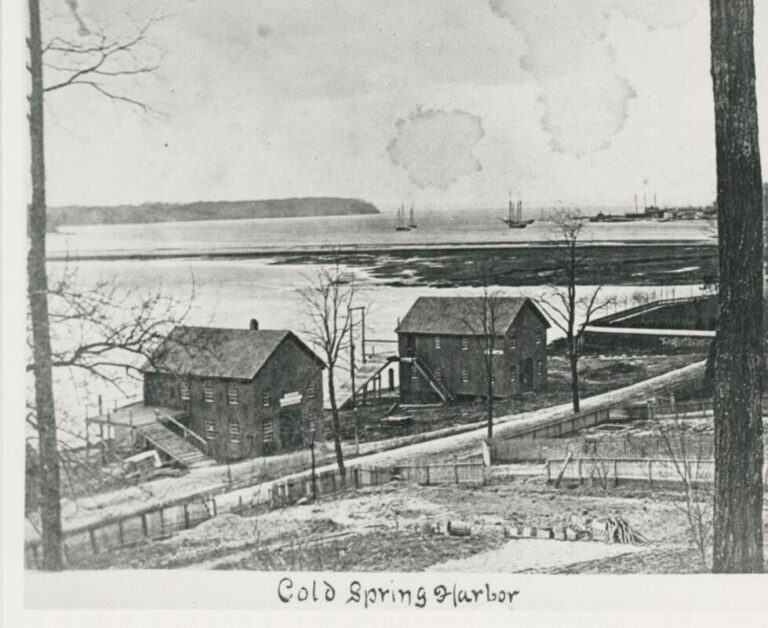
General Henry Clinton, in 1779 the commander-in-chief of the British armies in America, ordered that year that fortifications be built across Long Island. Locals were required to cut trees on their property and transport the wood as ordered. In July of that year, seventeen named local men were ordered to appear at Lloyds Neck, with three days provisions, horses, wagons, and ox teams, as well as shovels or spades, to build Fort Franklin there. Huntington Town Records, Volume III, page 53. Soon thereafter, on August 10, 1779, Lieutenant Colonel Richard Hewlett, a loyalist officer from Queens, issued another order to Captain Conkling of the Huntington militia, requiring militiamen to report to the works at Lloyd’s Neck, with axes, shovels, spades, and “One Waggon with a good Team,” to work for a day. “Not a farthing was ever paid them, either for their labour, their wood, or travelling expenses.” Jones,Volume I, pages 347-348. Those who failed to report for work, as ordered, were fined; the British colonels who routinely rejected any and all excuses for not appearing pocketed the fines. If those who were fined failed to pay, their farms were seized and sold at auction; typically, the only bidders on those farms were the same two colonels or their comrade officers. Dennis, page 128. By September 1779, Fort Franklin, commanding Cold Spring and Oyster Bay Harbors, had been completed and garrisoned by five hundred troops; loyalists sheltered there under British protection. Fort Franklin became a prime target of exiled Huntingtonians; it was attacked repeatedly by patriot forces coming across Long Island Sound from Connecticut. The Irony of Submission, pages 16-17.
THE OCCUPATION CONTINUES
Huntington was occupied by hostile military forces, including British regulars, Hessians, and/or loyalists, from 1776 into 1783, with only occasional short breaks. During the winter of 1776-1777, a loyalist battalion, composed of 500 local men, was quartered in Huntington. Early in 1777, this battalion left Huntington for Kingsbridge, but soon returned to Huntington and built a fort.
In February of 1777, Gaine’s Mercury, a New York newspaper, reported:
There are two companies of Tories stationed at Huntington, but not a man E[ast] of there; also about 10 or a doz[en] regular officers, without any men. They are billeted on the inhabitants, all of them without pay, and have plundered, stole and destroyed to such a degree, that the inhabitants must unavoidably starve in a little time, for want of food. Sundry of the principal men have been beaten in an unheard of manner for not complying with their righteous requests, particularly good Dr. Platt and Mr. John Brush. The Meeting-House made a storehouse of, no public worship allowed of, and the good people assembled 5 miles out of town, at West Hills—they (British) followed them, and broke up their assembling together any more.
Onderdonk, page 63.
On June 24, 1777, a Hessian soldier wrote to his brother about his service in Huntington:
. . . the regiment were quartered in an old church. We were also obliged to spend a night in it, or rather among the tombstones, as we were unable to find another place for our equipage or any other shelter for ourselves—if a night in a graveyard could be called that term. This experience gave us our first conception of what is meant by war in America.
On December 28, 1777, Huntington resident Silas Sammis submitted a claim for reimbursement for forced service to the King, imprisonment and false arrest, sheep, hogs, timber, carting services, “for working upon forts,” and for money and goods stolen from him. Many similar claims were submitted in vain during the Revolutionary War by other locals.
By spring of 1778, the British troops had left Huntington. But, by the fall, 1000 occupiers were back in town, stealing whatever they wanted from the locals. An order was issued in September 1778, requiring all Huntington males between the ages of fifteen and seventy to appear in New York City before loyalist Governor William Tryon “to wait on His Excellency.” Failure to do so would result in a fine; continuing refusal would mean that the individual would be exiled, “obliged to Quit the Island with Their families.” Huntington Town Records, Volume III, pages 33-34.
At a Town of Huntington meeting on May 4, 1779, a resolution was approved for the town to reimburse residents for their horses and oxen seized by the British two months earlier. However, as per Charles R. Street in Huntington Town Records, Volume III, page 51, though this action was “highly commendable,” it was “not generally pursued.”
On July 10, 1779, Loyalist Brigadier General Oliver DeLancey, “Commandant of Long Island,” clearly frustrated by violent resistance to British control, decreed that residents “Who have sons and near Relations with the Rebbles” who were “Committing Scandalous Robberies and secretly in the night carry off Peaceable and Inoffensive Inhabitants to Captivity” would be exiled to Connecticut and their property given to loyalists. Huntington Town Records, Volume III, pages 51-52. At about the same time, DeLancey urged citizens to report enemy boats landing from Connecticut; those who failed to do so would be considered “Privy to and Abetting the enemy’s Designs.” Huntington Town Records, Volume III, pages 52-53.
In October 1779, Hessian soldiers tried several times to break into the Widow Platt’s Tavern, just across Park Avenue from the Village Green, ostensibly to steal what they could. The third time they came to break in, they broke a window and fired shots into the building. Three Huntington residents, including the enslaved Elijah, fought them off; one of the Hessians was killed, another was struck in the head with a hatchet by Elijah, who himself was shot through the head. Elijah fully recovered and lived out his life in Huntington, where “He lived many years afterwards, and was a great fiddler, furnishing the rustic parties in Huntington, of that time, with music for dancing.” “Old Times in Huntington, An Historical Address,” by Henry C. Platt, 1876.
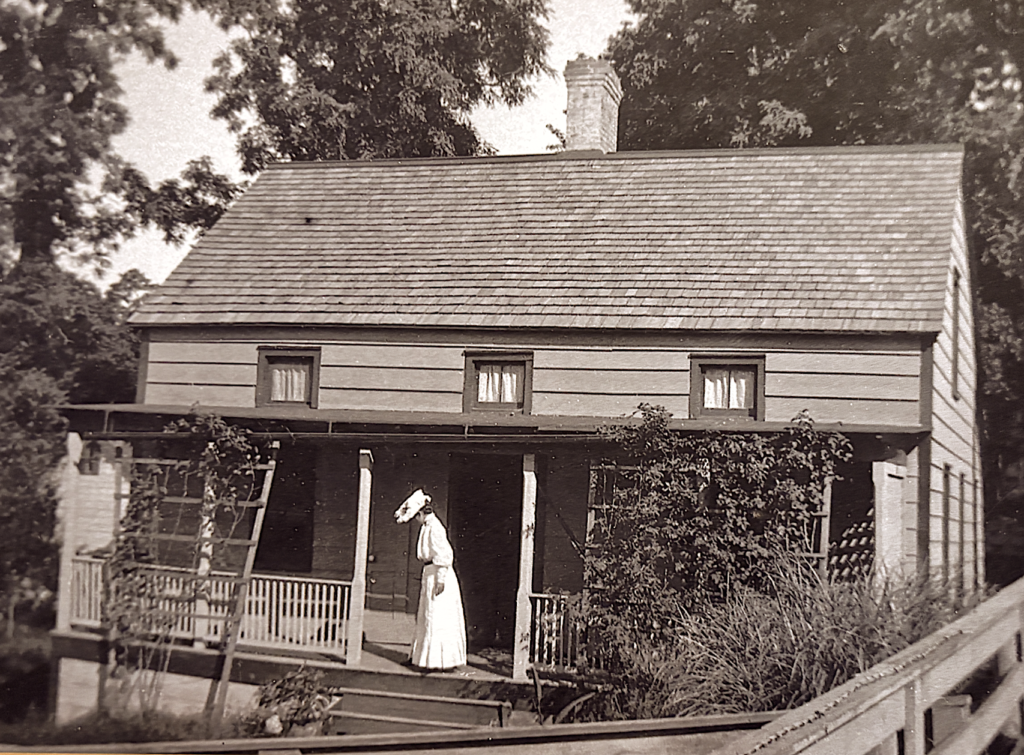
During the Revolutionary War, Platt’s Tavern stood on Park Avenue, across from the Village Green, just south of Main Street. The building was moved, around 1850, to the pottery site on Huntington Harbor. It was destroyed by fire in 1915.
By April 1781, as per Colonel Benjamin Tallmadge, who ran a patriot spy ring, 800 men, mostly refugees or deserters from the American army, were at Lloyds Neck. 500 of them were armed, and they had a small navy. Another patriot attack on Lloyds Neck was launched on July 12, 1781; it accomplished little. The Irony of Submission, page 19. The Huntington militia did not come to the assistance of the loyalists. Huntington Town Records, Volume III, pages 68-69. In October 1782, the British evacuated their position on Lloyds Neck. The loyalists there were then subjected to repeated attacks. The Irony of Submission, page 21.
As Lois J. Meyer concluded in The Irony of Submission, at page 22:
During the British occupation of Huntington, several other forts were erected, besides Fort Franklin at Lloyd’s Neck, at other places in town. There was also a continual flow of troops, provisions, or supplies passing from or through town as well, and the local inhabitants were well aware that a war was being waged and that they were its prisoners.
WOODLANDS: A SORE POINT
British demands for firewood, essential for their cooking and heating, continued, and became a particular sore point for local farmers, who relied on their woodlands for survival and prosperity. Huntingtonians were required to supply wood, ostensibly in exchange for receipts that would be paid by the Crown; those payments were never made. Alexander Sammis, in Februrary 1780, petitioned New York’s Provincial Governor Willam Tryon, reporting that he had cut 36 cords of wood and sent it to New York City for British use, and had another boatload ready to go, but that three named individuals had wrongly received permission to cut 300 cords from his property. Sammis prayed that Tryon allow the local British colonels to amend this order to allow him to supply the wood they deemed necessary for New York City. Huntington Town Records, Volume III, pages 59-60. Less than a month later, Huntington Town Clerk Solomon Ketcham asked that those who had been authorized to cut wood “under the Character of Refugees” on his land and the woodlands of others, be ordered to desist, and that the local British officers be allowed to determine how much wood was needed. Huntington Town Records, Volume III, page 61.
On July 11, 1780, a list was written of Huntington men in Captain Phillip Conkling’s militia company and the acres of woodland they owned; 10% of that total was to be cut and delivered to the British. Huntington Town Records, Volume III, pages 64-65. By Charles Street’s estimate, “it took fifty years to recover from the havoc made by the war in the Huntington woodlands.” History of Suffolk County, edited by W.W. Munsell, page 43.
PATRIOTS MAKE LIFE DIFFICULT FOR LOYALISTS
But, despite the British military occupation, and repeated threats against “rebels,” all was not safe for those in Huntington who sided with the British. On March 10, 1779, loyalists in Huntington posted a “Caution to Travelers,” warning that rebels were active at Bread and Cheese Hollow there, naming Nathaniel Platt, Thomas Tredwell, and Major Jesse Brush as rebel leaders, and noting:
The unfortunate Loyalists in this part of the country are greatly exposed to the savage cruelty of these assassins. They [loyalists] are few in number and unable to defend themselves from the frequent incursions of the parties who land from Connecticut and who are supplied with provisions and intelligence by their confederates above mentioned.
Huntington Town Records, Volume III, page 46, note.
In July of 1779, Gaine’s Gazette published a letter from a Huntington loyalist, describing “the friends of Government” as “greatly distressed” that British troops were no longer stationed there, and “the rebellious part of the inhabitants in this town” were no longer “in awe,” but had “become more insolent than ever,” plundering their neighbors and threatening to have “all the loyalists carried off to Con[necticut].”
But Huntington continued to be an important British military base. In July 1779, two thousand British soldiers boarded ships, crossed Long Island Sound and raided Connecticut, then came to Huntington for a few days before returning to New York City. A few months later, British troops were ordered to evacuate Rhode Island; they stopped in Huntington on their way, plundering homes. Some of them soon returned to Huntington, where they stayed through the winter. On November 3, 1779, as reported in Rivington’s Gazette, a Hessian regiment landed in Brooklyn, then marched to Huntington. During 1780 and 1781, British and/or loyalist troops periodically passed through, or stayed briefly, in Huntington.
REFUSAL TO COOPERATE WITH THE OCCUPIERS
It was on August 19, 1779, that loyalist Brigadier General Oliver DeLancey ordered 210 Suffolk County militiamen, including men from Huntington, to march immediately to Brooklyn Heights in order to work with a British engineer to construct military fortifications there. He also demanded tens of thousands of various wooden pieces, including pickets and rails, to be used in that construction. After the commander of the Suffolk militia, Colonel William Floyd, replied that it was impossible to comply with this order, on August 26, 1779, the British adjutant general issued a response to Huntington’s militia captains, warning them that if there were not immediate compliance with this order, locals would be exiled and their farms seized:
“ . . . a Detachment of Troops will be Sent into that District and Every Person who Shall have refused to Contribute his Assistance towards a Work in which the Kings Service and the Interest of the Loyal Inhabitants are so Intimately Blended Shall be turned without Distinction out of Long Island and their Farms will be Allotted for the Support of those who have Suffered for Real Attachment to the Government.”
Huntington Town Records, Volume III, pages 56-57.
Huntington residents continued to complain, in writing, about their treatment. Richard Conklin wrote that, in August of 1778, a “good wagon” was taken from him and he worked for seven days with that wagon “upon the Fort.” August 20, 1779, Colonel Paterson took a trumpet from Conklin’s home. And, in July 1780, Colonel Hewlett “put a man upon me . . . for doctoring and nursing;” that lasted for almost five and one-half months. Huntington Town Clerk’s Archives, Manuscript Collection.
On April 13, 1780, British Captain Squire listed the farms of nine Huntington residents “which were evacuated when the Island was taken” and were then occupied by other named individuals. Huntington Town Records, Volume III, pages 62-63. As Charles R. Street notes in Huntington Town Records, Volume III, page 62, note, this was a partial list of those who had been banished after refusing to take the oath of allegiance, and the names of loyalists who had taken over their farms. This process did not go unopposed: Major Jesse Brush, a patriot leader described as “strong as Hercules and bold as a lion,” sent a warning on August 25, 1780, to the loyalist who had taken possession of his property: “I have repeatedly ordered you, especially April 15th to leave my farm. This is the last invitation. If you do not your next landfall will be in a warmer climate than any you ever lived in yet. 20 days you have to make your escape.” Huntington Town Records, Volume III, pages 62-63.
Though Huntington’s militiamen did some of the forced labor demanded of them by the British, they earned a reputation with the British occupiers and their allies as uncooperative. On July 16, 1781, Hessian Major General Friedrich De Riedesel wrote from Brooklyn to Brigadier General Oliver DeLancey, who commanded the loyalist brigade on Long Island, commending the Queens County Militia for “their alertness and willingness to assist . . . ,“ but then criticizing Huntington’s militia: “It grieves me to be under the Necessity of excluding from this Number the Huntington Militia. But their unwilling Conduct of absolute neglect in Giving any support to Lloyds Neck—but too, sensibly, Obliges me to it.” Huntington Town Records, Volume III, pages 68-69.
THE TIDE OF WAR TURNS AGAINST THE BRITISH
As the Revolutionary War continued, British defeats in battle mounted. On October 19, 1781, that British Lieutenant General Charles Cornwallis surrendered his army at Yorktown, Virginia. Congress then declared December 13 as a day of public thanksgiving for the success of American armies, “but this success seems to have led to more tyrannical treatment by the British soldiers of the people of Huntington.” Charles R. Street in Huntington Town Records, Volume III, page 70, footnote. Street adds:
Though the war continued nominally several months longer, and the people of Huntington suffered more than ever from the barbarities of the soldiers camped in their midst, the fighting practically came to an end early the next Spring. The War Ministry of Lord North went out of power, and in May instructions were given by the British Government to negotiate for an early peace, and the Summer of 1782 passed in correspondence with a view to peace.
Huntington Town Records, Volume III, page 70, footnote.
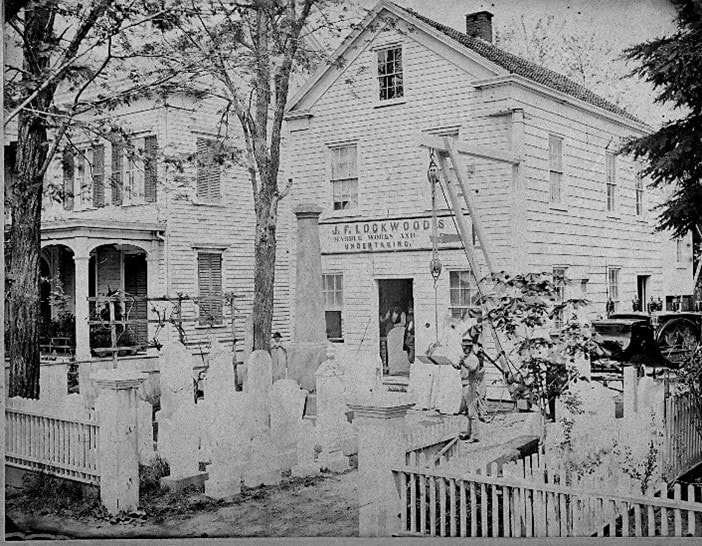
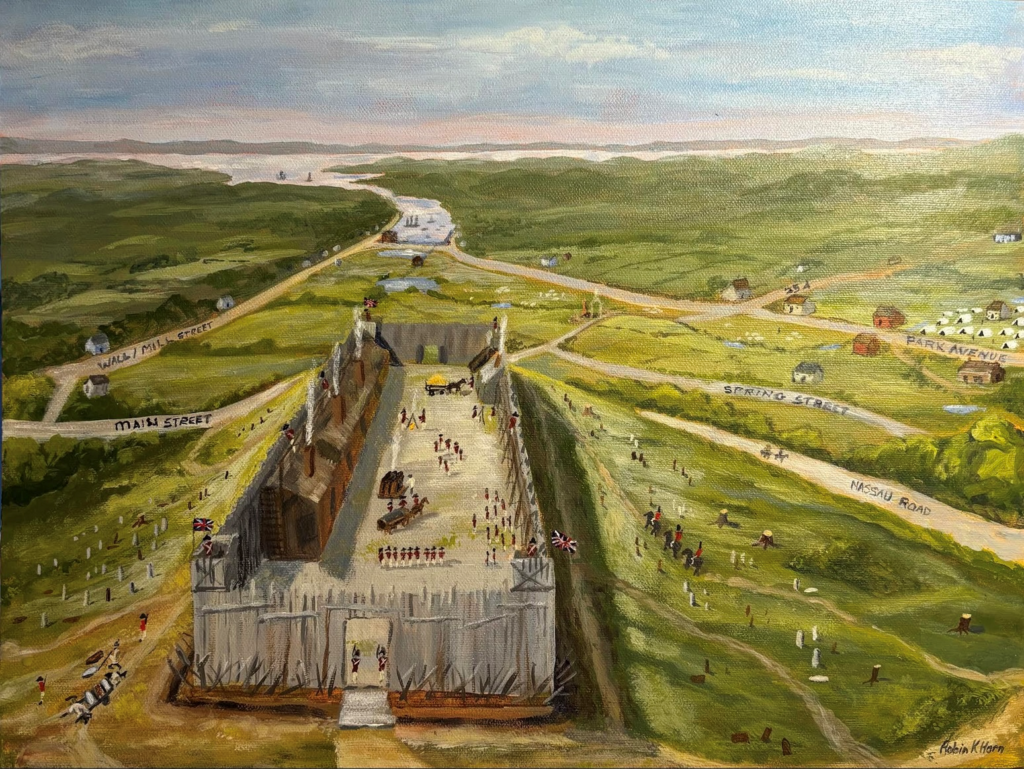
Nevertheless, by the fall of 1782, the British, 600 strong, were back in Huntington. This was a year after Cornwallis’s surrender that had effectively ended the war. It was months after peace talks between the United Stated and Great Britain had begun in April 1782, in Paris, France, and about the same time as the Provisional Treaty of Peace had been agreed upon on November 30, 1782, effectively ending the fighting. Nevertheless, the British occupying Huntington had a new project aimed at punishing the local rebels: forcing them to build Fort Golgotha (named for the place where Christ was crucified) on the graves of their ancestors, the very land where Huntington had buried its dead since soon after its founding in 1653. According to Huntington Town Records, dated August 22, 1783, as early as 1778, 260 pine boards surrounding the Old Burying Ground had been taken by the British or their loyalists. That desecration, however, was nothing compared to what was to happen in the Old Burying Ground during the winter of 1782-1783.
FORT GOLGOTHA: THE WANTON DESECRATION OF HUNTINGTON’S OLD BURYING GROUND
On November 5, 1782, Captain Cornelius Conkling of the Huntington Militia reported that he had been ordered to compile a report of the “number of servants,” (apparently a reference to enslaved men), wagons, horses, and oxen available locally. He had been further ordered “to send one Quarter of the men with Axes Day by Day till the works were done . . . .” Huntington Town Records, Volume III, page 76. On November 26, Huntington Militia Captain Philip Conkling conveyed an order from loyalist Lieutenant Colonel Benjamin Thompson (who after the war fled to England, where he was knighted as Count Rumford) to “immediately warn all the Carpenters . . . to appear by 8 O’Clock every morning with their Tools to work at said Fort in Town on failure of which I’m under an Obligation to return their names.” Huntington Town Records, Volume III, pages 81-82.
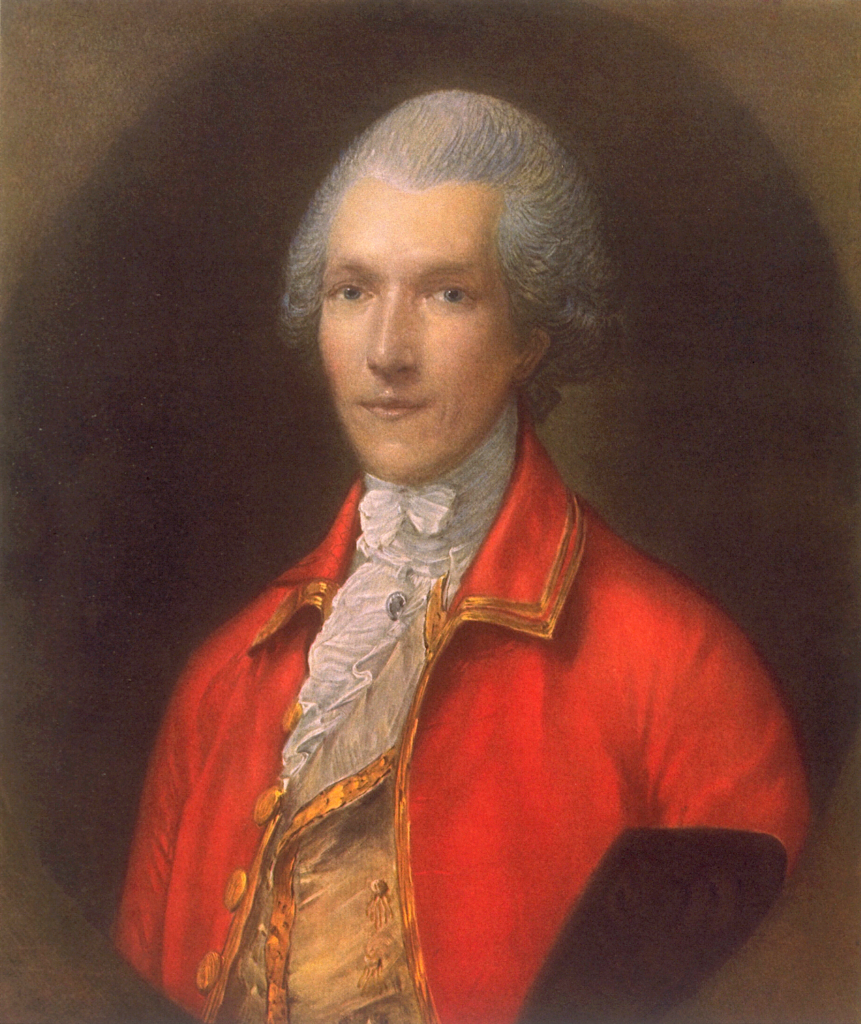
Lieutenant Colonel Benjamin Thompson was born in Massachusetts, married into wealth, and declared himself a loyalist in 1775. He recruited and armed loyalists to fight with him during the Revolutionary War and led troops that occupied Huntington. He raised the King’s American Dragoons in 1781 and terrorized Huntington in 1782 and 1783. It was Thompson who led the desecration of Huntington’s Old Burying Ground. After the war, he fled to England, where he was knighted. Portrait by Thomas Gainsborough.
Charles R. Street, in Huntington Town Records, Volume III, page 76, details the work done by locals on Fort Golgotha:
While the fort was being constructed a force of carpenters was set at work tearing down the church, which stood where the present First Presbyterian Church [now known as the Old First Church] now stands, and the material was used in building the fort. Lumber in barns and other buildings was also taken for the purpose. Apple orchards were cut down and fences levelled in all directions and used on the fort. The fort was built in about 15 days . . . . The works, including huts for the soldiers, occupied about two acres of ground. The tombstones, which were dug up, went into the construction of the fort for fireplaces and ovens and it is a tradition that loaves of bread came out of these ovens with the reversed inscription of the gravestone on the lower crust. These outrageous acts were principally committed after peace had been determined upon by Great Britain and this country.
Seventy-five locals were recorded as having worked on the construction of the fort; their work varied from up to 15 hours each down to an hour. Huntington Town Records, Volume III, pages 76-78.
Street, in his Huntington Town Records, Volume III, page 82, footnote, described the fort as being placed “[n]ear the center of the village of Huntington” on “a hill of considerable elevation.” “It commands a fine view of the harbor, bay and sound and the distant shores of Connecticut.” However, as Street notes, it was on consecrated ground: “It had been the principal burying ground of the town for more than a hundred years;” tombstones marked the burials of the town’s ancestors. “It was upon this spot, sacred to the tenderest sentiments of the human heart, that Col. Thompson decided to erect the fort . . . .” Street concludes, “Probably nothing could have been done by the British soldiers at this period to so profoundly move the people to anger and grief as this horrid sacrilege . . . .”
On December 8, 1782, a resident of Stamford, Connecticut, “D.M.,” passed through Huntington; he described Fort Golgotha:
. . . it extends a considerable distance north and south, the works altogether of earth, about six foot high, no pickets or any other obstruction to the works, except a sort of ditch, which was very inconsiderable some brush like small trees fixed on the top of the works, in a perpendicular form; he was told it encompassed near 2 acres of ground. It is built on a rising ground, and takes in the burying-ground; the Meeting house they have pulled down.
The troops in town were Thompson’s Loyalist Regiment, Queen’s Rangers, and the Legion, totaling “550 effectives.” They were “quartered as compact as possible in the inhabitants houses and barns, and some hutted along the sides of the Fort.” D.M. concluded, “The inhabitants of Huntington do suffer exceedingly from the treatment they received from the troops, who say the inhabitants of that Country are all Rebels, and therefore they care not how they suffer.” Huntington Town Records, Volume III, page 76.
Lieutenant Colonel Benjamin Thompson was born in Massachusetts, married into wealth, and declared himself a loyalist in 1775. He recruited and armed loyalists to fight with him during the Revolutionary War and led troops that occupied Huntington. He raised the King’s American Dragoons in 1781 and terrorized Huntington in 1782 and 1783. It was Thompson who led the desecration of Huntington’s Old Burying Ground. After the war, he fled to England, where he was knighted. Portrait by Thomas Gainsborough.
Charles R. Street, in Huntington Town Records, Volume III, page 76, details the work done by locals on Fort Golgotha:
While the fort was being constructed a force of carpenters was set at work tearing down the church, which stood where the present First Presbyterian Church [now known as the Old First Church] now stands, and the material was used in building the fort. Lumber in barns and other buildings was also taken for the purpose. Apple orchards were cut down and fences levelled in all directions and used on the fort. The fort was built in about 15 days . . . . The works, including huts for the soldiers, occupied about two acres of ground. The tombstones, which were dug up, went into the construction of the fort for fireplaces and ovens and it is a tradition that loaves of bread came out of these ovens with the reversed inscription of the gravestone on the lower crust. These outrageous acts were principally committed after peace had been determined upon by Great Britain and this country.
Seventy-five locals were recorded as having worked on the construction of the fort; their work varied from up to 15 hours each down to an hour. Huntington Town Records, Volume III, pages 76-78.
Street, in his Huntington Town Records, Volume III, page 82, footnote, described the fort as being placed “[n]ear the center of the village of Huntington” on “a hill of considerable elevation.” “It commands a fine view of the harbor, bay and sound and the distant shores of Connecticut.” However, as Street notes, it was on consecrated ground: “It had been the principal burying ground of the town for more than a hundred years;” tombstones marked the burials of the town’s ancestors. “It was upon this spot, sacred to the tenderest sentiments of the human heart, that Col. Thompson decided to erect the fort . . . .” Street concludes, “Probably nothing could have been done by the British soldiers at this period to so profoundly move the people to anger and grief as this horrid sacrilege . . . .”
On December 8, 1782, a resident of Stamford, Connecticut, “D.M.,” passed through Huntington; he described Fort Golgotha:
. . . it extends a considerable distance north and south, the works altogether of earth, about six foot high, no pickets or any other obstruction to the works, except a sort of ditch, which was very inconsiderable some brush like small trees fixed on the top of the works, in a perpendicular form; he was told it encompassed near 2 acres of ground. It is built on a rising ground, and takes in the burying-ground; the Meeting house they have pulled down.
The troops in town were Thompson’s Loyalist Regiment, Queen’s Rangers, and the Legion, totaling “550 effectives.” They were “quartered as compact as possible in the inhabitants houses and barns, and some hutted along the sides of the Fort.” D.M. concluded, “The inhabitants of Huntington do suffer exceedingly from the treatment they received from the troops, who say the inhabitants of that Country are all Rebels, and therefore they care not how they suffer.” Huntington Town Records, Volume III, page 76.
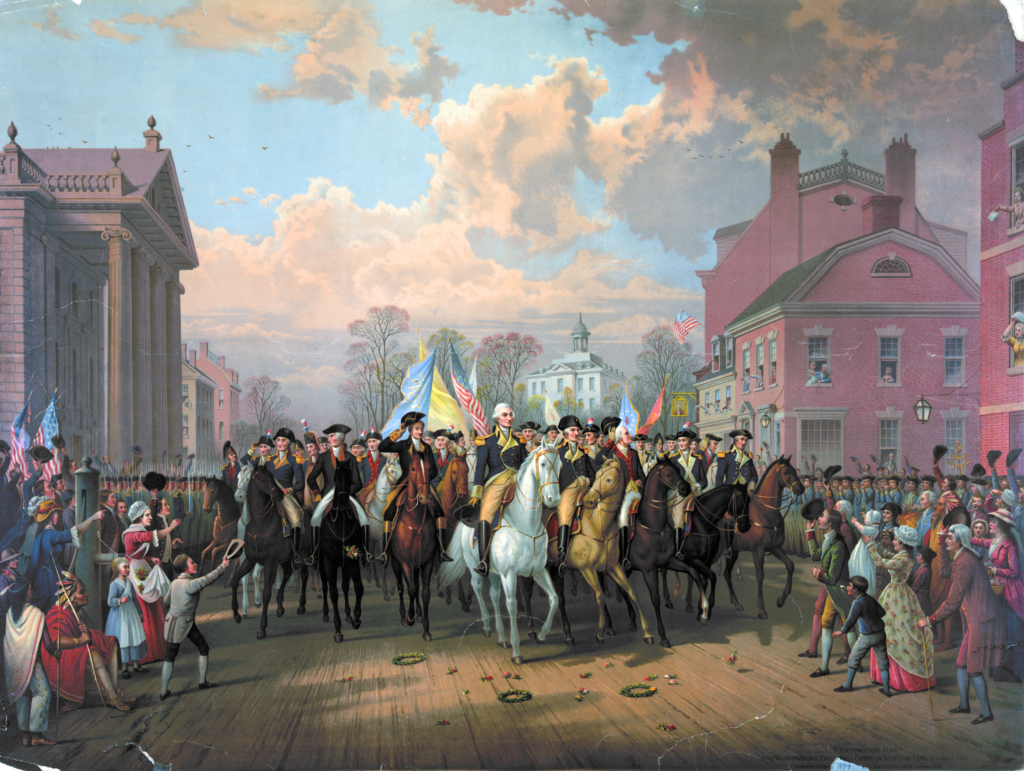
Evacuation Day in New York City, 1783.
As Charles H. Street concluded in Huntington Town Records, Volume III, page 119, note 3, the Revolutionary War inflicted great suffering on Huntington residents, making the triumph of the War for Independence that much sweeter:
From the profoundest depths of humiliation and sorrow, into which the people of Huntington had been plunged by a long and desolating war, they were elevated as it were, to the seventh heaven, by the news that the armies of Washington were victorious, the haughty legions of the King vanquished, and the freedom and independence of the Colonies achieved and acknowledged. Is it any wonder that the generation that passed through these trials and triumphs ever after celebrated their independence, as John Adams predicted they would, by the ringing of bells, the roar of artillery and the declamation of orators?