By Barbara LaMonica
The craft of styling jewelry and accessories from human hair is primarily associated with Victorian mourning jewelry. However, hair jewelry dates back thousands of years and was worn for multiple reasons. Hair has always been viewed as a powerful symbol of life and power (consider Samson’s unfortunate haircut) and in ancient Egypt hairwork jewelry signified religious belief. In China and India jewelry fashioned from human hair was worn for good luck as well as a tribute to a loved one, living or dead. In the Middle Ages jewelry was worn to convey social status, religious beliefs, and identity in the form of heraldic designs. Some jewelry, made from strands of woven hair, was often sent as a gift to convey adoration for a loved one and a memento of oneself.
The craft of styling jewelry and accessories from human hair is primarily associated with Victorian mourning jewelry. However, hair jewelry dates back thousands of years and was worn for multiple reasons. Hair has always been viewed as a powerful symbol of life and power (consider Samson’s unfortunate haircut) and in ancient Egypt hairwork jewelry signified religious belief. In China and India jewelry fashioned from human hair was worn for good luck as well as a tribute to a loved one, living or dead. In the Middle Ages jewelry was worn to convey social status, religious beliefs, and identity in the form of heraldic designs. Some jewelry, made from strands of woven hair, was often sent as a gift to convey adoration for a loved one and a memento of oneself.
Beginning in 17th century Sweden the art of hair woven jewelry as folk art began in the village of Vamhus where the art was learned along with needlework and wig making. After the weaver obtains at least a foot of hair it is woven into intricate patterns using a hair table and bobbin while applying a chosen pattern. The hair is then covered over wooden beads or metal findings making the jewelry more affordable than using gold. The village women often left their homes for Europe to make commissioned jewelry. Today Vamhus is still known for teaching the art of hairwork. Hairwork Jewelry – Hemslöjd Studios
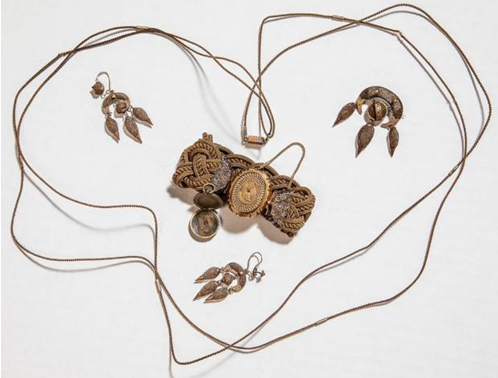
Hairwork art as mourning jewelry reached its peak of popularity during the Victorian era, with the death of Prince Albert in 1861. Queen Victoria remained in mourning for the rest of her life and wore several pieces of jewelry containing Prince Albert’s hair. Since Queen Victoria was a popular figure, people on both sides of the Atlantic, Americans as well British populations, emulated her mourning style. Jewelry was fashioned from hair into earrings, brooches, rings and watch fobs. The Huntington Historical Society has several pieces of hair jewelry from local families in their collection.
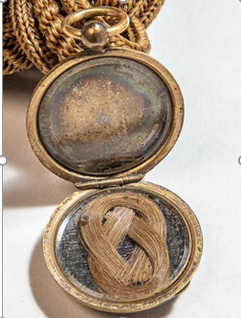
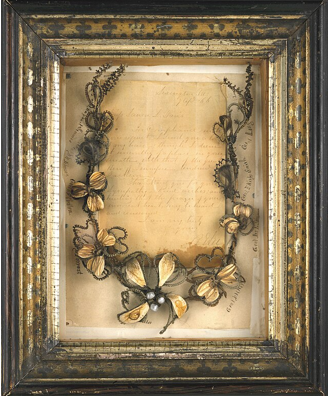
The hairwork also had symbolic meaning: braided indicated family or marital unity, curled often meant eternal love, as the coil had no beginning or end, and some pieces had hair from multiple people signifying the connection between close relatives.
However, the majority of surviving hairart is dedicated as mementos to the living and not the dead. Hair would be fashioned into decorative wreaths and framed, or made into flowers arrangements and placed under glass domes as decorative displays in the home. People often sent a lock of their own hair to someone as a symbol of friendship, and even attached a strand of hair to postcards.
Although hairwork jewelry has fallen out of fashion, to be replaced with cremation jewelry, there are contemporary artists not only practicing the craft but passing on the skill to others.
About — Melanie Bilenker
Woven: Traditional Swedish Hair Jewelry with Karen Keenan [KarenFinalDraft]