SMITH, DAVID (1750-1820). Private, Colonel Josiah Smith’s 1st Regiment of Minutemen, 2nd Company, Huntington Militia. David was born in 1750 in Hulse Landing, Suffolk County, to Samuel Blue Cory Smith (1706-1778) and Esther Jarvis Wickes (1714-1791), as per a family tree posted on Ancestry.com; he was baptized in 1750. That family tree names these siblings, all born in Huntington: Samuel (1745-1770); Tabitha Elizabeth (1753-1833); Anna Marie (1757-1799); and Eliakim (1760-1839). Other siblings had no birthplace identified: Nathaniel “Blue” (1733-1818); Esther (1735-1801); Daniel (1738-1780); Mary (1740-1779); and Martha Ann (1748-1814). The Geneanet website confirms the names of his parents as does his Find A Grave website page which lists his mother as Esther Wicks Smith Valentine.
David married Sarah Wickes (Wicks) (1750-1824) in 1770 at the First Church of Huntington in a ceremony performed by Reverend Ebenezer Prime (see). As per the family tree posted on Ancestry, they had a daughter named Sarah (no life dates given and not mentioned elsewhere).
During the American Revolution, the Huntington Town Records list him as a private in Captain Platt’s Company under the command of Colonel Joseph Smith who led the 1st Regiment of Suffolk County Minutemen. It is unclear why he is listed as Captain Smith in the Ancestry and Find A Grave genealogies and the inscription on his original gravestone; perhaps he was a sea captain. Notably, there were two David Smiths from Huntington who signed the Oath of Loyalty to the Crown in 1778. Many Huntingtonians signed this oath, under duress, during the British occupation of Huntington.
The following reports in the Huntington Town Records do not distinguish which David Smith is the signatory. An item in the Huntington Town Records of November 14, 1782, indicates that a vote was carried out to supply the “Garrison in Town with Fuel at 4 Dollars per cord”; a David Smith (unclear which of the two) is one of the four Contractors for Wood. Further, the Huntington Town Records reported that on November 23, 1782, residents were requested to supply British troops with wood; the townspeople were divided about this and Smith, one of the four men who signed the paperwork, requested that the captain of each company should decide what is proper. Again, it is not clear which of the two David Smiths is this signatory.
David Smith is listed in an appendix to the Huntington Town Records as having been involved in working for the British troops; it is unclear which David Smith was employed for six days carting wood to the British barracks in Huntington on March 24, 1777. Another entry shows a David Smith was employed and foraged hay and oats for one day on August 3, 1782, for the Kings American Dragoons. On January 18, 1780, an entry shows that a David Smith was employed with sled and two horses transporting hay from the magazine at Coram to Lloyd’s Neck for the troops there. Also, an entry on December 9, 1781, shows that twelve cattle belonging to the Queens County Brigade were being used to cart forage for the Commissary General, rationed on Salt Hay of David Smith. In spite of the confusion of two David Smiths, the entries show how the townspeople were treated under British occupation.
The family tree on Ancestry shows that David lived in Huntington in 1790. The 1790 census reports a household of five to a David Smith in Huntington: one free white male over 16; one free white male over 16; one free white female; another free person and one enslaved person; it is unclear as to the identity of the male under 16 or the unnamed free person. As per New York Tax Assessment Rolls of Real and Personal Estates, 1799-1804 for Suffolk County, David Smith had $401 in personal and real estate and was assessed $1.50 in taxes; he owned his farm with Nathan Smith (likely his brother Nathaniel), a modest holding compared to others in his town.
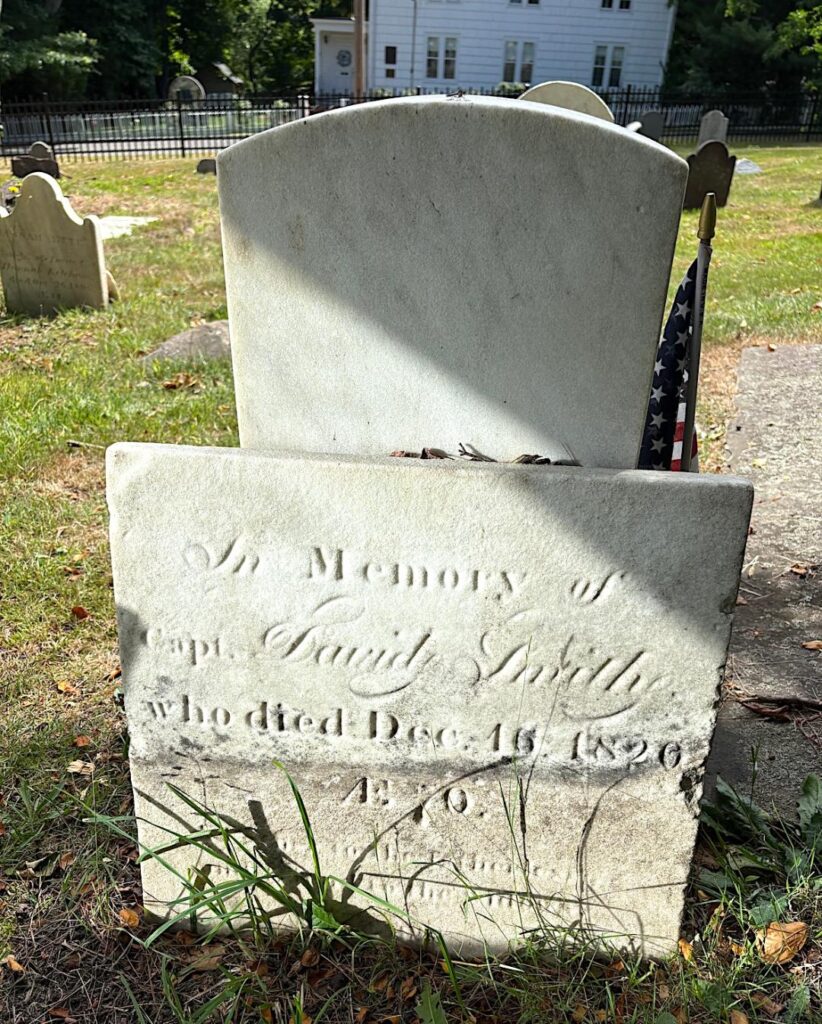
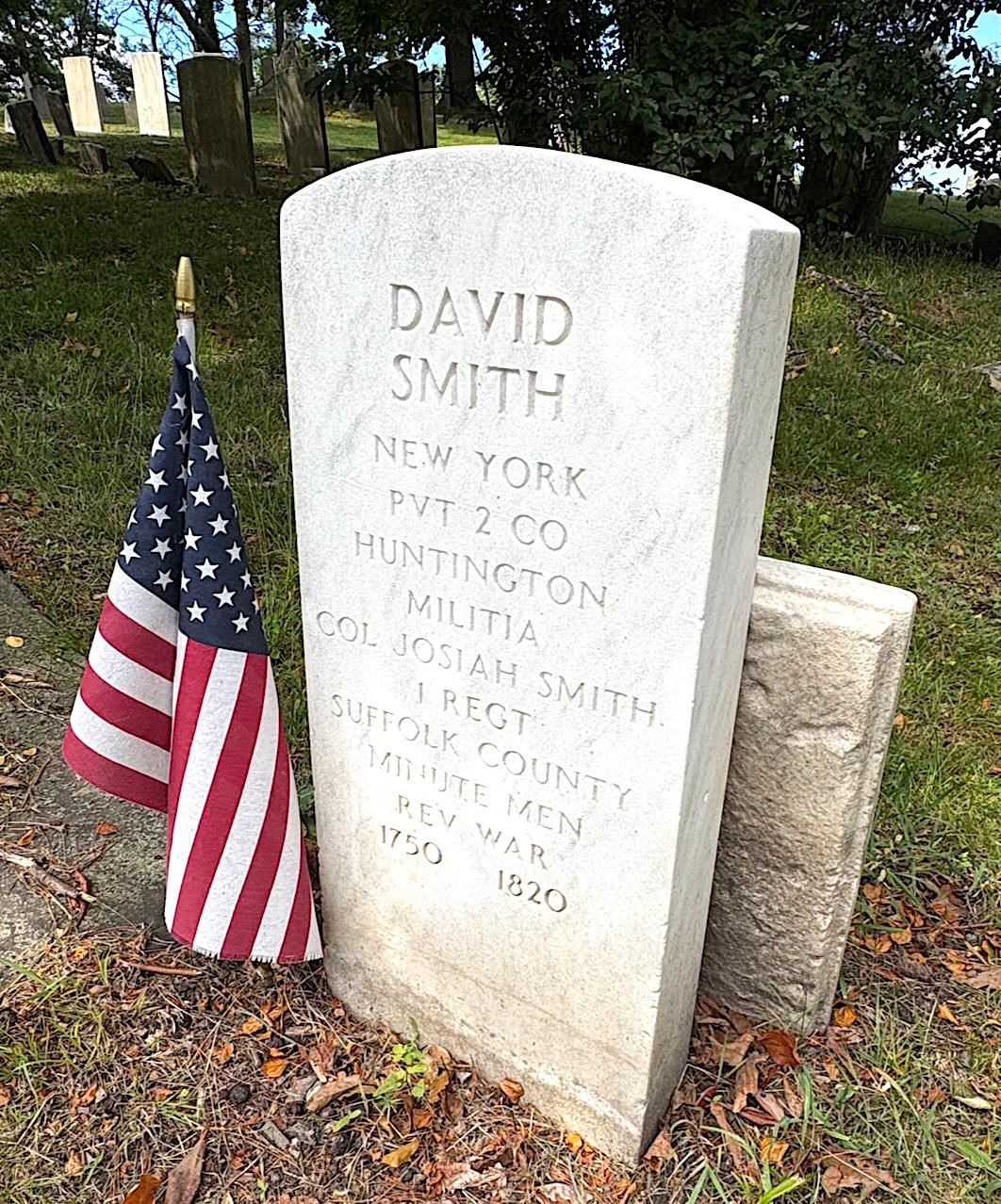
David was a resident of Brooklyn in 1818 and died there on December 16, 1820. He was buried in Huntington. As per Cemetery Inscriptions from Huntington, Long Island, compiled by Josephine C. Frost in 1911, his original headstone read, “In memory of Capt. David Smith who died Dec. 16, 1820, New York, Pvt 2 Co Huntington Militia, Col. Josiah Smith, 1st Regt Suffolk County Minute Men, Rev. War.” His wife died in Brooklyn in 1824. Her tombstone is inscribed and copied by Ms. Frost: “Sarah, wife of David Smith, died Dec. 8, 1824, Age 74 years.” Huntington Town Historian Rufus B. Langhans applied for a government-issued upright marble headstone with no emblem for David Smith on August 2, 1973. Langhans noted Smith’s service in the 2nd Company of Josiah Smith’s 1st Regiment of Minutemen. The rank of captain is crossed out on the paperwork and in red ink it is written on the reverse that he was a private and that his company was commanded by Nathaniel Platt; the headstone was ordered on December 7, 1973.
As per “An Excursus into the Smiths of Jamaica, Huntington and Brooklyn” in Genealogies of Long Island Families, Volume II, David’s will was dated March 3, 1818 and probated on December 21, 1820. That will names his wife Sarah to have use of lands adjoining James P. Chichester’s (a witness to his will), or to the children of her sisters and the balance of his estate to “such of the children and grandchildren of my brothers and sisters as are here named…” A handwritten copy of the will which appeared on Ancestry notes that after David’s debts and funeral costs were settled, the executors could sell his real and personal property with the interest going to his beloved wife Sarah.