Honored by Steve Stern and the Huntington Historical Society
By Barbara LaMonica
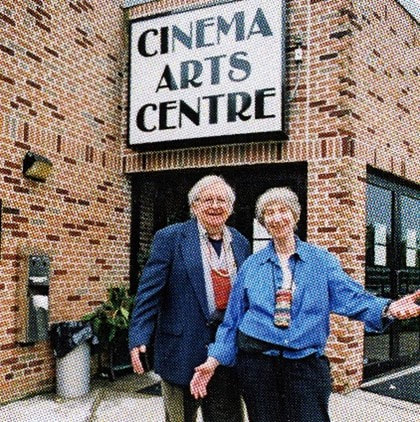
On Sunday, July 28 the Cinema Arts Centre and the Huntington Historical Society co-sponsored a brunch to celebrate the Cinema’s 50-year anniversary and its inclusion on the New York Historic Business Registry. Assemblyman Steve Stern had nominated the Cinema to the Registry which honors businesses that have existed for at least 50 years and have a positive impact on the community. In addition, Assemblyman Stern presented the Cinema with a $125,000 legislative grant.
On Sunday, July 28 the Cinema Arts Centre and the Huntington Historical Society co-sponsored a brunch to celebrate the Cinema’s 50-year anniversary and its inclusion on the New York Historic Business Registry. Assemblyman Steve Stern had nominated the Cinema to the Registry which honors businesses that have existed for at least 50 years and have a positive impact on the community. In addition, Assemblyman Stern presented the Cinema with a $125,000 legislative grant.
The Cinema Arts Centre has had a storied history on its way to becoming a cultural landmark.
The year is 1973 and in a small room above a dance studio on East Main Street two transplants from Brooklyn, Charlotte Sky and Vic Skolnick, had set up a borrowed 16mm film projector, hung up a white sheet for a screen, and introduced Huntington to their passion: films –independent, classic and foreign-that were rarely shown in suburbia. Soon outgrowing the space, they moved to a second floor gym at 235 Main Street. Finally, in 1977 the Cinema moved to the former Village Green School on Park Avenue. In 1988 the Huntington Town Board approved a lease and in 1991, with a half a million dollar grant from the Hoffman Foundation for renovations, the Town Board granted the Cinema a new long-term lease.
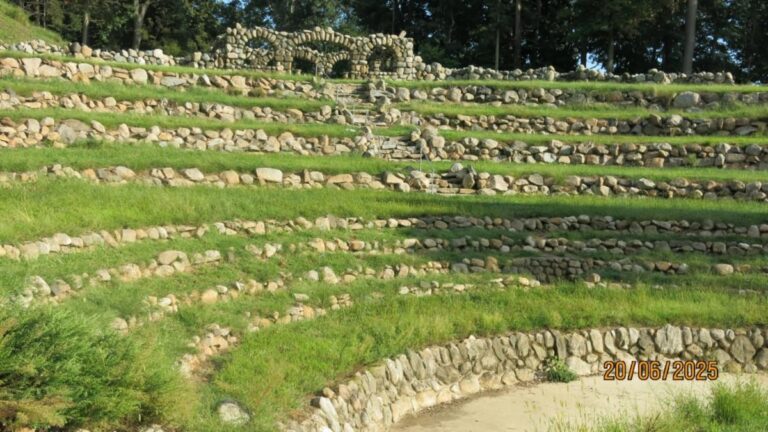
The founders of the Cinema Arts Centre have more than met their original goal to create a premier film art house on Long Island. They evolved from a “bring your own chairs and pillows” venue to a 2,200 square foot, state of the art three screen theater with a combined seating capacity of 315 serving over 100,000 visitors per year. In addition, there is the Sky Room Lounge serving coffee and snacks plus beer and wine. The lounge also opens up to outdoor seating in a lovely garden with tables and chairs. But there is also an interesting piece of history in the garden. The stone benches were originally part of a serpentine wall designed by Frederick Olmstead, (designer of Central Park), for the Jennings estate in Lloyd Harbor.
Cinema’s co-directors Charlotte Sky and her son Dylan Skolnick (Vic Skolnick passed away in 2010) still program independent films and documentaries in addition to special film series with guest directors and actors. Many classics, including a silent film program with live music are also shown on the big screen, as they were originally meant to be seen.
The Cinema Arts Centre is supported by foundations as well as local and state grants. Most importantly, the Cinema is membership funded. If you join the Cinema you can see films and attend special events at a reduced price. For more information https://cinemaartscentre.org