By Barbara LaMonica
The familiar sight of lamppost wreaths lit up along the streets and Christmas trees dotted with ornaments and strung with lights create a festive atmosphere in businesses and homes. In stores, museums, and online a plethora of ornaments fashioned from glass, metal or plastic depicting everything from super heroes to animals, fruits, baseball teams to designer additions and more are offered.
Compared to today Christmases past were simple affairs and the season certainly didn’t last two months! The first Christmas trees originated in Germany in the early 1600s and the ornaments were a few simple handmade ones fashioned from natural items such as dried fruits and nuts.
A wave of German immigrants in the early 1800s influenced Americans to celebrate Christmas by decorating trees. Early American ornaments were made of edible items including dried fruit, cranberry garlands as well as “scrap” ornaments made of fabric, wood, tin and paper.
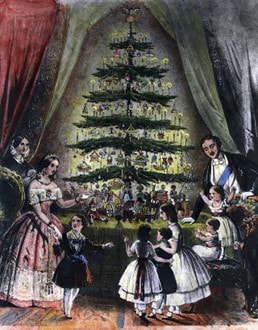
The tradition of glass Christmas ornaments also had its beginnings in Germany. In the early 1800s glass ornaments called kugels-meaning ball- were produced by glass blowing families. They were fashioned into delicate designs depicting angels, animals and fruits. By the 1850s these ornaments were exported to England where they first graced the Christmas tree of Prince Albert and Queen Victoria. When a London newspaper published a print of the royal tree it quickly popularized these intricately designed ornaments, at least among the wealthier classes.
In 1880 the Woolworth 5 & 10 company was the first American retailer to sell imported German ornaments. A German traveling salesman convinced Frank Woolworth to buy a case of 144 glass ornaments for his Lancaster Pennsylvania store. To Frank’s surprise the ornaments sold out in a day. Obviously Woolworth had a winner. It is estimated that between 1880 and 1939 over 500 million ornaments were sold.
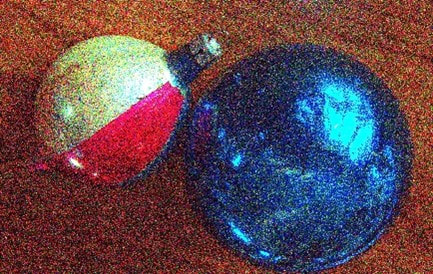
In 1939 an enterprising businessman named Max Eckhardt foresaw that imported Christmas ornaments from Germany were to be affected by possible war. So he got together with a representative of Woolworth to convince Corning Glassware of New York to use their machine which were used to make lightbulb to also make glass ornaments. By 1940 Corning was making over 300,000 ornaments a day, most of which were shipped to Eckhardt’s new company Shiny Bright, and the American made ornament business took off.
Today Christmas ornaments cover the spectrum of glass, ceramic, homemade as well as cherished family heirlooms. There are also personalized ornaments commemorating births, weddings, anniversaries and vacations, and favorite sports teams and movie heroes.
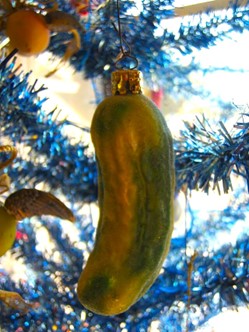
There are interesting stories associated with several ornaments which have retained their popularity over the world. For example, according to legend, the pickle ornament should be the last one hung on the tree, and the child who finds it on Christmas morning will receive an extra gift.
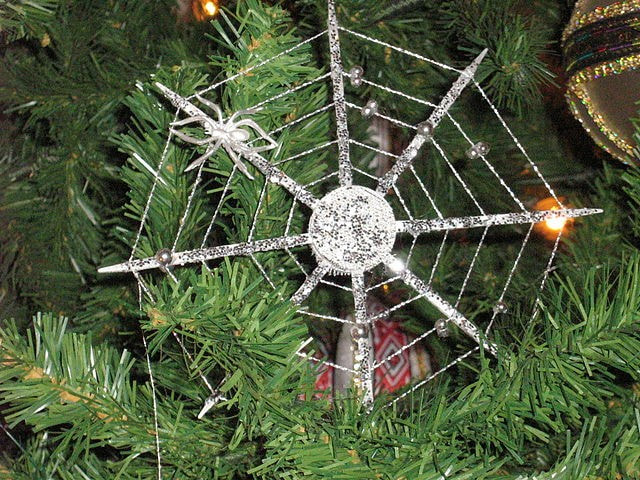
The Ukrainian spider web ornament dates back centuries to tell the story about a spider that entered a poor families’ house to enjoy the warmth inside. In appreciation the spider spun a web as a beautiful Christmas decoration which brings good luck. It is thought this may also be the origination of tinsel on a tree.