By Barbara LaMonica
Our seemingly timeless traditions of trees and lights, gift giving, over eating, greeting cards and general revelry is really just little more than 100 years old as Christmas was not always considered a national holiday or celebrated in the same way throughout the nation. The forerunner for present day Christmas traditions was set approximately 100 years ago.
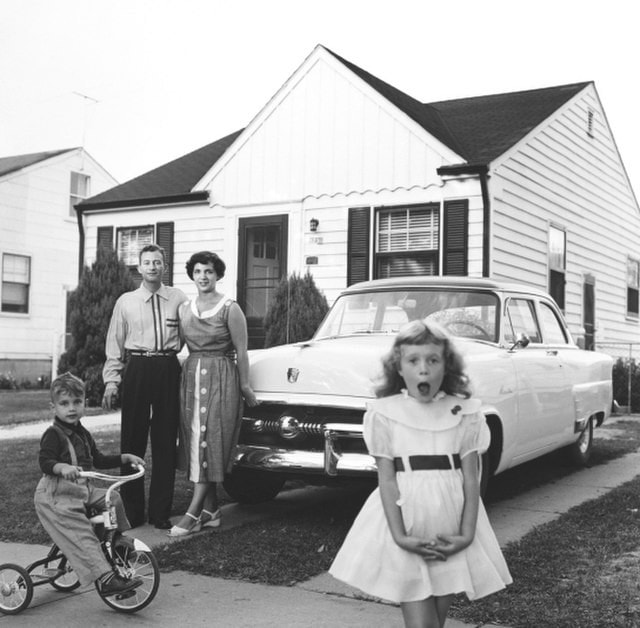
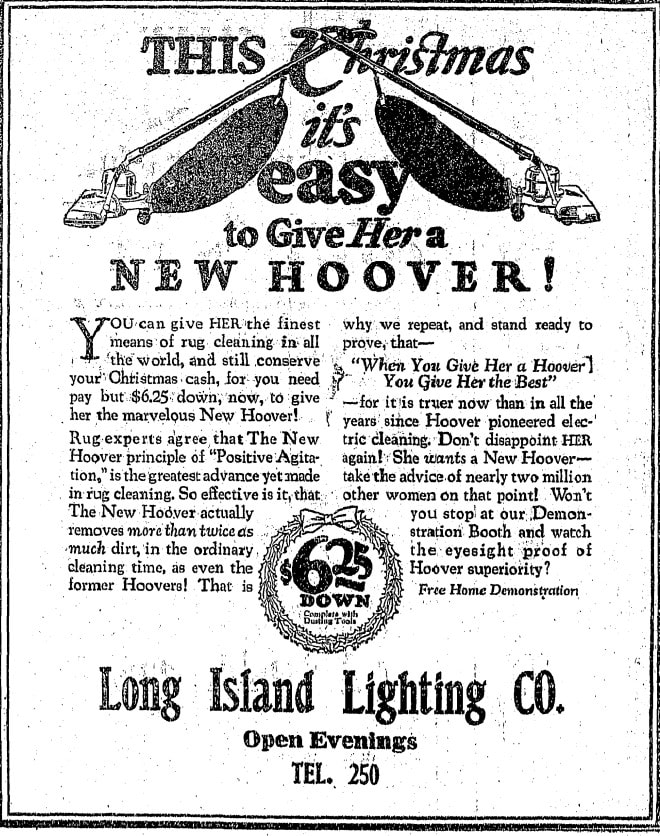
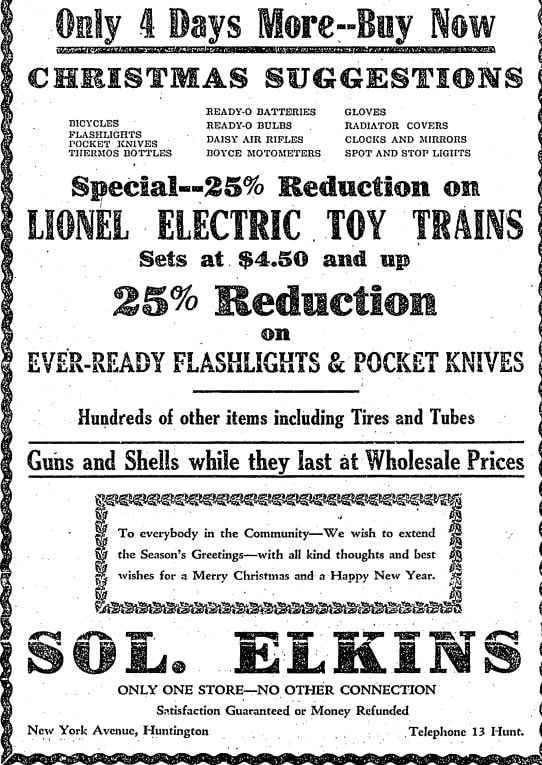
The 1920’s ushered in momentous changes in American society. The horrors of the flu pandemic and WWI had come to an end as the country entered a stage of unprecedented economic growth characterized by a high standard of living for most Americans. It was an age of technological advances-radios, automobiles, electricity and household conveniences became commonplace in many homes. The growth of consumer culture influenced how people celebrated Christmas in the Twenties. Gift giving became more extravagant as homemade items and decorations gave way to manufactured goods. With the majority of homes now electrified, gifts of the latest modern labor saving devices such as vacuums, irons, washers, and sewing machines were favored. All boys anticipated Lionel electric trains, and the Teddy Bear, which was originally introduced in 1902, became the most popular toy due to advances in mass production. Luxury items such as rugs, dishes, silverware, jewelry, and clothes gained popularity. With its increased secularization and commercialization, Christmas traditions of 1920s set the pattern for today’s holiday. Below: Advertisements for Christmas shopping, Long Islander, 16 Dec 1927.
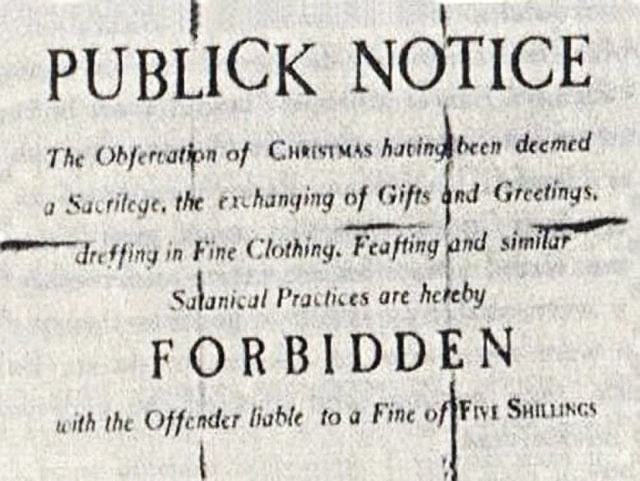
During the 17th and 18th centuries Christmas celebrations were not uniform across the land, as Christmas was not even thought of as a national holiday. Christmas was celebrated or not in different sections of the country according to whatever traditions immigrants brought with them. In some places it was forbidden to celebrate Christmas. For example, in 17th century New England Puritans passed laws banning the celebration of Christmas because they deemed it pagan and satanic in origin, not to mention its association with the Catholic Church and the Church of England. Quakers, as well, frowned upon celebrating Christmas claiming that no day was holier than another, and holidays were man’s vain contrivance. Many of these prohibitions stayed in place until the early 19th century.
Southern planters however would feast, hunt and hold large balls emulating the traditions of old English manors as Christmas became part of their social calendar.
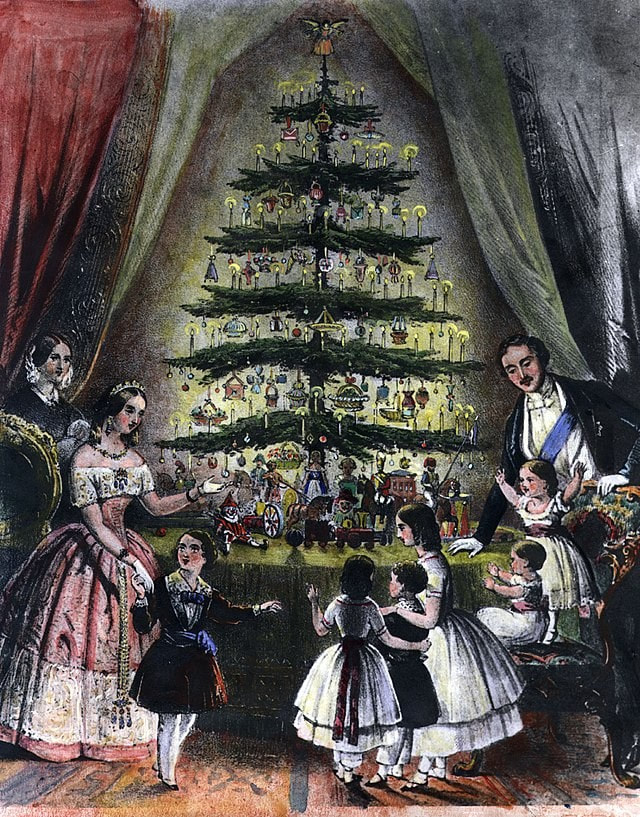
After the Civil War uniform celebrations were seen as a means to reunify the country. Increased communication, and transportation contributed to the consolidation of a national consciousness, and immigrants brought their own unique holiday customs which were absorbed into the society. The Victorian era was another major influence on Christmas in America. Queen Victoria, a popular royal admired here and abroad, celebrated the holiday with a tree, a tradition brought to England by her German husband Prince Albert.
Another influence from Victorian England was Charles Dickens’ novel “A Christmas Carol”. Dickens caused a sensation when in 1867 he toured American to sold out venues reading excerpts from the novel.
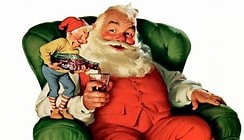
As early as the 16th Century the Dutch brought the image of St. Nicholas to New Amsterdam. He was considered a holy man, the patron saint of children, who would leave presents in shoes left outside the door. The Dutch celebrated this tradition through the years but most Americans did not get a glimpse of a Santa Claus until the poet Clement Moore published “A Visit from Saint Nicholas,” or “The Night Before Christmas” in the Troy Sentinel in 1823. But it was not until 1920s that a soda company popularized the image of Santa Claus we know him today.
On June 28, 1870 President Ulysses S. Grant signed a bill designating Christmas a legal, unpaid holiday for federal workers in D.C. The Fourth of July, Thanksgiving, and New Year’s Day were also included in the bill. It is believed that this law was promoted by local merchants who could gain by the commercialization of such holidays as well as Grant’s desire to bring the country together.
However, this was not uniform across the country as only state legislatures had the right to declare official holidays. The first states to officially acknowledge Christmas were in the south, Alabama being the first in 1836; Louisiana and Arkansas followed in 1838. The reluctance of Northern states to act in accordance was due to lingering effects of early Puritan, Anabaptists, and Quakers who disapproved of man-made holidays. But increased immigration brought different traditions and increased industrialization necessitated workers having time off. Massachusetts recognized Christmas in 1856, and New York in 1881.
Today’s Christmas is a compilation of past traditions. Faith and secularism, consumerism and charity. Today the holiday reflects the national demographic and has become more diversified and inclusive; as you will find crèches, Santas, Menorahs and Kwanzaa candles.