
TITUS. HENRY (1750 or 1752-1839). Signatory, Huntington’s Articles of Association. The family tree posted by a maternal descendant on Ancestry.com identifies Henry Titus II as his 5th great uncle. As per that posting, Henry was born on January 12, 1750, in Huntington to Henry Titus I (1722-1754) and Sarah née Birdsall (1735-1820). The birth year doesn’t match the inscription on Henry’s gravestone of 64 years which suggests a birth year of 1752. The Ancestry family tree lists the birth of Henry’s sister, Sarah (1753-1834), and brother, William (1754-1826), who was born three weeks after the death of his father. A family history indicates that in Henry’s father’s will, his father noted that his wife was pregnant with his youngest child in addition to mentioning his other children and other siblings. His mother remarried and these half-siblings are named on the family tree: John (1757-1826); Samuel (1760-?); Daniel (1762-1826); and Johanna, the poster’s maternal 4th great-grandmother (1765-?). Samuel was born in Pennsylvania, the others in Westbury, Nassau County.
On December 31, 1774, Henry married Phoebe Platt in Huntington. Children listed on Ancestry’s family tree include Mary, Lemuel and Obadiah (identified as a distant first cousin). Their marriage is recorded in Huntington Marriages, Baptisms, Etc. on page 305.
Henry is listed as a signatory of Huntington’s Articles of Association (1775) by Frederic Gregory Mather in his scholarly text, The Refugees from Long Island to Connecticut (1913). On May 8, 1775, 403 men, most of them Huntington residents (a few were from Islip), “shocked by the bloody Scene” that had occurred just weeks before at Lexington and Concord in Massachusetts, where patriot Minutemen and British regulars had engaged in a bloody armed struggle, put their signatures on Huntington’s Articles of Association. Only 37 Huntington residents, either Loyalists or those wanting to stay out of the fray, refused to sign. The Articles noted that the signers affirmed their “Love to our Country,” agreed “to whatever Measures may be recommended by the Continental Congress; or resolved upon by our Provincial Convention, for the Purpose of preserving our Constitution, and opposition to the Execution of the several arbitrary, and oppressive Acts of the British Parliament,” and prayed for “a Reconciliation between Great-Britain and America.” The actions of these associators were seen by both patriots and the British as a step towards rebellion. The fact that these men signed these Articles, placing themselves in danger of British retaliation, including imprisonment, seizure of their property, and exile from Long Island, is proof of their patriotic service.
During the American Revolution when Huntington was occupied by the British after the Patriot’s humiliating defeat at the Battle of Long Island (Battle of Brooklyn) on August 27, 1776, residents were unwillingly required to work for the occupiers and could do little when their property was seized. Henry is among those who took The Oath of Loyalty to the Crown in 1778 before Governor Tryon in Suffolk County. “An Historical Address,” by Hon. Henry C. Platt on July 4, 1876, references that Henry Titus resided on West Neck Road along with others noted in these biographical sketches. Henry, like many Huntingtonians, were impressed to work for the British occupiers. According to Huntington Town Records of July 11, 1777, and May 21, 1778, Henry was named on “A List of Militia” in Captain Conkling’s Company who were ordered to duty by the British. Henry later noted that on June 20, 1777, he provided one bay mare to carry baggage to Hell Gate that was never returned; another entry in Huntington Town Records reports that he had one wagon and two horses work for the British. As per Revolutionary Incidents on Suffolk and Kings Counties by Henry Onderdonk Jr. (1849), Henry Titus was listed as among those who gave hay and straw for the use of His Majesty’s Troops on March 27, 1782; although payment was promised, it is unlikely that he received any. Huntington Town Records for November 5, 1782, name Henry Titus as being among the residents were called to work and provide wagons, timber and straw for the construction of Fort Golgotha; Henry worked two days and provided four wagons. Huntington Town Records enumerated the “Assessment of Property in Huntington About the Close of the War in 1782;” Henry’s property was valued at £80 and 20 shillings, in the lower half of his contemporaries.
The 1800 census shows that Henry headed a household in Huntington with two free white residents over the age of 25. As per the 1810 census, Henry was living in Hempstead, Queens, in a household of six people: one male under 10, two males aged 10 through 15, one male aged 26 to 44 and one female aged 26 to 44; children’s names are not listed.
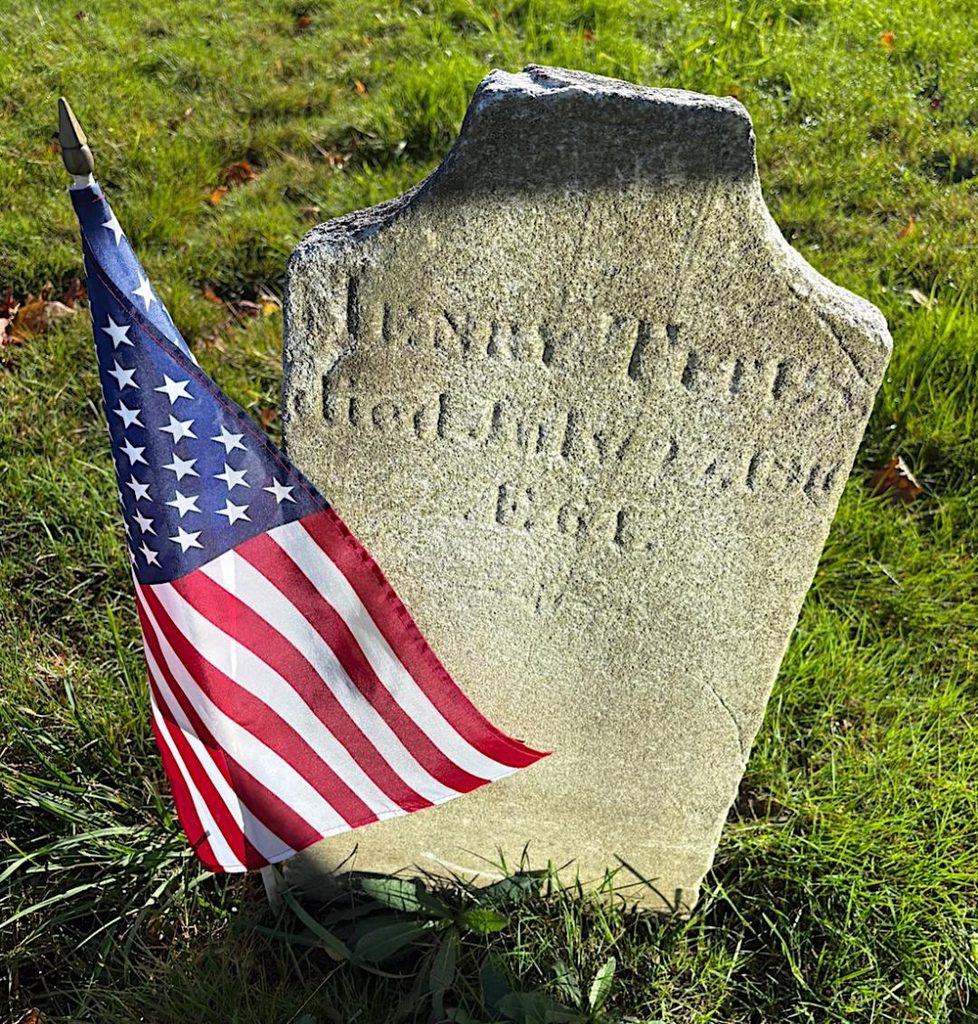
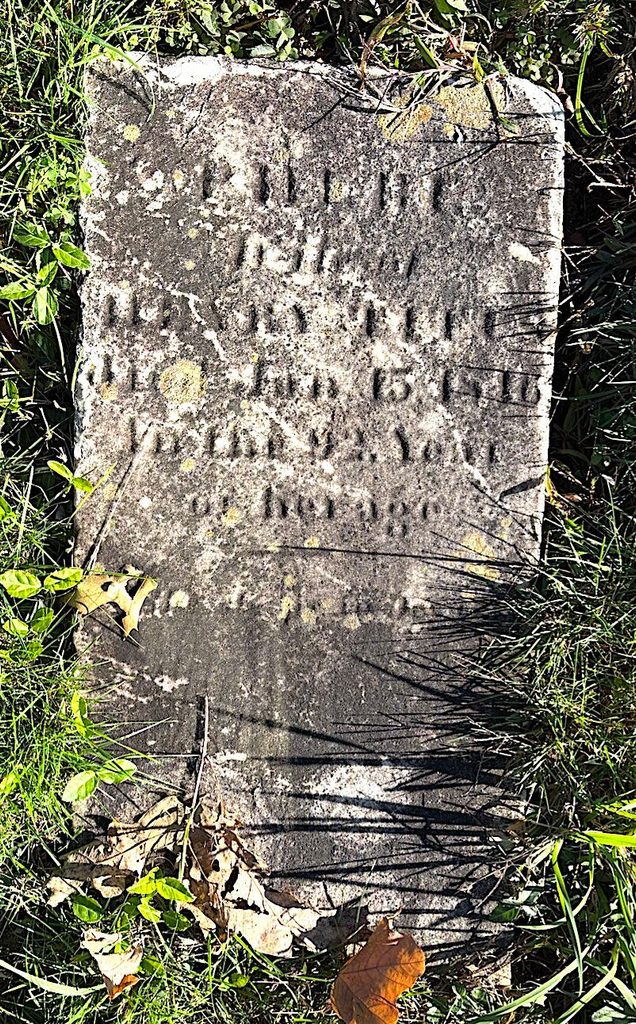
Henry died on July 27, 1816, in Huntington and is interred there in the Old Burying Ground. The names of Henry and his wife were recorded in Cemetery Inscriptions from Huntington, Long Island, compiled by Josephine C. Frost in 1911. Henry’s stone reads, “Henry Titus, died July 27, 1816. Age 64 yrs.” His wife’s stone was carved: “Phebe, wife of Henry Titus, died Jan. 15, 1846. Age 92 years.”