
SCUDDER, JONATHAN (1737-1814). Associator (signer of Huntington’s Articles of Association in 1775). As per his family tree posted on Ancestry.com, Jonathan was born on April 5, 1737, in Huntington to Moses Scudder (1709-1759) and Mary Smith (1711-1737) Scudder. Records of the First Church of Huntington note that Jonathan was baptized by Reverend Ebenezer Prime (see) on May 11, 1737. His family tree on Ancestry lists the births of two half-sisters, Elizabeth Anne (1742-1815) and Susannah (1746-1830), both born in Huntington. His family tree posted on Find A Grave names siblings: Thankful Scudder Platt (1732-1816); Anne Scudder Smith (1832-); and names Susanna as a half-sibling along with Captain William Scudder (1740-1804) but does not name Elizabeth Anne. The Geneanet Family Tree Index lists an incorrect birth date of May 11, 1737 and Find A Grave records just the birth year of 1737. New York Wills and Probate Records, 1659-1999, for his father, Moses Scudder, lists another son, Obadiah, but does not list Anne.
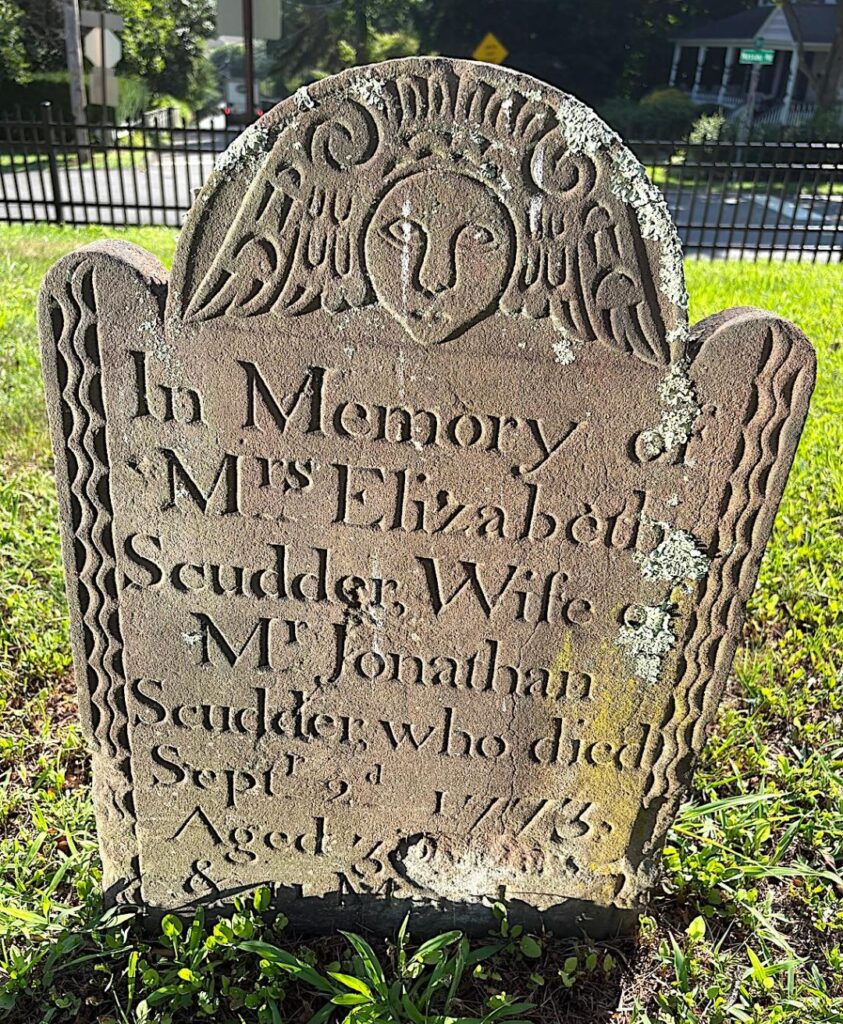
On January 2, 1759, Jonathan was married to Elizabeth Sammis (1737-1773) in Huntington by Reverend Ebenezer Prime. The couple had five children: Moses (1761-1825); Jacob (1763-1795); Elizabeth (1765-); Isaac (1767-); and Mary (1770-1824). After the death of his wife, Elizabeth, Jonathan in 1774 married Sarah Buffett (1737-1816) in Huntington at the First Church, again officiated by Reverend Ebenezer Prime.
Jonathan was an associator in Huntington and was a signatory to the Huntington Articles of Association. On May 8, 1775, 403 men, most of them Huntington residents (a few were from Islip), “shocked by the bloody Scene” that had occurred just weeks before at Lexington and Concord in Massachusetts, where patriot Minutemen and British regulars had engaged in a bloody armed struggle, put their signatures on Huntington’s Articles of Association. Only 37 Huntington residents, either Loyalists or those wanting to stay out of the fray, refused to sign. The Articles noted that the signers affirmed their “Love to our Country,” agreed “to whatever Measures may be recommended by the Continental Congress; or resolved upon by our Provincial Convention, for the Purpose of preserving our Constitution, and opposition to the Execution of the several arbitrary, and oppressive Acts of the British Parliament,” and prayed for “a Reconciliation between Great-Britain and America.” The actions of these associators were seen by both patriots and the British as a step towards rebellion. The fact that these men signed these Articles, placing themselves in danger of British retaliation, including imprisonment, seizure of their property, and exile from Long Island, is proof of their patriotic service.
Jonathan Scudder remained in Huntington during the British occupation after their triumph at the Battle of Long Island (Battle of Brooklyn) on August 27, 1776; the occupation lasted through 1783 and residents were subject to harsh treatment by the occupying forces. Although there is no indication that the residents were repaid, reimbursement records show that on September 4, 1776, one horse of Jonathan’s was seizer, entered in General Cleveland’s Department and valued at £20. On November 12, 1779, one mare, saddle and bridle worth £30 were confiscated from him. He was to be reimbursed £5 for carting 10 cords of wood in May 1779 and £3.40 for carting provisions with ox team to Smithtown on August 20, 1780. Huntington Town Records for May 1, 1781, show that Jonathan Scudder and Hubbard Conkling (see) were chosen as overseers of the poor. At the near close of the war in 1782, Assessment of Property in Huntington reported that Scudder’s property was valued at £290, the highest of his contemporaries. Huntington Town Records of August 28, 1783, noted that at the close of the war, the country was in a state of disorder with many rural areas subject to nighttime robberies. The Town of Huntington, at a meeting convened at Platt Carlls home, named men, including Jonathan representing East Neck, who were chosen to call residents together in the event of robberies or lawlessness.
The 1790 census reports that Jonathan’s household was comprised of six persons: two free white males over 16, one free white female, one other free person and two enslaved persons. According to Huntington Town Records of March 2, 1795, Jonathan was a tavern owner in town and on March 1, 1796, applied for a license for his establishment. According to U.S. Tax Assessment Rolls of Personal and Real Estates for 1799 in Huntington, Jonathan Scudder owned $1,535 in real estate and $102 in personal estate and paid $1.63 in taxes, the upper third of his contemporaries. The 1800 census shows that Jonathan lived in Huntington in a household comprised of one free white male under 10, one free white male over 45, one free white female under 10, one free white female over 45 and one other free person.
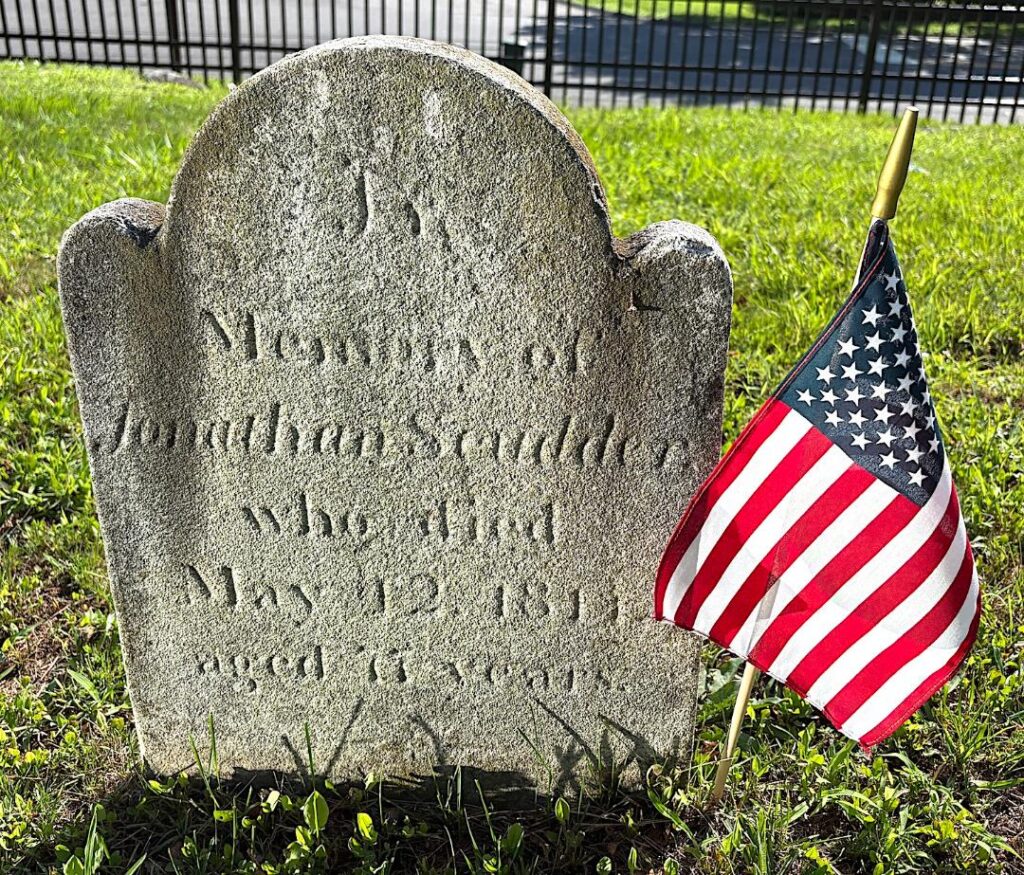
Scudder died on May 12, 1814, and was buried at the Old Burying Ground in Huntington. As per Josephine Frost, in Cemetery Inscriptions from Huntington, Long Island, 1911, his gravestone reads: “Jonathan Scudder, died May 12, 1814. Age 77 years. Ms. Frost also noted inscriptions for Jonathan’s wife, Elizabeth, his father, Moses Scudder, and other family members.